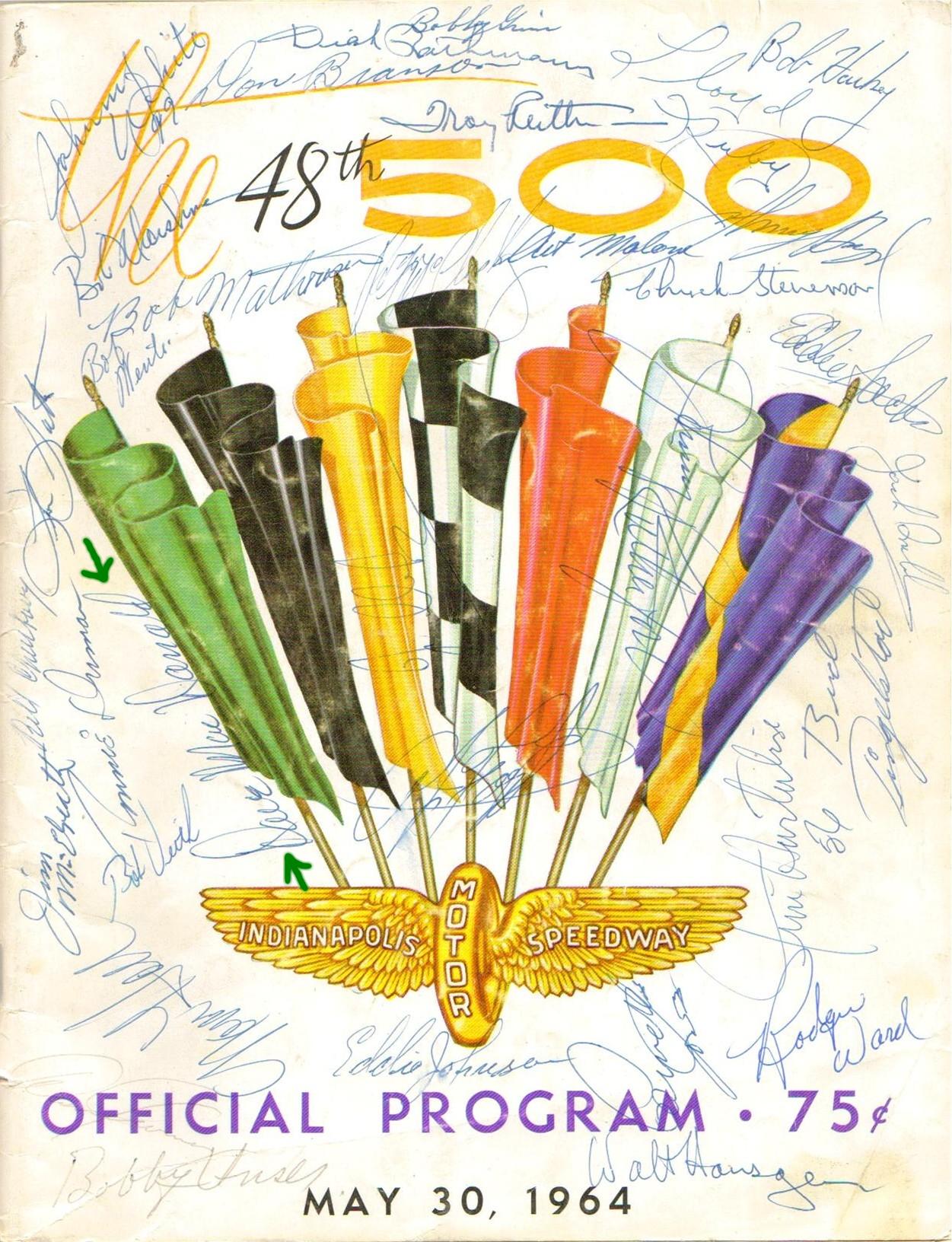
May 30, 1964 - The 48th running of the "Greatest Spectacle in Racing" - The Indianapolis 500. This page begins in October 1963 and offers
a chronological accounting of the 1964 Indianapolis 500.
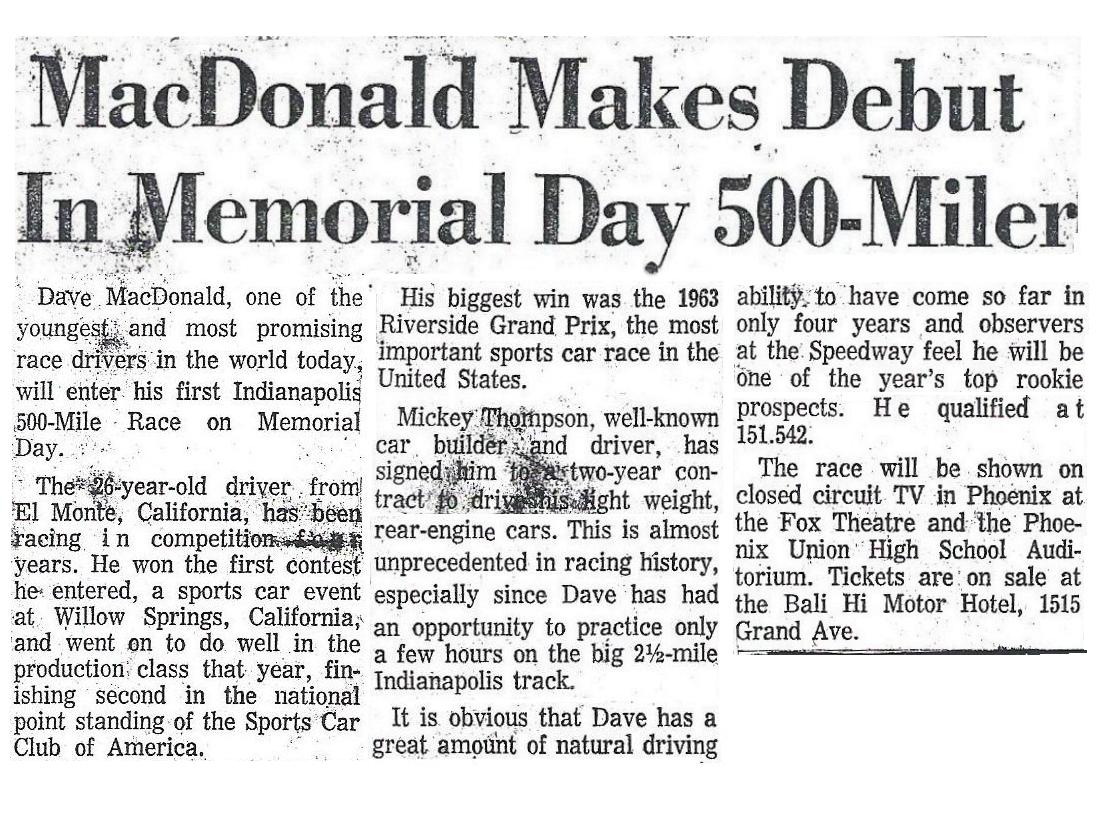
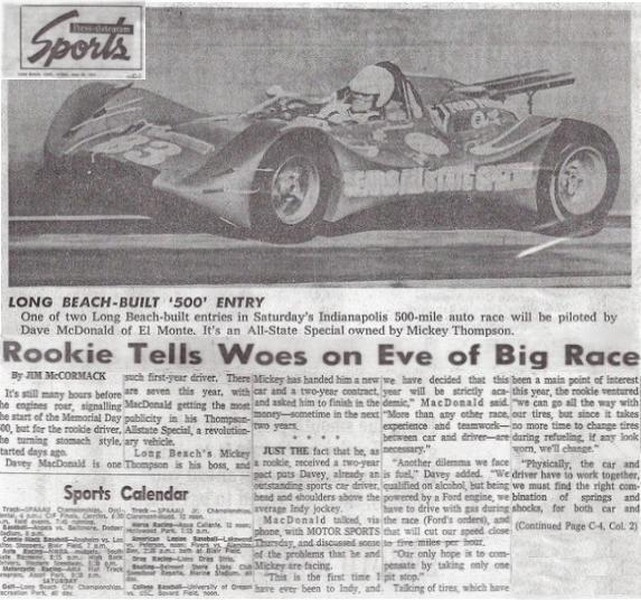
In the summer of ‘63 racer Dave MacDonald had agreed in principle to run Mickey Thompson’s low slung "superskates" in the 1964 500.
Mickey's cars were designed around tiny 12” tires and had run in that fashion in ’63 race. The deal between Mickey & Dave just needed
Carroll Shelby’s approval but at a time when Carroll's Cobra movement was soaring and gaining worldwide attention he wasn’t keen on
the idea of losing his top driver for long periods of Indy testing. Mickey enlisted the help of Ford executives and Carroll eventually agreed.
Mickey and Dave signed a two-year Indy contract for 1964/1965.
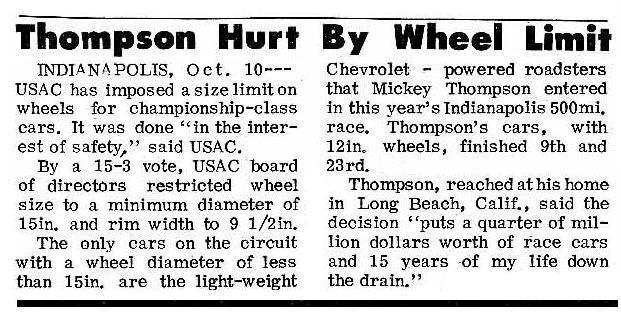
Then a few weeks later USAC delivered a crushing blow to Mickey Thompson and his low-slung racers mandating that all cars run a
minimum 15” tire. This rules change impacted only one team, Thompson’s, and effectually banned the tiny 12” tires his cars were wholly
and completely designed to run on. There was now and urgent need to put Mickey's racers on the track to see the effects of the larger tires,
Complicating matters though was the fact Mickey had just signed a deal with Sears to provide the team with the 12” tires for the ’64 race.
Sears along with Armstrong engineers had already begun production of the 12s when news of the USAC ban hit the wires in Oct ’63 so
there were no 15s available for testing. Sears immed stopped production on the 12s and went to work designing a larger 15” tire. Mickey
anxiously awaited availibility of the first tires. Dave's first break in his Cobra schedule would be in late November just prior to running
the King Cobra at the Nassau Speed Weeks on Dec 1. Mickey got word Sears/Armstrong could have 15" tires available for that period
and arranged a five-day test session at the Brickyard beginning Nov 26. (NOTE: Article mentions one of Mickey's rollerskates finishing
9th in the '63 500 but it was actually Al Miller in a rear engine car with traditional size tires.)
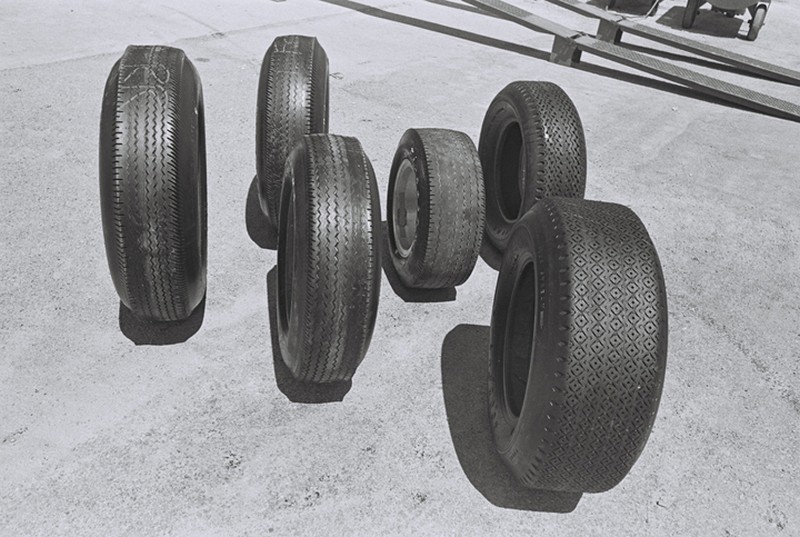
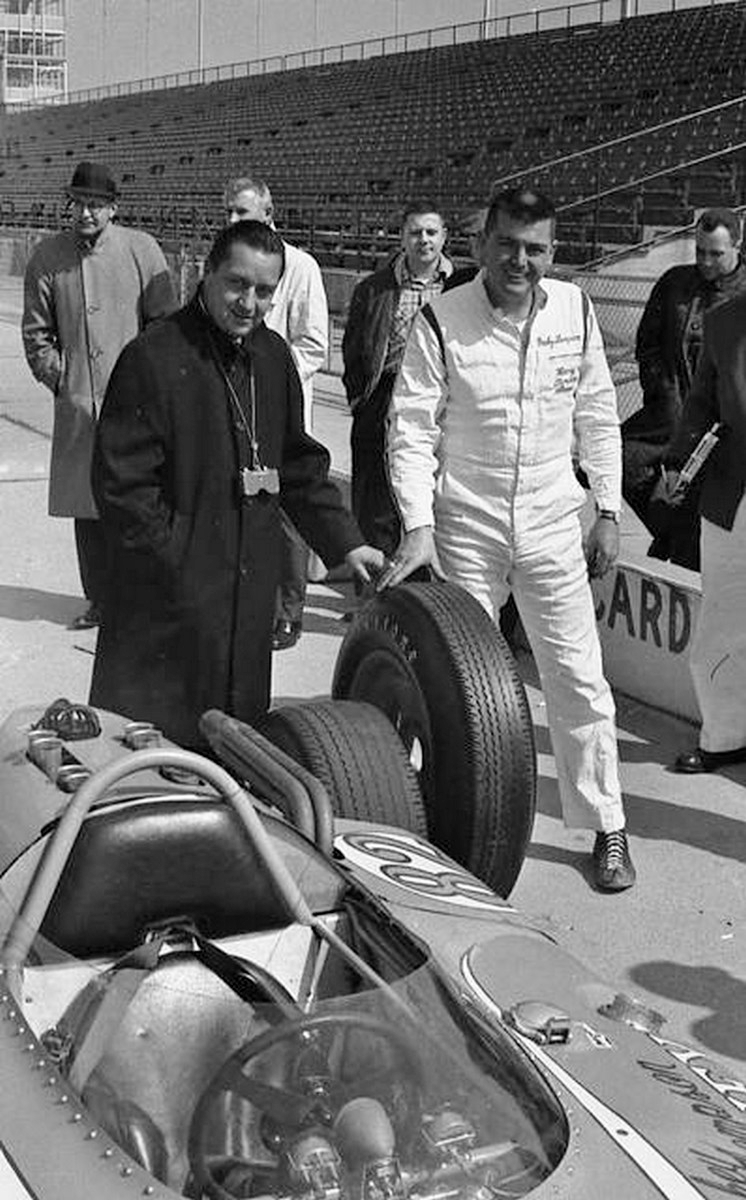
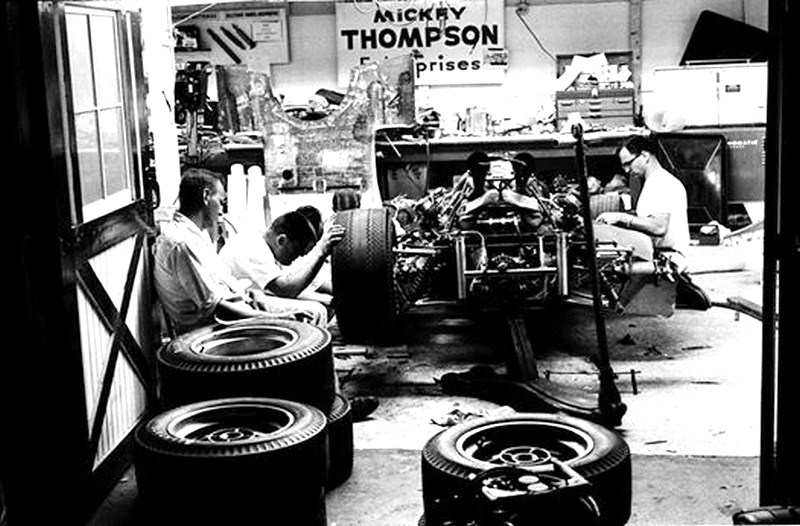
This photo is from the garage area during the 1963 Indy 500 and shows the dramatic difference between Mickey Thompson's 12" slicks
that USAC banned after 1963, and some of the larger traditional Indy tires. [Dave Friedman/The Henry Ford]
Another comparison photo from 1963 practice, Mickey's 82 car. [Dave Friedman/The Henry Ford]
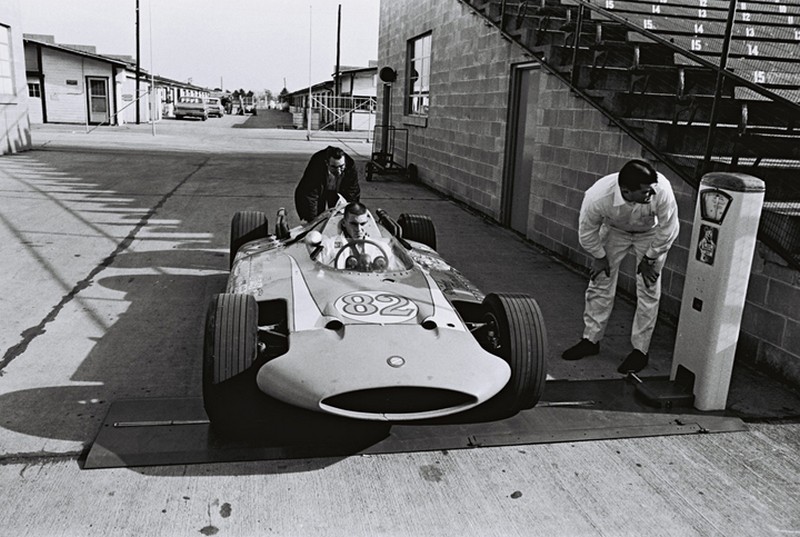
Photos below are from the November 1963 tire test session at the Speedway. Testing scheduled for five days beginning on the 26th with
Dave MacDonald, Masten Gregory and Duane Carter on hand. These crucial first laps with the larger 15” tires would either ease or confirm
the team’s fears that the car’s taller stance would have a negative effect on handling. Below MacDonald sits in the 82 car with compliant 15"
rubber while Thompson checks the scales. [Dave Friedman/The Henry Ford]
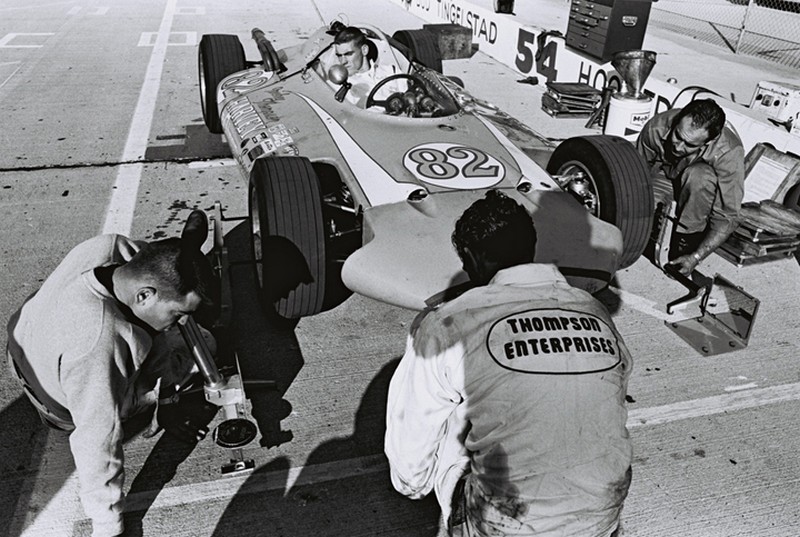
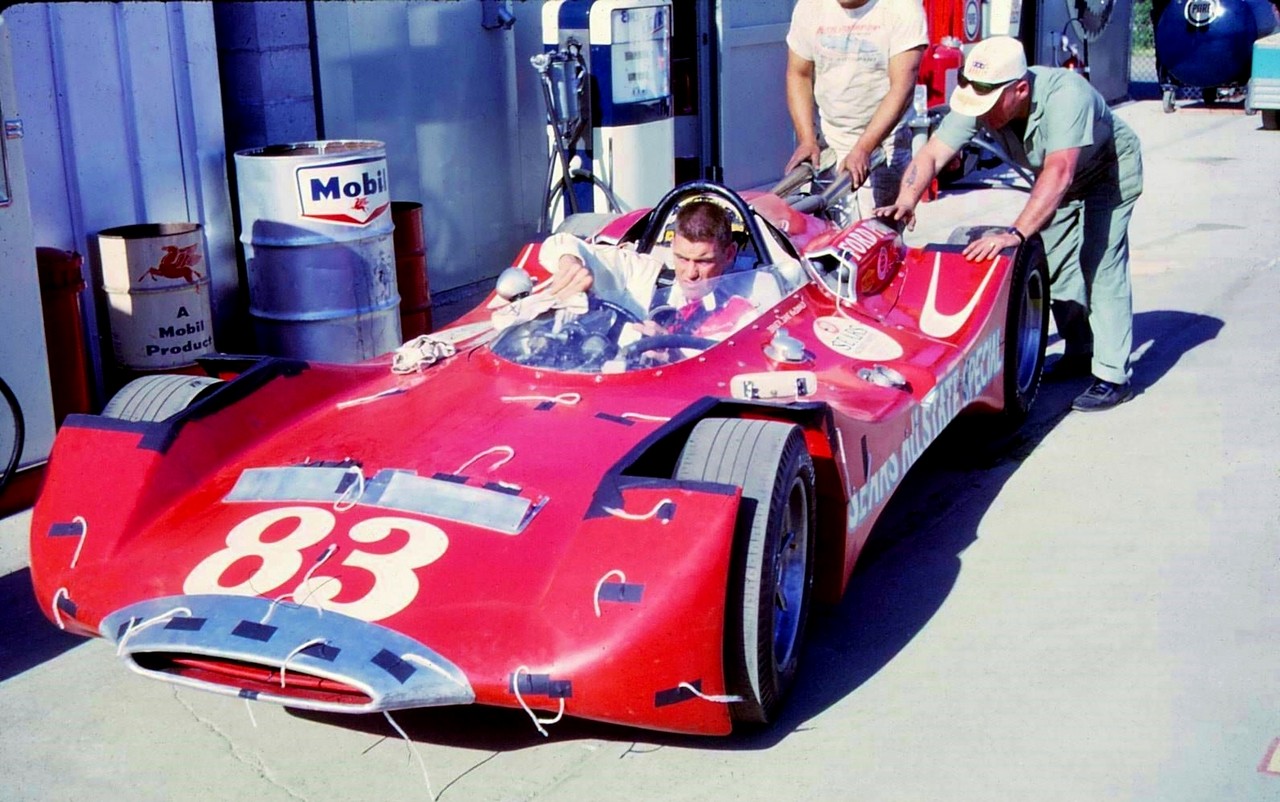
With the Thompson 82 fired up Dave MacDonald is pushed to the track for the moment of truth. Notice the crude air intake mod taped to the
nose of the car. Mickey ran these cars with Chevrolet powerplants in '63 and while he’d contracted with Ford to run the new (and heavier)
’64 DOHC engines in '64 they were not available at the time of these tests. Mick at LR tire helping push. [Dave Friedman/The Henry Ford]
.jpg)
Dave MacDonald back in after just a few laps in the 82 and the team’s fears are realized. The larger tires increased the car's roll center and
MacDonald said the car was lifting and floating, especially in the turns. Mickey searching for a fix. [Dave Friedman/The Henry Ford]
Duane Carter takes his turn in the 82 car and is back in with a similar report, the car is lifting. A low center of gravity was a critical design
element in Mickey’s cars and now the team must search for an on-track solution. [Dave Friedman/The Henry Ford]
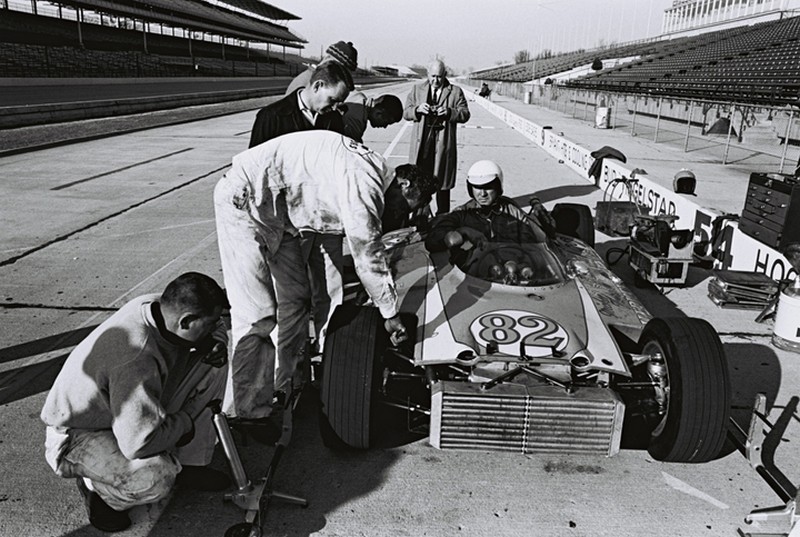
Day two of November testing was much colder. MacDonald (in his Shelby Anmerican Cobra helmet) prepares to head out in the 82 while
Duane Carter sits behind him in the 83 car. Also on hand for these critical tests were Ford execs and Sears tire engineers. [Friedman/THF]
.jpg)
Duane Carter waiting for Dave MacDonald to return before setting out in Thompson's 83 car. [Dave Friedman/The Henry Ford]
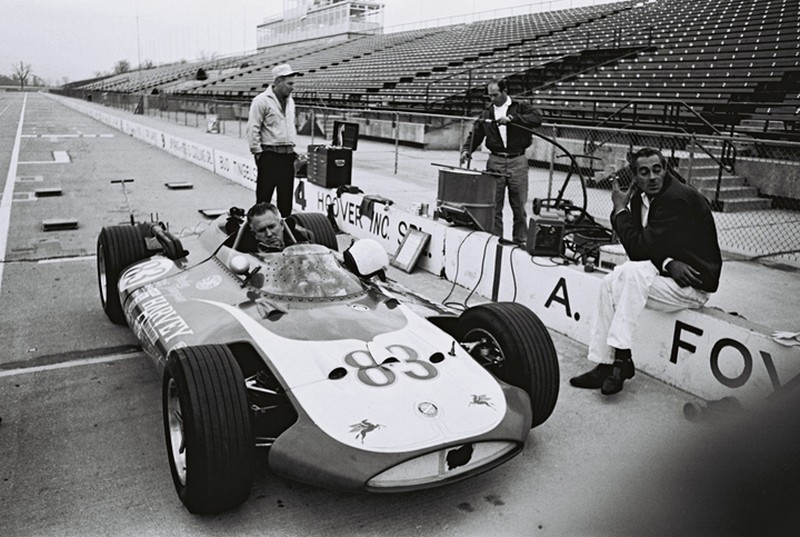
Bottom line is the November tests were nothing short of disaster and Mickey cancelled the five day session after day two and headed home
to Long Beach California to search for a solution. Below is a November ‘63 blurb from Motor Trend writer George Moore's Indy Diary.
.jpg)
Some backgrtound on the change to new 15" rubber


With the November tests cut short Dave had an unexpected break before his scheduled arrival in the Bahamas on 12/1 to run the King Cobra
for Shelby. He figured he'd fly home to California and spend the rest of Thanksgiving with his family. Ford had different plans and rerouted
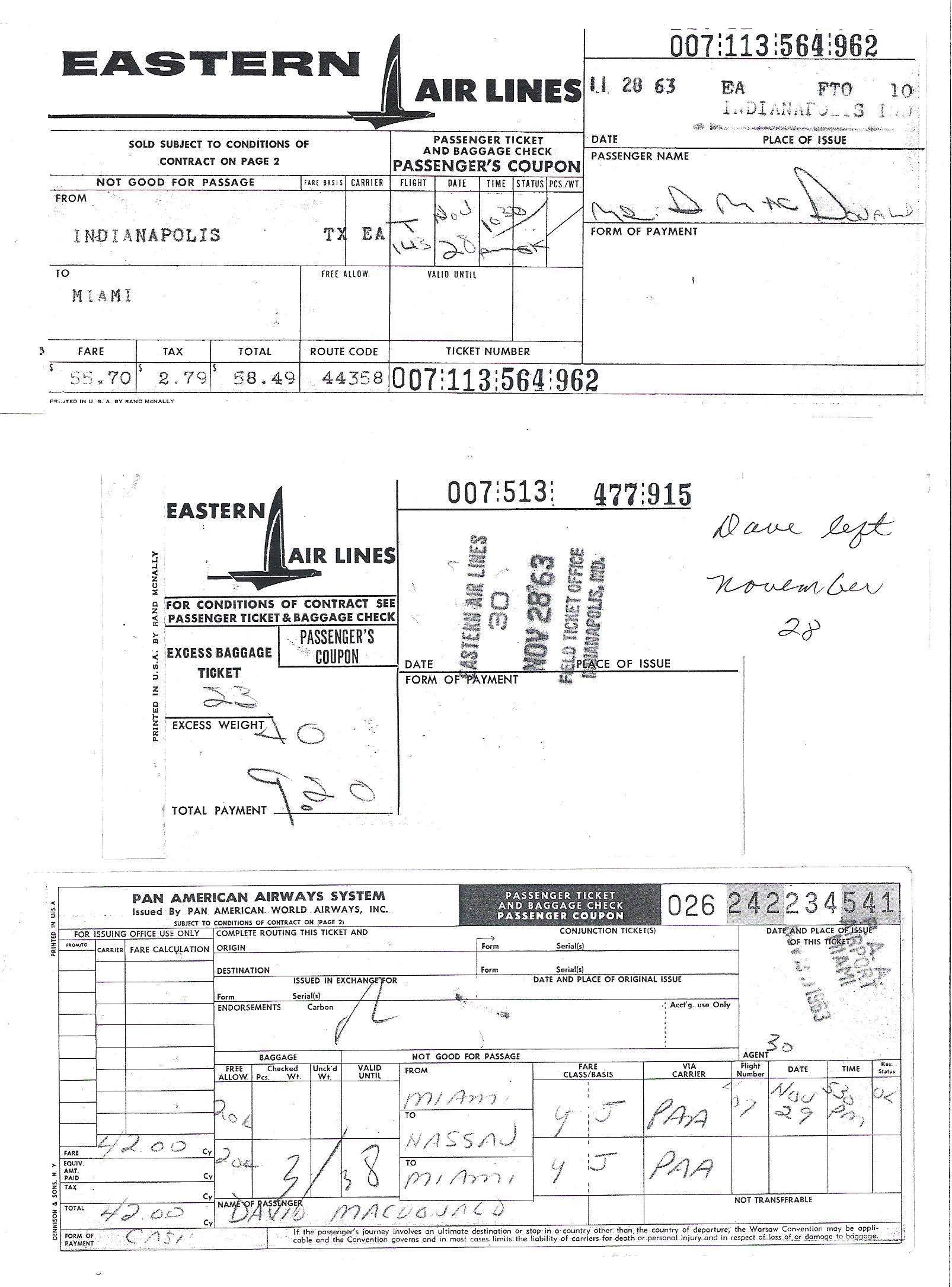
him to Daytona to join Fred Lorenzen and the Holman Moody team running tire tests on the new ’64 Ford Galaxy. He left Indy on the
28th aboard an Eastern Airlines flight for Miami and then puddle hopped to Daytona.
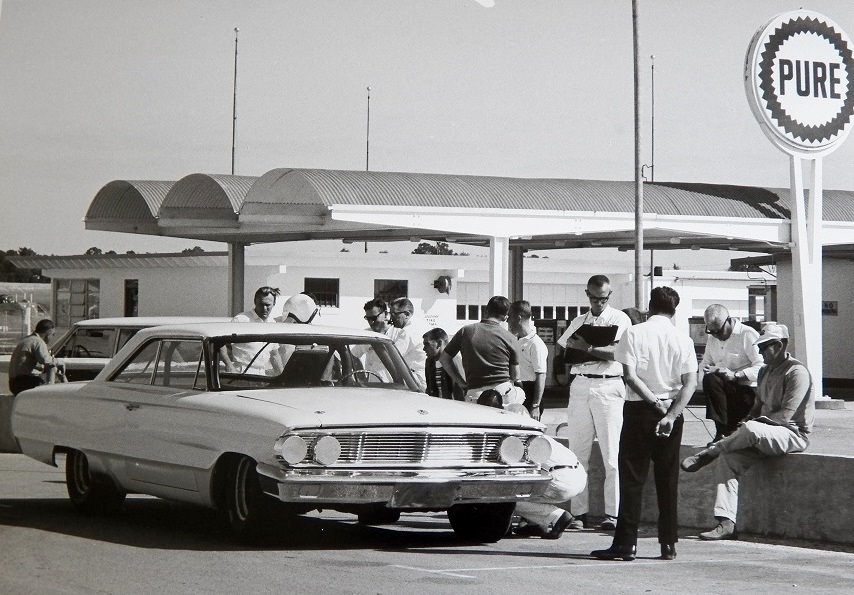
Dave (seated on wall by driver's door w/Shelby shirt underneath his sweater) met up with Fred Lorenzen (behind car) and the Holman Moody
team at Daytona Speedway and ran tire tests that evening and the next morning. On Nov 29th Dave left Daytona for Miami and the Bahamas.
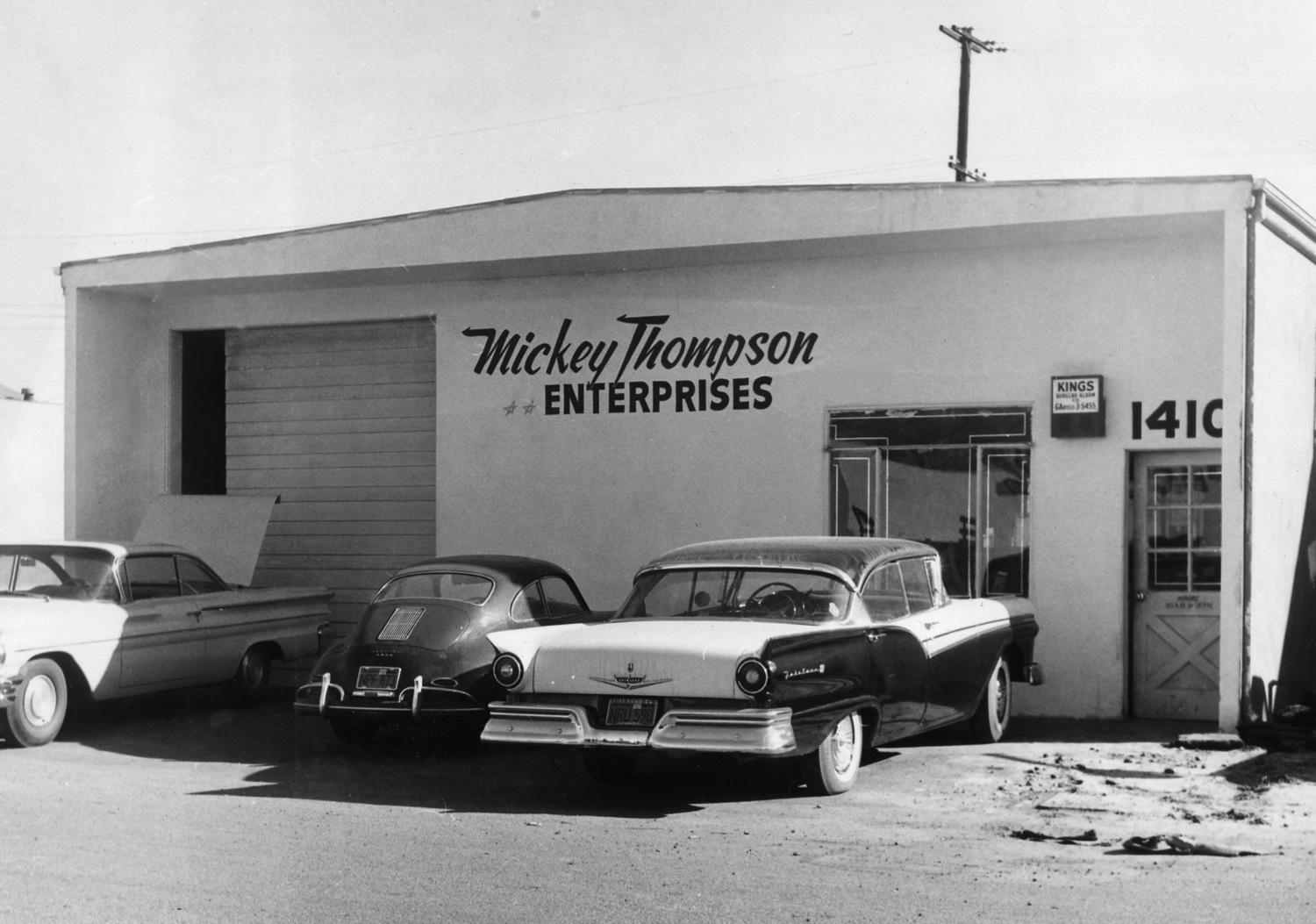
Meanwhile Mickey Thompson had trailered both cars back to his Long Beach California speed shop and began chassis and suspension mod-
ifications in an effort to resolve handling issues posed by the larger tires. Photo courtesy Mickey & Danny Thompson
Dec 6, 1963 - Mickey Thompson describes the disappointing November test session to Los Angeles Times writer Bob Thomas. "The cars
just wouldn't handle, there was too much body roll due to the higher center of gravity". Mickey also says the cars are currently in a wind
tunnel. (Wind tunnel testing was certainly a crude art in '63?)

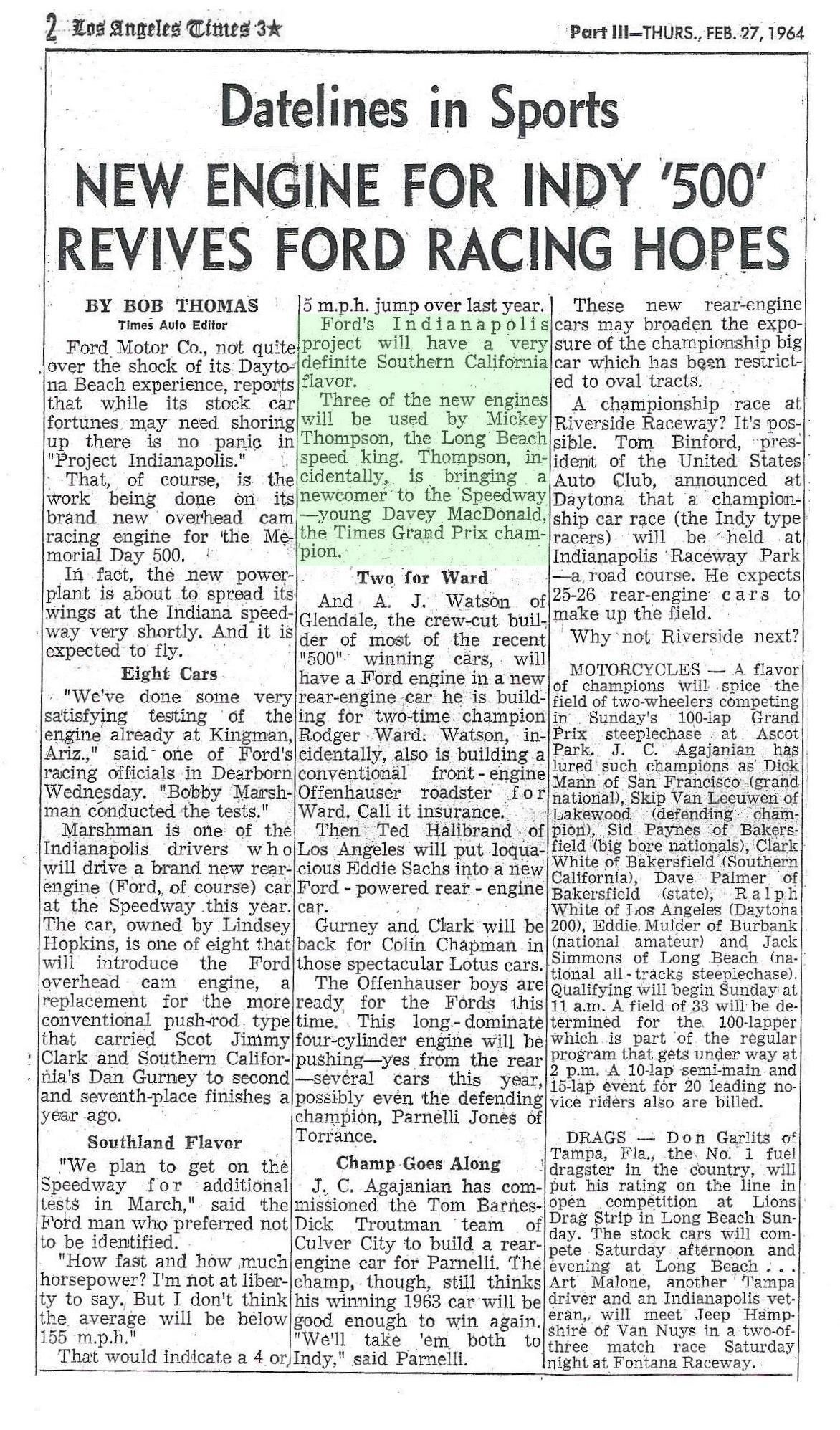
Mickey Thompson was not only a hard charger and brilliant innovator, but a charismatic salesman as well. Just a sophomore at Indy but
nonetheless able to secure three of Ford's powerful new double overhead cam engines - a hot commodity in the Ford camp. This from
a man who ran Chevrolet engines in the 1963 Indy 500. Courtesy Los Angeles Times
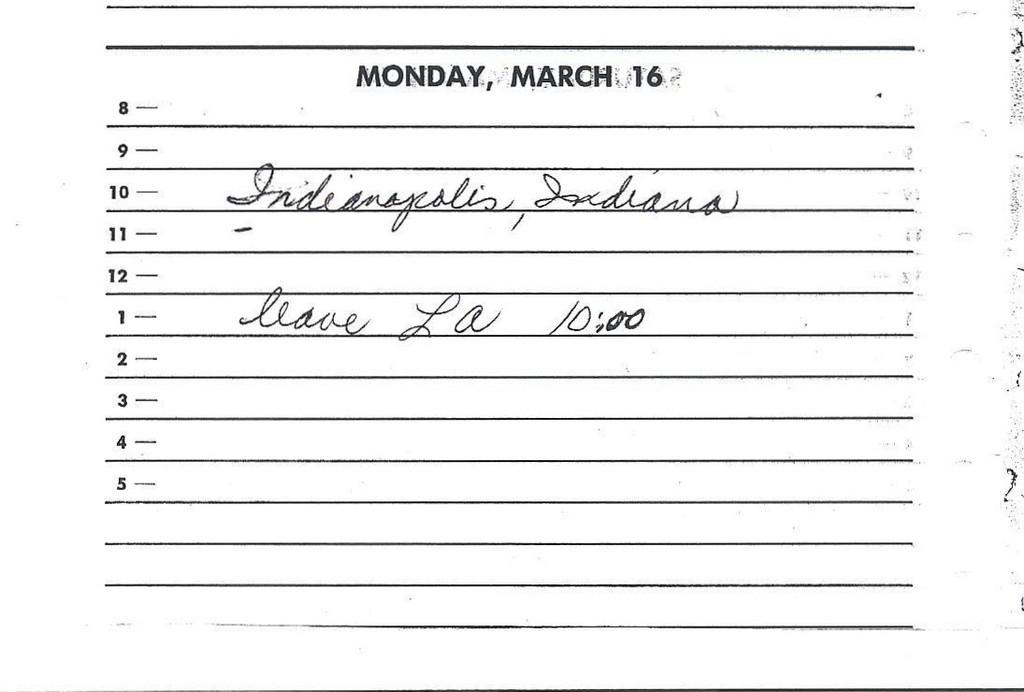
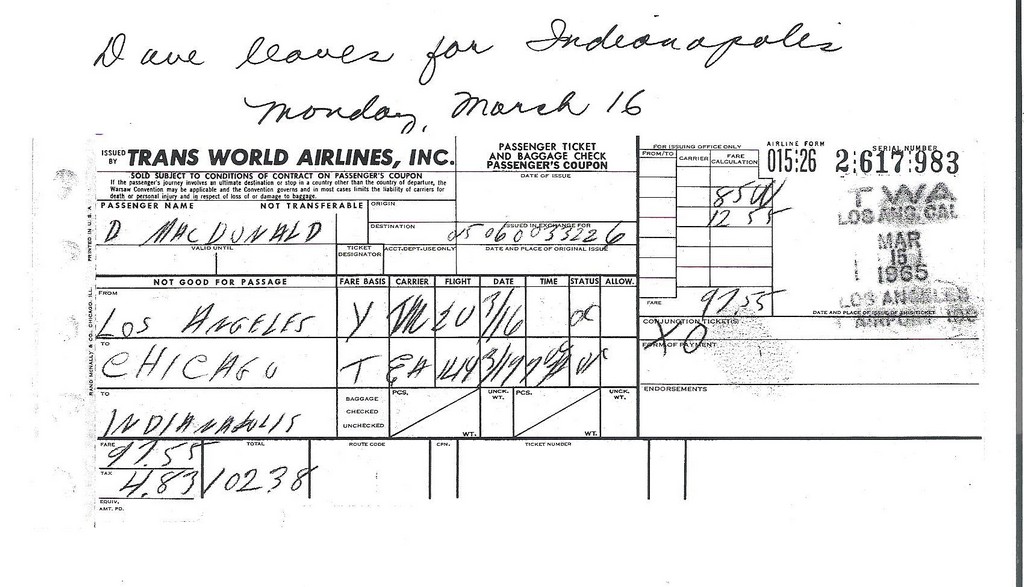
Sherry MacDonald's notes from March 1964. Dave MacDonald flies back to the Brickyard for additional testing on the Thompson racers.
It will be a three day test session.
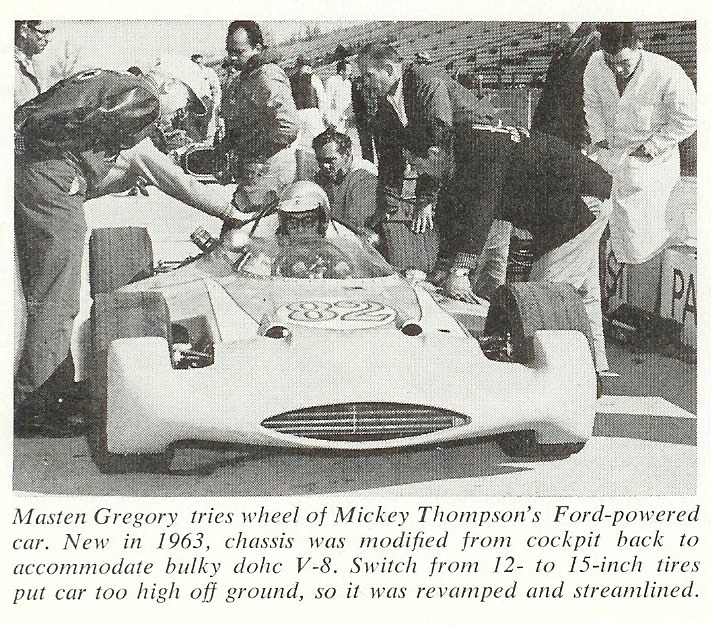
Dave and the Thompson team are on the track early on March 17th, Sears tire people were back too for a first hand look at hopeful progress
on Mickey's racers. The car were fitted with the new experimental aero modifications; which included side skirts and a rear wing but USAC
officials denied the use of those mods (Wings & sides skirts are commonplace today). Drivers present for these tests were Graham Hill,
Masten Gregory and Dave MacDonald. Only one new '64 DOHC Ford engine was made available for these tests and it went in the 82 car.
Dave's 83 still ran with a Chevy powerplant. After only a couple laps in the 83 Hill brought it in and parked it, calling it "diabolical". He
left Indy for Europe and did not return
Sears tire engineers performing tests after Masten Gregory's run. Gregory and MacDonald agreed with Graham Hill that handling issues
remained but both drivers felt there was an improvement and at this point decided to stay committed to the effort.
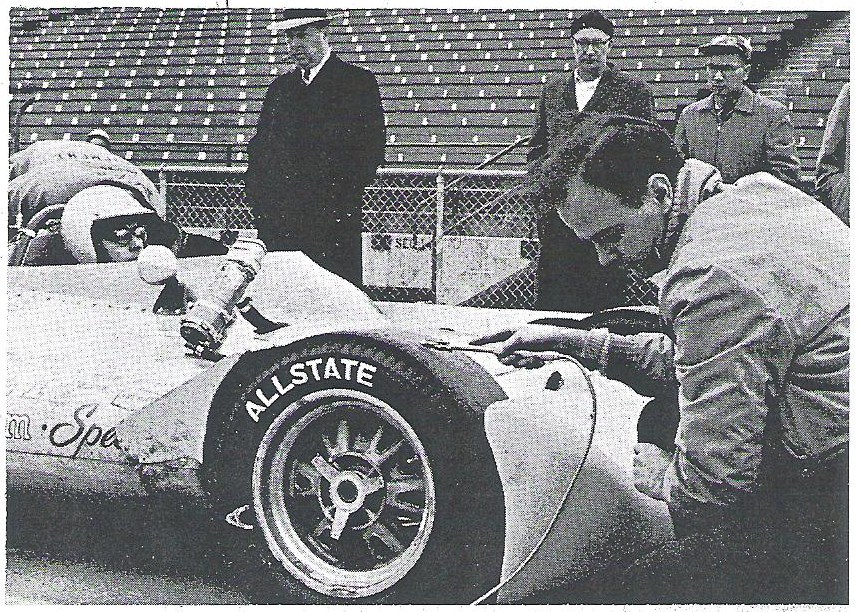
Sherry's notes show Dave & Masten only managing low speeds at these March tests. Dave 135 mph with the lighter Chevrolet engine and
136 mph for Masten in the 82 car with a heavier Ford DOHC engine but also with newly installed lighter titanium suspension pieces. Tests
were not encouraging but Mickey promised significant changes once he had the cars back at his Long Beach California speed shop.
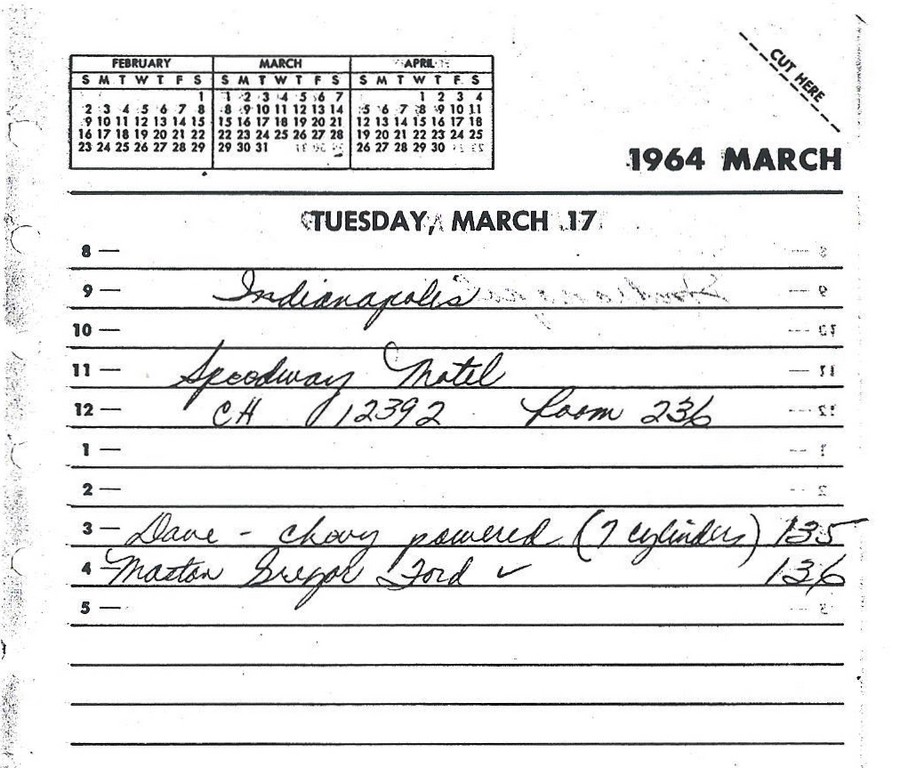
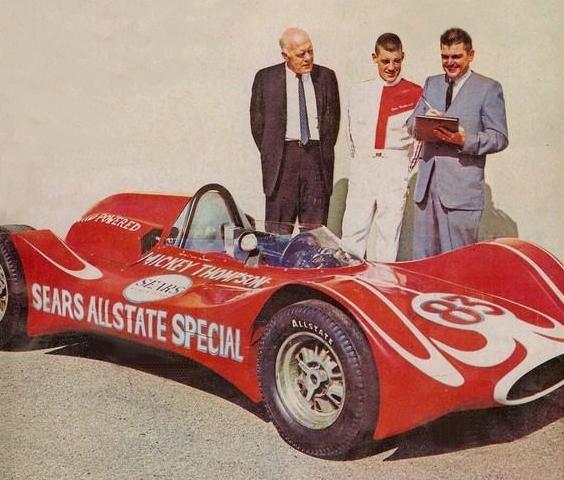
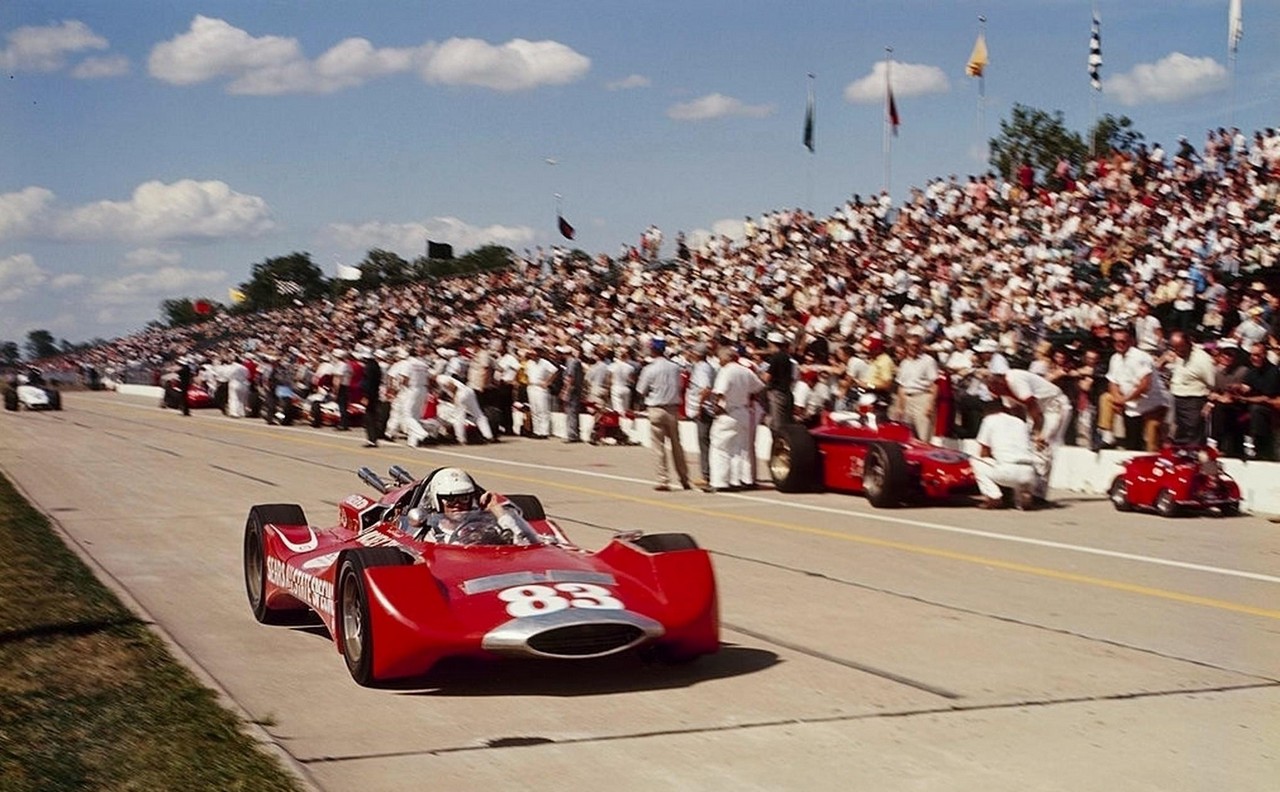
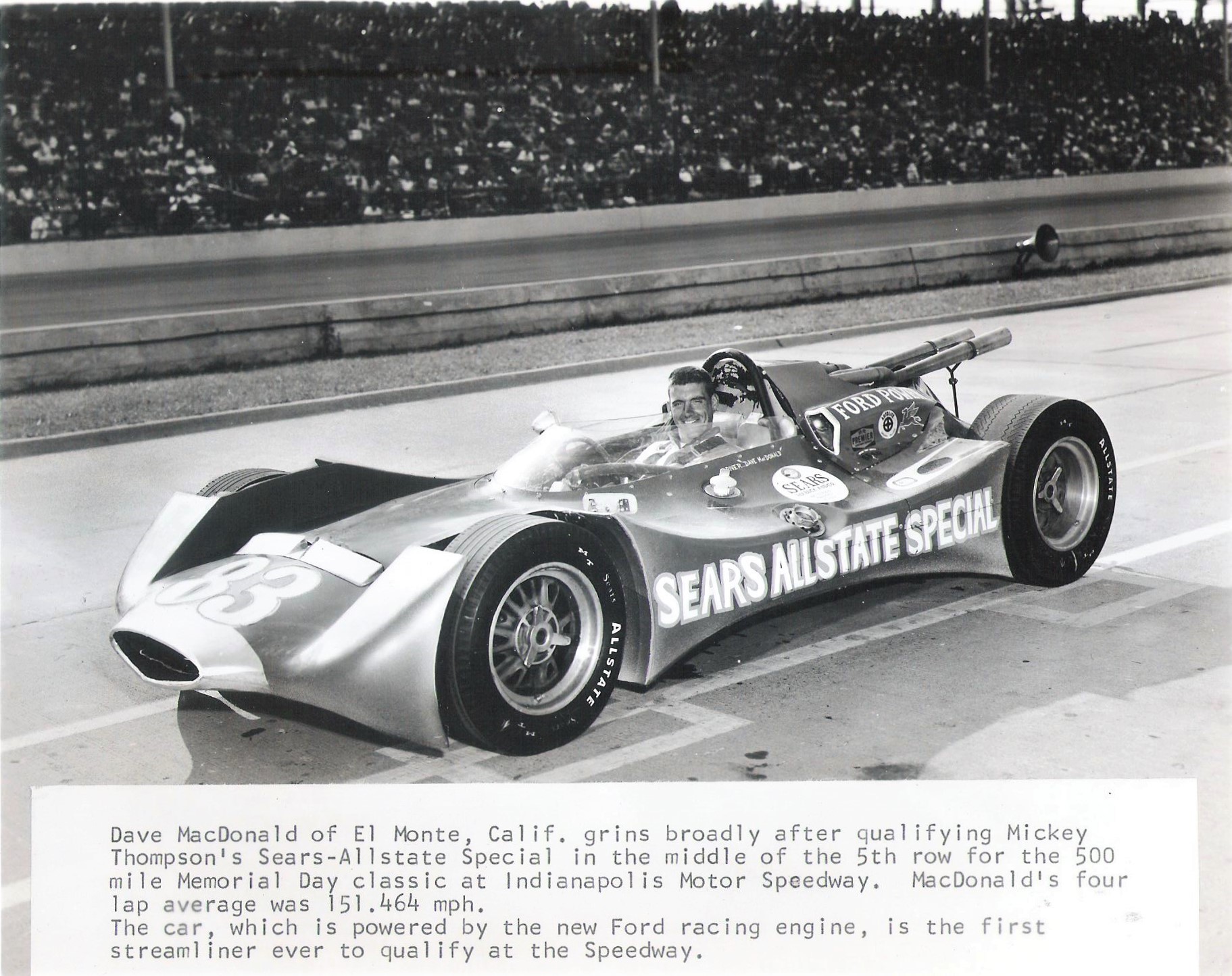
Changes indeed! Mickey assembles the press on April 21 to show off his newly redesigned Ford Sears Allstate Special. He'd completely
redesigned the body to include a new full fendered aerodynamic shell designed to counteract lifting and floating caused by the larger 15"
tires. Remarkably Mickey and his team accomplised this in a mere 30 days! [Bruce R Craig]
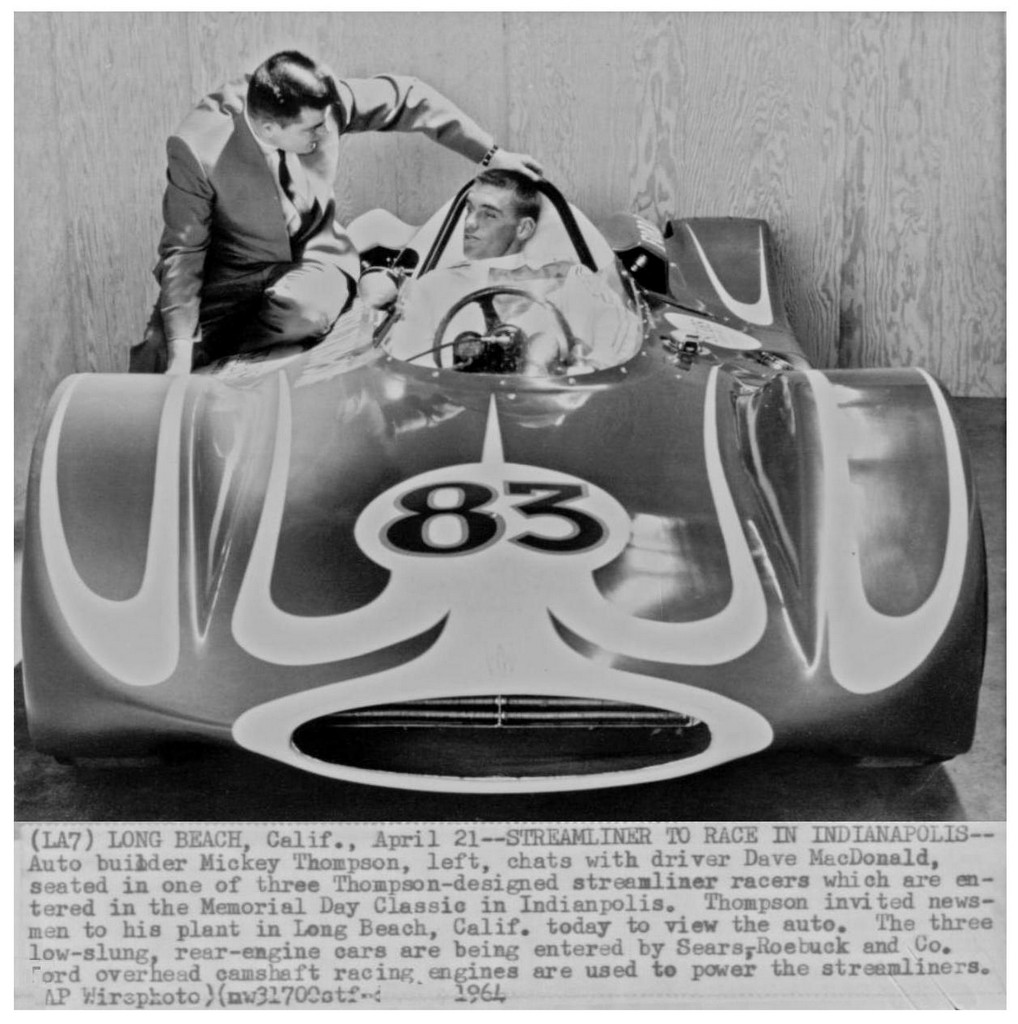
Dave MacDonald and Mickey Thompson. Photo Dave Friedman
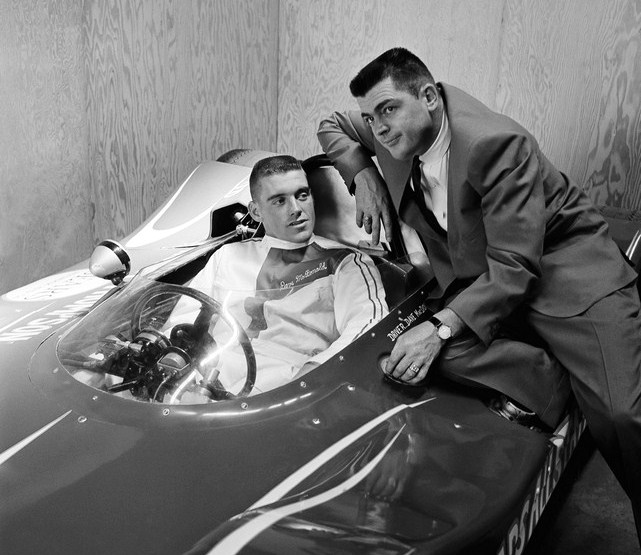
Driver Dave MacDonald (C) and car owner Mickey Thompson (R) with the newly designed Thompson #83 car.
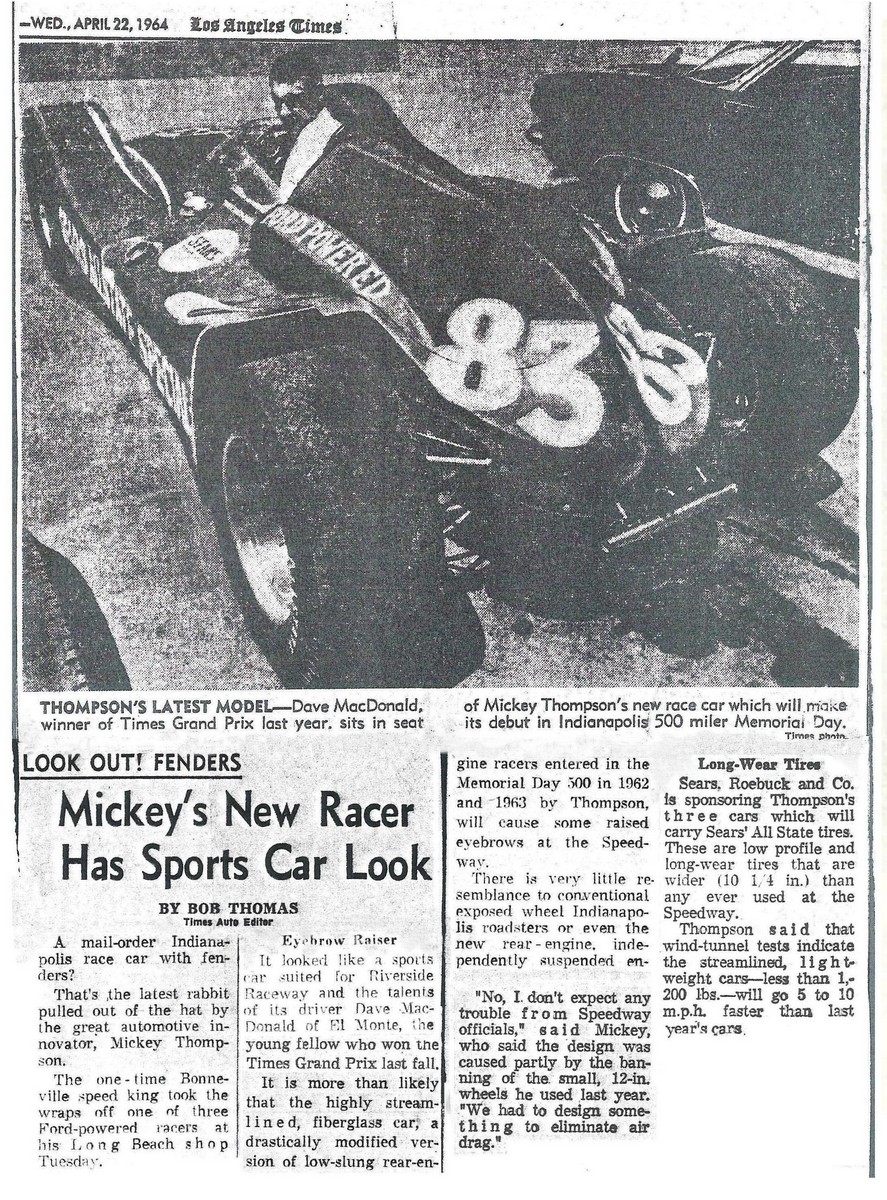
On April 22, 1964 the LA Times gives readers a first glimpse at Mickey Thompson's new full fendered aero design Indy car.
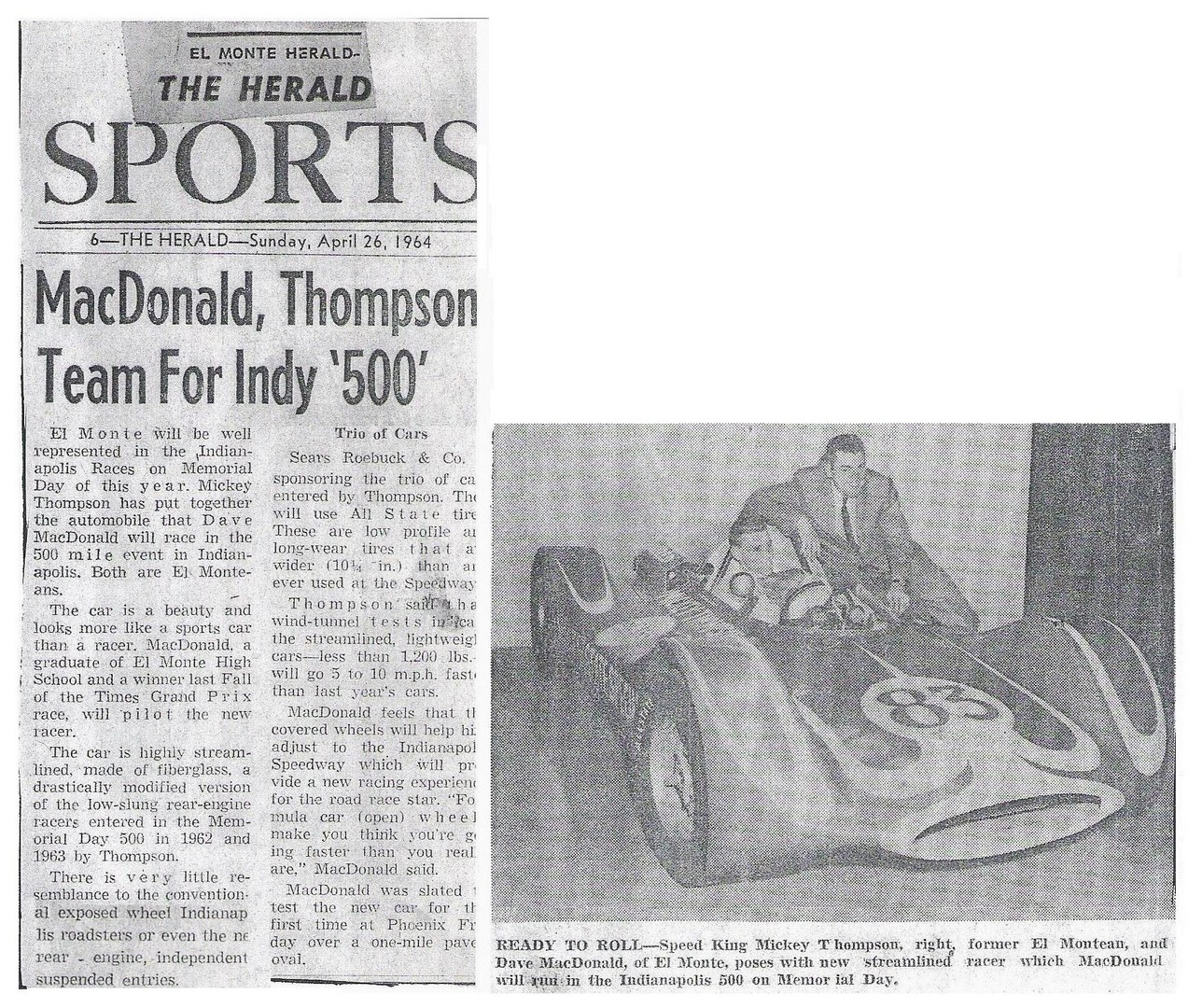
Four days later the El Monte Herald runs a photo and the southland is buzzing about Thompson's futuristic Indy car
May 1, 1964. The Brickyard officially opens for practice.

All eyes on Mickey Thompson's exotic full-fendered superskate as the team begins practice at the brickyard. Bright and early on May 1, the
Thompson #83 car (MacDonald's car) and Chuck Rodee's #87 are pushed out for some track time. In addition to the aero skins, there were
many other modifications made to the cars since the March tests, including major chassis & suspension adjustments all in an effort to
resolve instability issues. Mickey's rear wing attachments were still ruled out by USAC officials. Photo courtesy IMS.
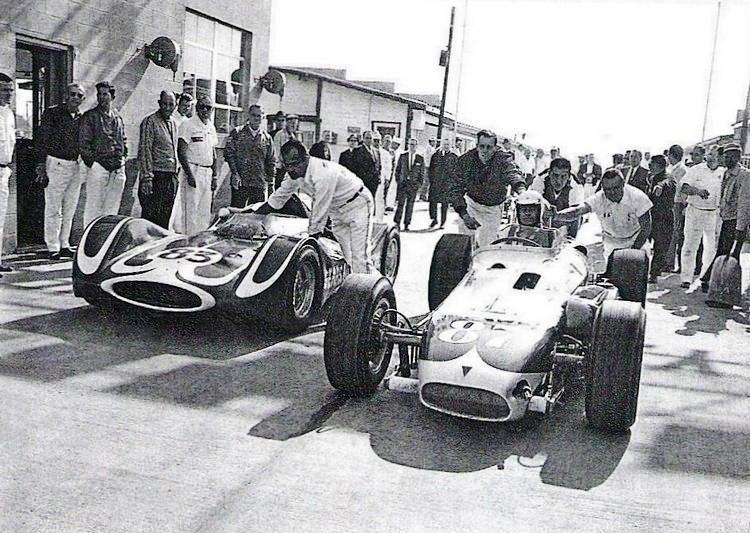
Mickey Thompson's new design was a dramatic departure from the traditional open wheel Indy racer. Thompson was a brilliant innovator
and his aero kits were far ahead of their time but still unproven on these cars, and at the Brickyard. To date only wind tunnel testing had
been performed but now the team would find out whether or not the aero skins would counteract the lifting and floating caused by the 15"
tires. Dave MacDonald's #83 racer pushed to the pit area and readied for initial testing. [The Henry Ford]

Dave MacDonald is pushed out in the #83 for its initial run. On return Dave would tell Mickey anything above 145 mph and the front end
lifts. Photo courtesy of Indianapolis Motor Speedway.
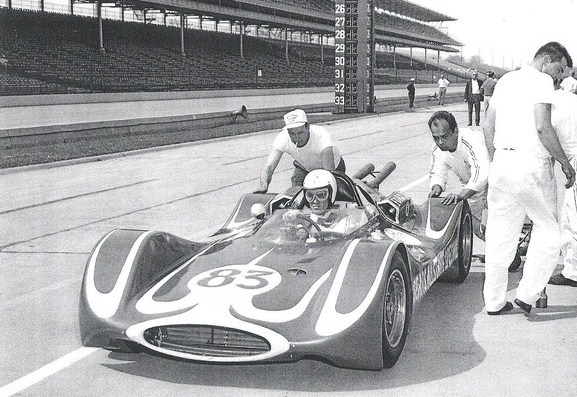
Out next was Masten Gregory in Duane Carter's #82 car. [First Turn Productions]
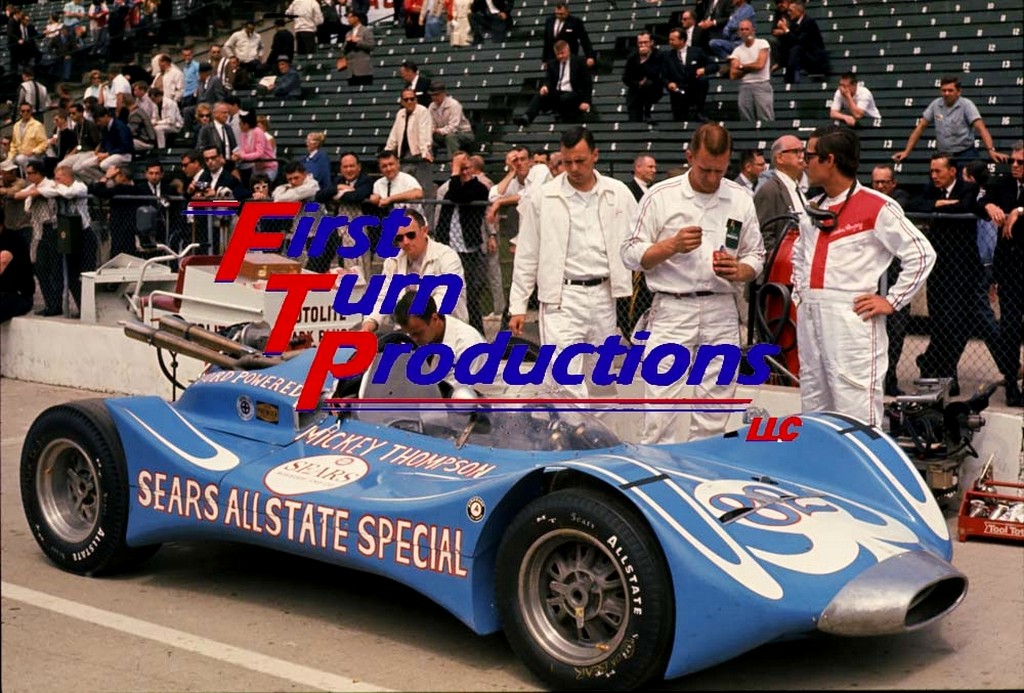
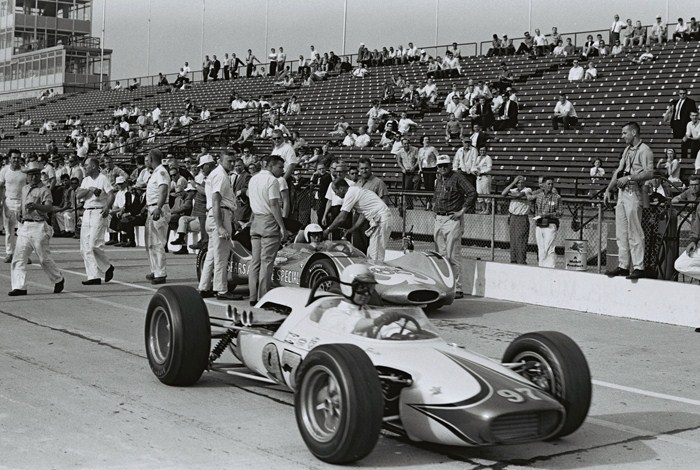
Gregory returns from his practice run in the 82 and tells Mickey the car is not only not sticking in the corners but lifting in the straights too,
to the point where the steering was so light he didn't have control of the car. Mickey braced for a long month. #97 is Parnelli Jones in
JC Agajanian's rear engined car. On Dec 10 Jones made the decision to stick with the front engined #98. Photo The Henry Ford.
Throughout the day on May 1 the Thompson team made adjustments to the cars of Masten Gregory and Dave MacDonald and here the
team changes the setup on MacDonald's #83 car before sending him out again. The cars were far from where they hoped they'd be at
this point and the entire team realized it was going to be a trying month. Not many happy faces in this Dave Friedman photo.
.jpg)
Crowd favorite Eddie Sachs takes his American Red Ball Express Ford out for practice laps on May 2nd. Dave MacDonald in the Thompson
83 in the background will run practice laps too in preparation the first stage of his rookie tests later in the day.
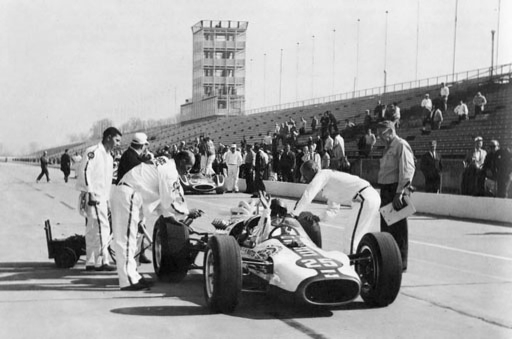
Late in the afternoon on May 2nd it was time for Dave MacDonald to perform his rookie test. The cars remained a work in progress and
fortunately the rookie test was not at full speed. The test required drivers to run 10 consecutive laps around the track at a moderate, con-
sistent speed. A driver’s speed isn’t supposed to vary by more than half a mile an hour and is increased in increments of 5 mph: 120 mph,
125 mph, 130 mph and 135 mph. Many drivers have been sent home for more seasoning after failing to impress officials during their test.
Photo courtesy of Indianapolis Motor Speedway.
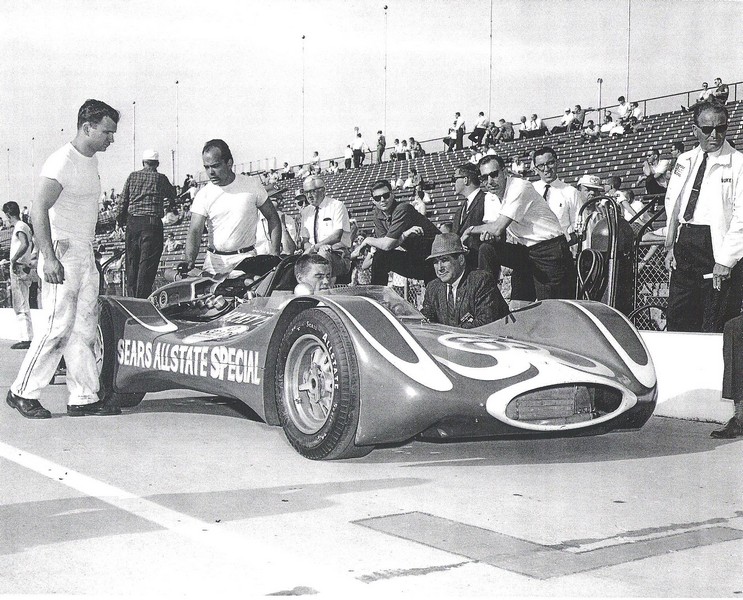
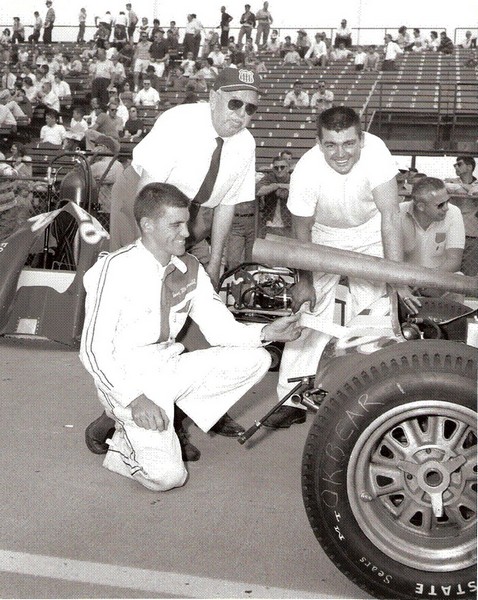
After successfully completing his two day rookie testing Dave MacDonald removes his rookie stripe as Mickey Thompson and track safety
director Paul Johnson look on. Johnson and veteran USAC Director Jim Thompson were overseeing the testing process and both said they
were impressed with Dave. “He laid ’em in there very consistently,” said Thompson, “He’s a very good looking boy.” Photo IMS.
[Dave Friedman/THF].
.jpg)
Jimmy Clark (L) and Dan Gurney congratulate Dave MacDonald on being the first rookie eligible for the '64 Indy 500. Photo courtesy
of Indianapolis Motor Speedway.
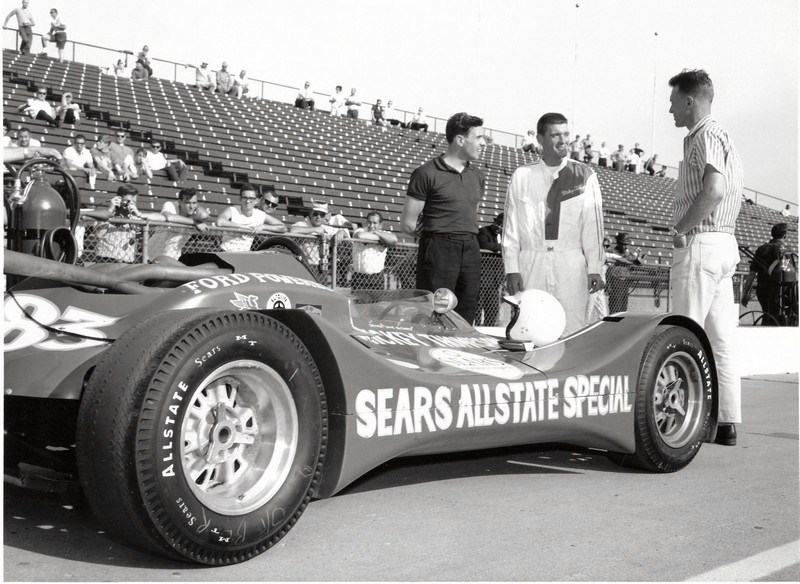
Photo courtesy of Indianapolis Motor Speedway.
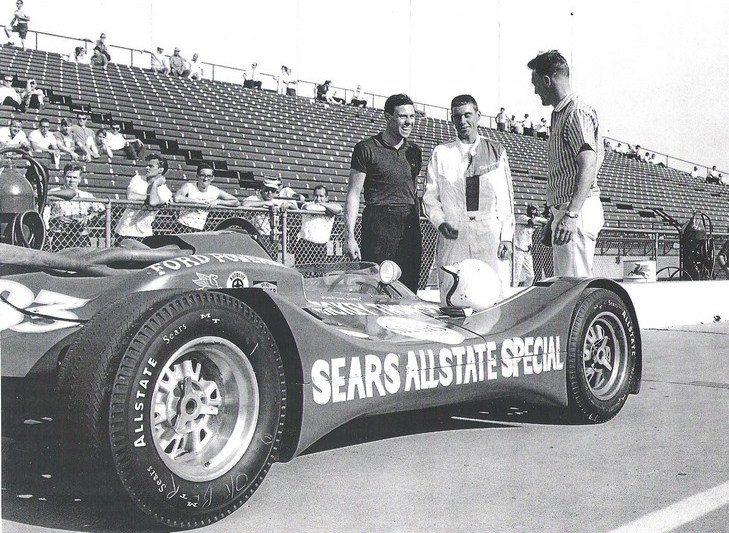
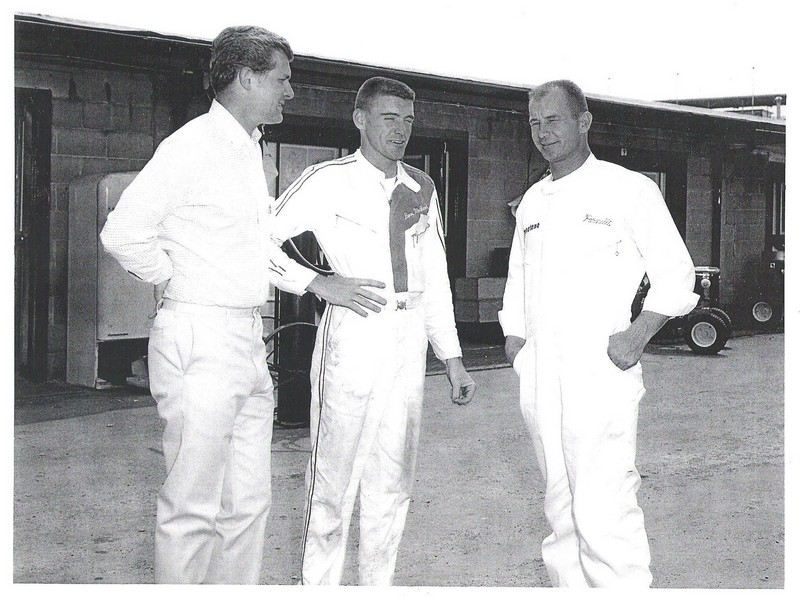
Dave MacDonald chats with friend and reigning Indy 500 Champion Parnelli Jones (R) outside the Thompson garage. Photo IMS.
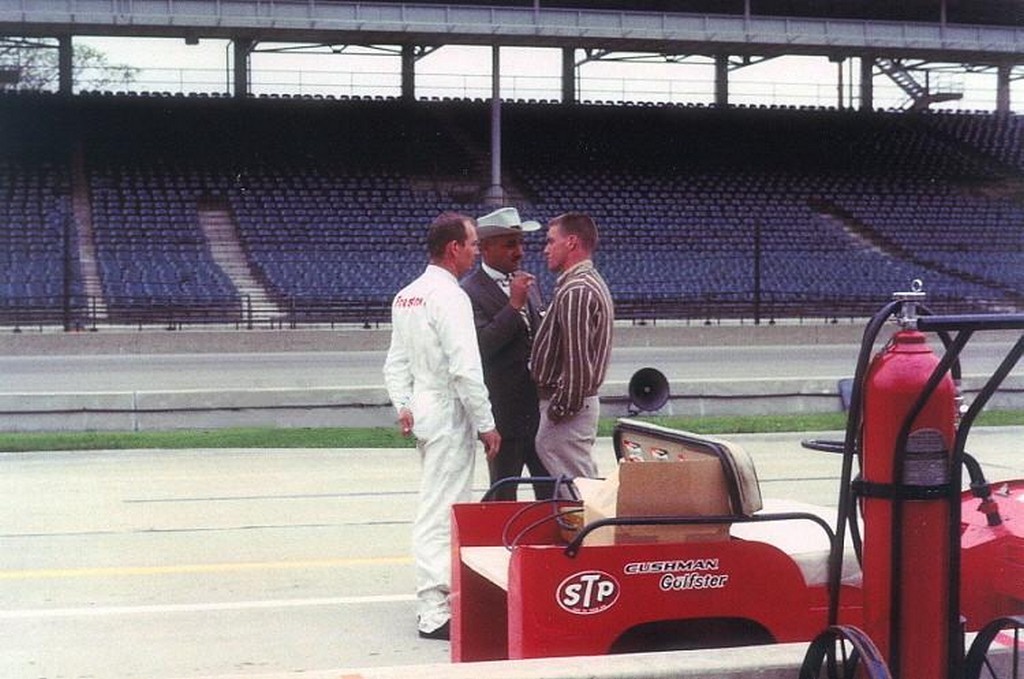
Mickey Thompson in a Brickyard conversation with Honda founder Soichiro Honda (hat) and an interpreter. The motorcycle company had
just begun making cars in 1963 and contemplated a move into Indy car racing. Mr Honda was at Indy in 1964 gathering information.

Rookie test aside, the crew knew that running at 130 mph is far different from side by side racing at 180 so they continued to look for a
setup that would provide speed as well as control. The Thompson crew would work on MacDonald's car while he flew back to California
to run a race for Carroll Shelby. Dave Friedman photo from the The Henry Ford Collection
.jpg)
Dave was becoming a Ford "Works" driver and having signed a 20-race NASCAR contract with factory member Bill Stroppe was scheduled
to run the Stroppe #17 Merc in the Yankee 400 at IRP on May 3rd. However having already skipped the Pensacola USRRC race in favor
of the Atlanta 500 NASCAR race Dave lost his lead in the USRRC Drivers standings to Pensacola winner Jim Hall. Carroll Shelby pulled
rank to get Dave rerouted to Laguna Seca and run the King Cobra against Hall. Rodger Ward filled in for Dave and ran the Stroppe 17 to
a 7th place finish … with Dave’s yellow rookie bumper and all!
.jpg)
Dave at the track with JC Agajanian & Parnelli Jones on May 2 prior to leaving for the US Road Racing Championships at Laguna Seca.
By now everyone in Dave's universe, friends, fellow racer had urged him to back out of the ride, the car was not safe. Dave was staying
loyal to Mickey but also concerned that if he pulled out Mickey would cancel his contract and he'd never be offered another. Agajanian
told Dave not to worry, he'd give him a ride in the 1965 500. (Carroll Shelby also offered to build a Lotus for the '65 race and crew it
with Shelby guys so Dave did have options should he back out. But he was a loyal man
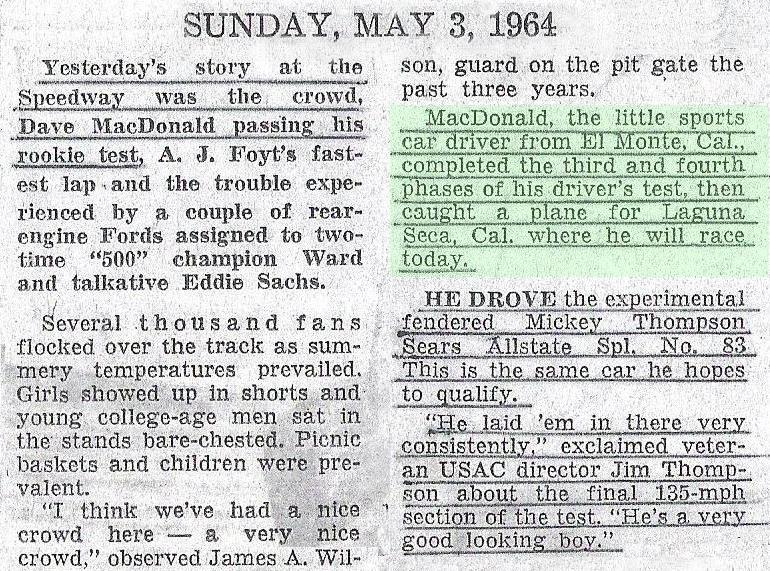
So on May 2nd Dave left Indy for California to run King Cobra against Jim Hall's Chaparrals. Courtesy Indianapolis Times 5/3/64
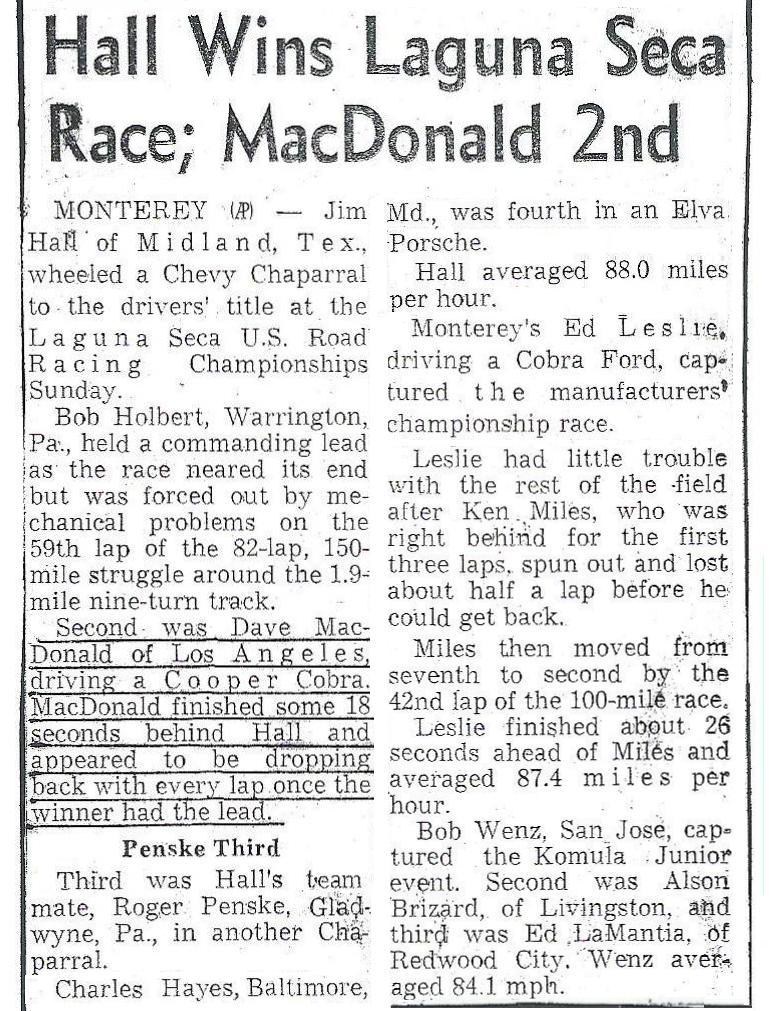
Dave ran a strong race at Laguna Seca but came up a bit short, finishing 2nd sandwiched between the Chaparrals of Jim Hall & Roger Penske.
Hall would extend his lead over MacDonald in the 1964 United States Road Racing Championship for Drivers
Dave flew back to the Brickyard immediately after the Laguna Seca race and resumed testing the Thompson #83 car on May 4th.
Masten Gregory had his #84 car out as well. Friends Dan Gurney and Jim Clark sitting on the wall by Dave's car. Photo Dave Friedman
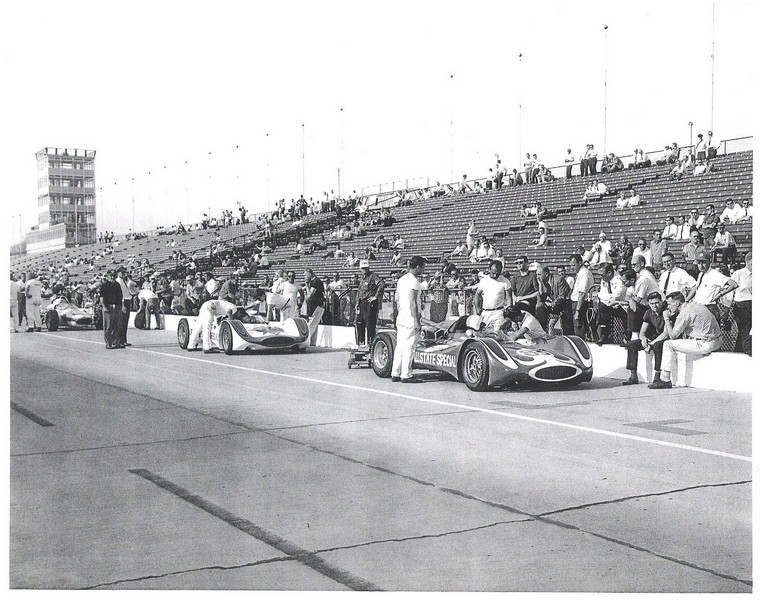
An unhappy Masten Gregory brings the #84 car back in and is becoming increasingly vocal about the car's handling woes. (Dave Friedman)
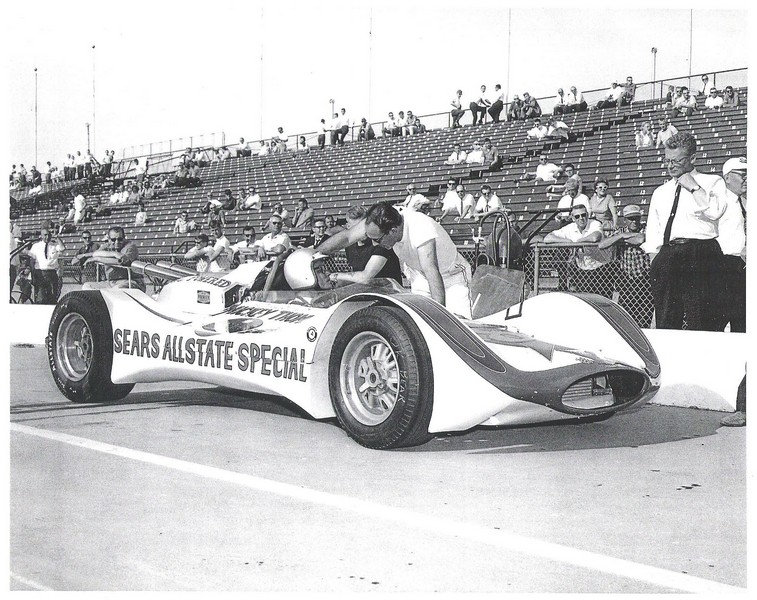
Another late afternoon run for Dave MacDonald in the 83. Colin Chapman (far left) over for a look see. [Bruce R Craig]
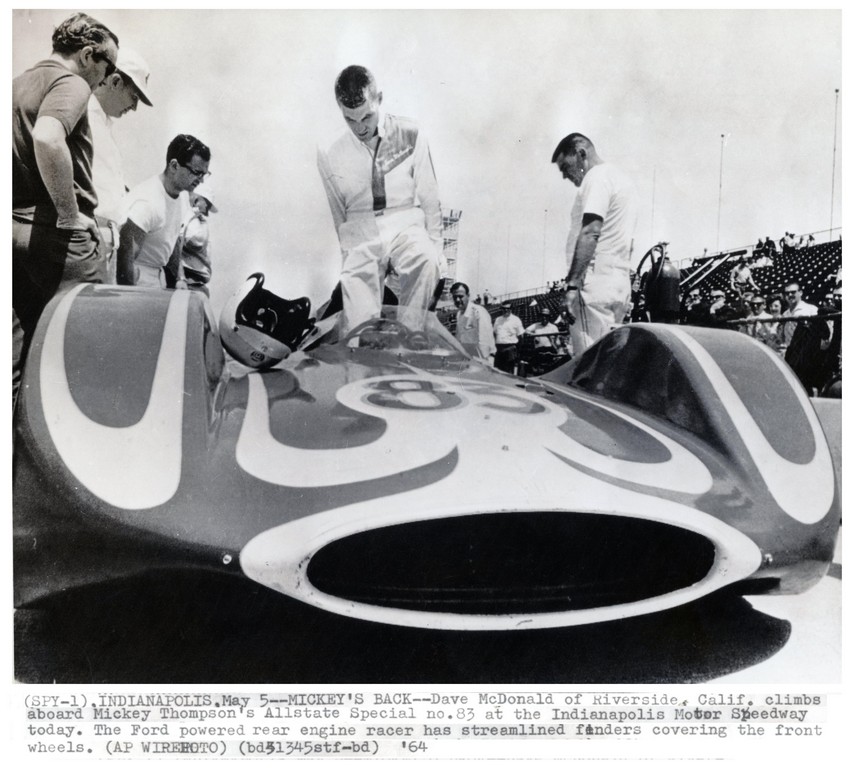
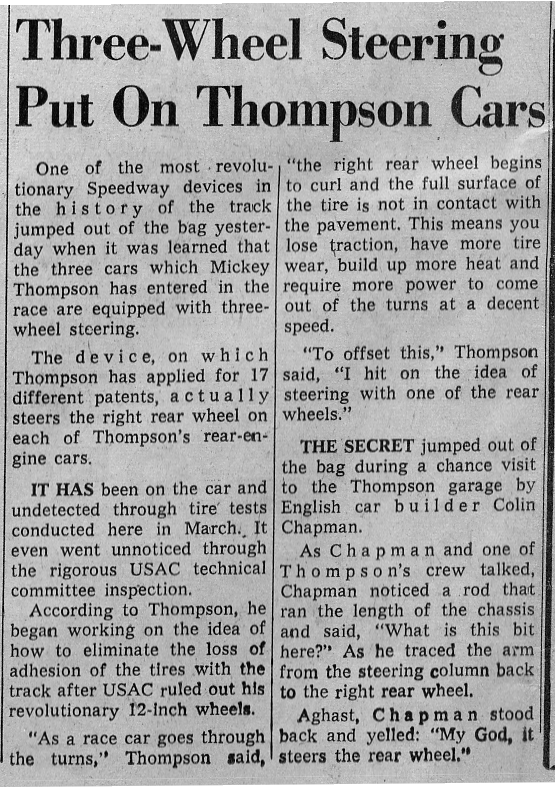
Adding further controversy to Mickey's cars was Colin Chapman's discovery of a radical third-wheel steering arm connected to the right
rear wheel of Mickey's racers. This went completely unnoticed by track officials during car inspections. When this news hit the wires any-
one who wasn't already talking about the Thompson superskates, was now. Mickey was a brilliant innovator, and while many of his con-
cepts were revolutionary they didn't always receive proper development time. This was more of an experimental solution Mickey concocted
to help resolve the handing issues. By all accounts it was disconnected by race time.
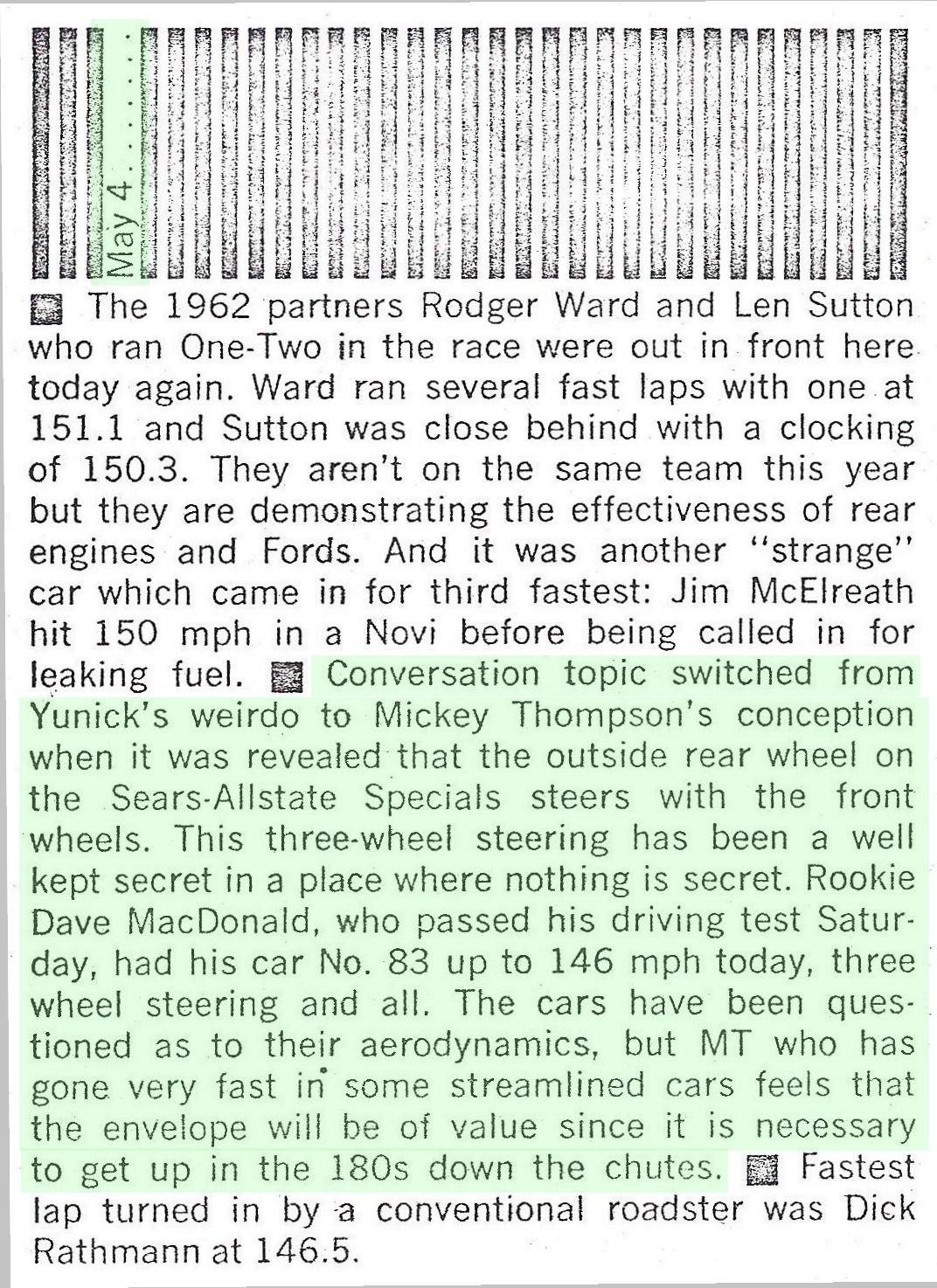
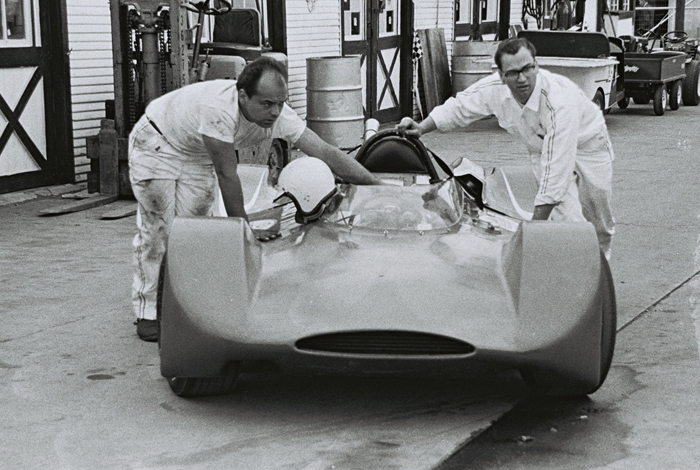
Still searching for a reliable setup Mickey brought in several different nose cone configurations from his Long Beach California speed shop
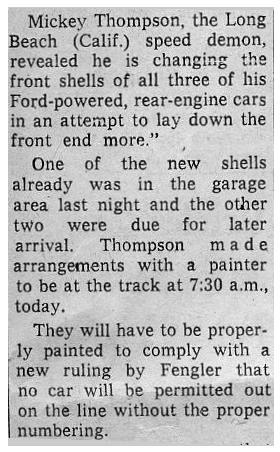
Dave MacDonald's #83 car gets fitted with a new front aero shell and is pushed from the garage to the painter to be numbered. A new rule
required all cars to be properly numbered before being put on the track. Mickey continued to believe USAC was trying to make his life
more difficult and says the impromptu ruling was aimed directly at him. Dave Friedman photo from the The Henry Ford Collection
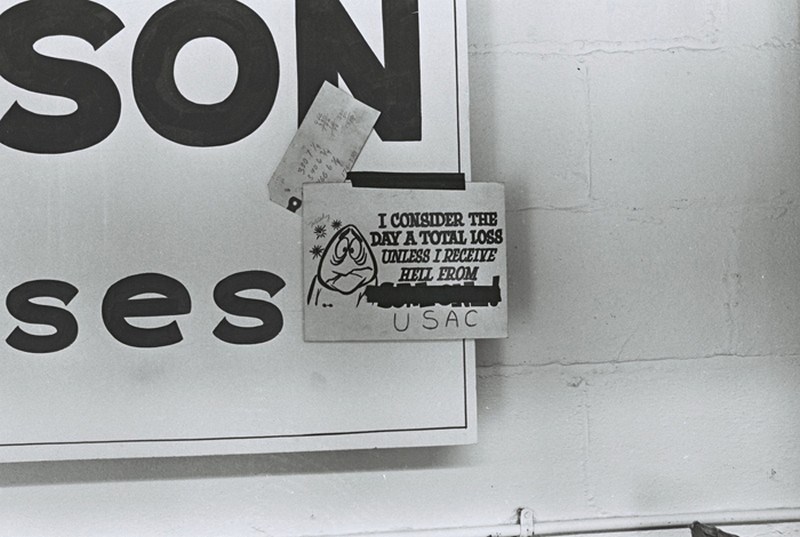
Sign Mickey Thompson hung in his Indy garage. Mickey was already unhappy with USAC for banning his tiny 12" tires, and later for
disallowing the use of his rear wing and aero side skirts. He felt the Indy establishment was wholly against him and he was not shy about
expressing his feelings, often openly blasting USAC officials for costing him $250K in development costs. Photo The Henry Ford
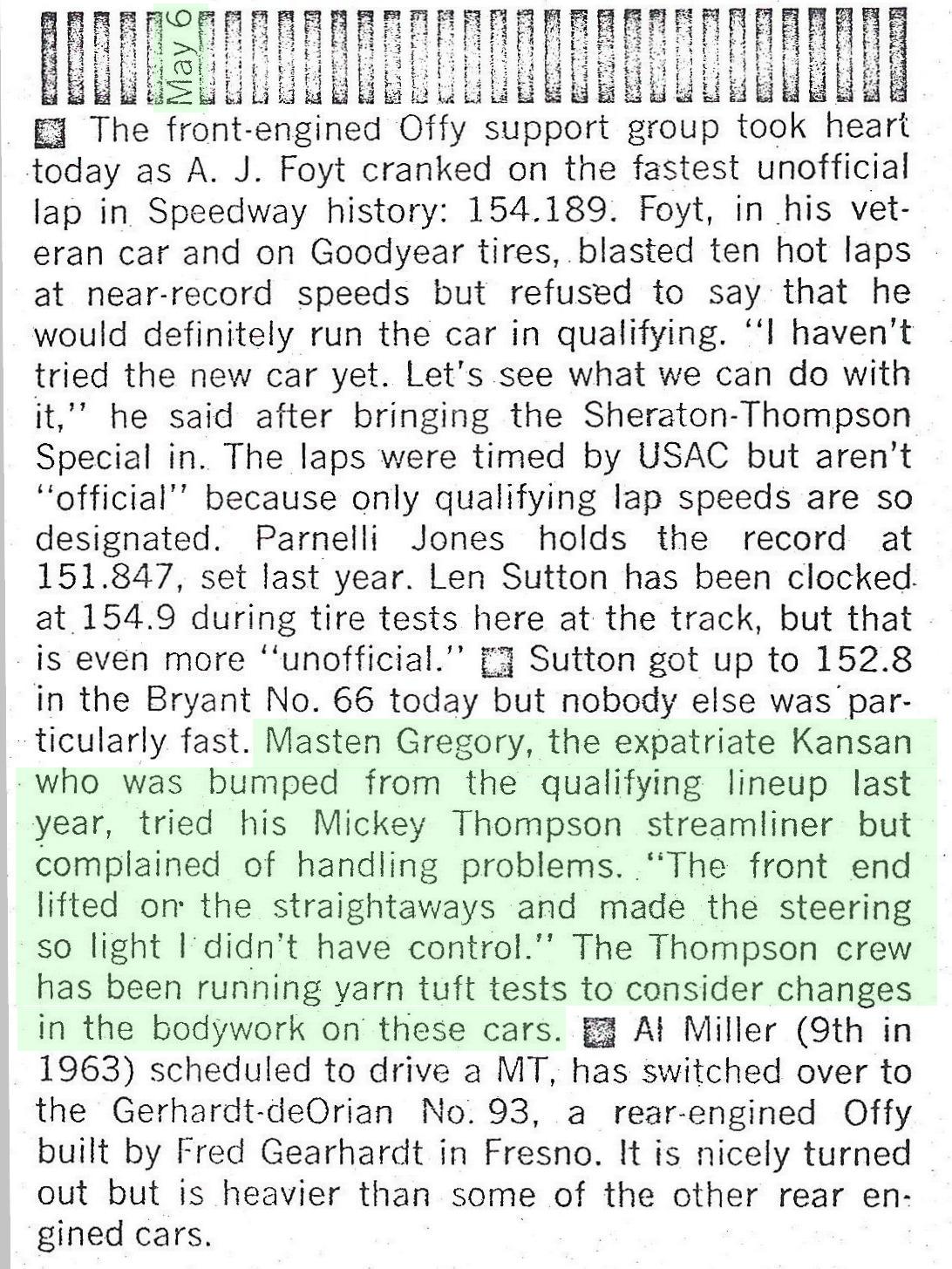
May 6 blurb from Motor Trend writer George Moore's "Indy Diary" talks about the Thompson crew out running yarn tuft tests with
MacDonald's #83 car. The crew stationed cameras at several points throughout the track to monitor and film the movement of the tufts.
Mickey cut air vents into the tops of the front shells and was experimenting with various configurations in an effort to improve handling.
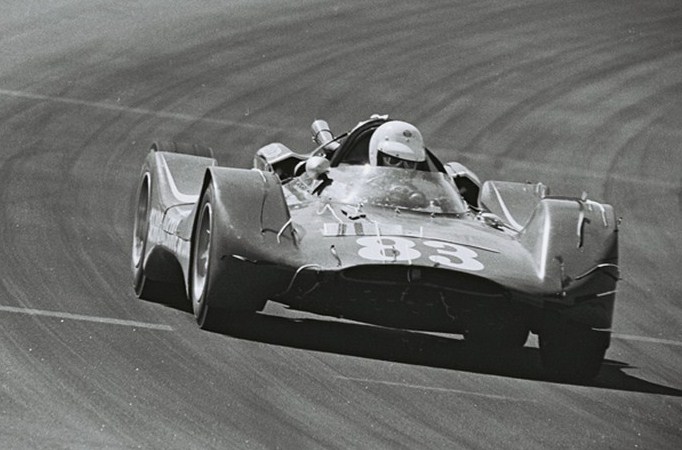
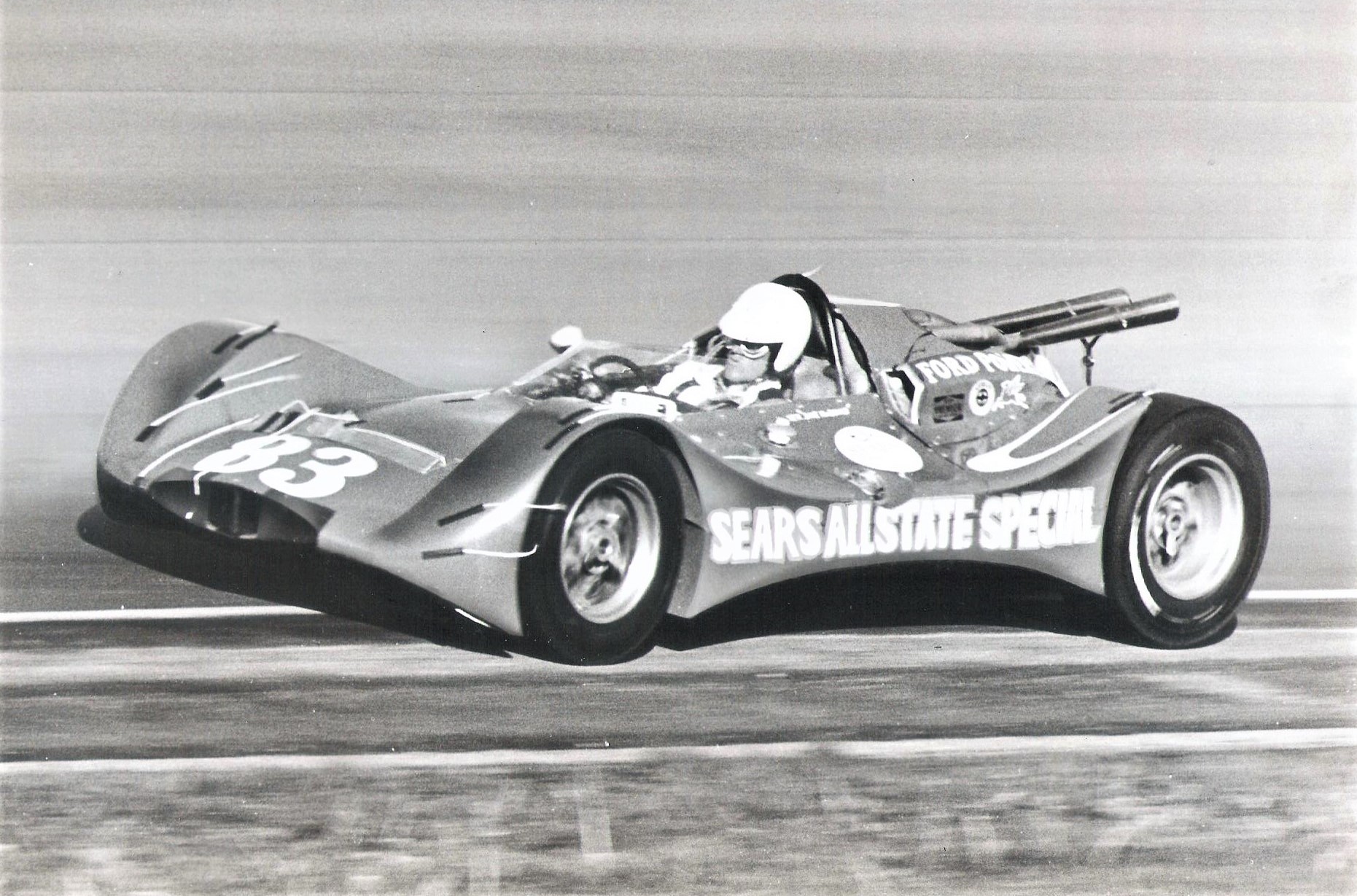
May 5 photo of Dave MacDonald in the 83 running air tuft tests with a new aero front shell; a freshly painted #83 to satisfy new Indy
regulations requiring all cars practice with race numbers. Dave Friedman photo from the The Henry Ford Collection
Masten Gregory (Goggles) continues to complain about poor handling on the 84 & 82 cars, but now he’s becoming more vocal and telling
the press he's not happy with his ride. He also confides in good friend Jack Brabham that his Thompson car "Is the most lethal, evil
handling car I've ever driven". (Mickey Thompson far left and Dave MacDonald on pit wall to the right). [Dave Friedman/THF]
.jpg)
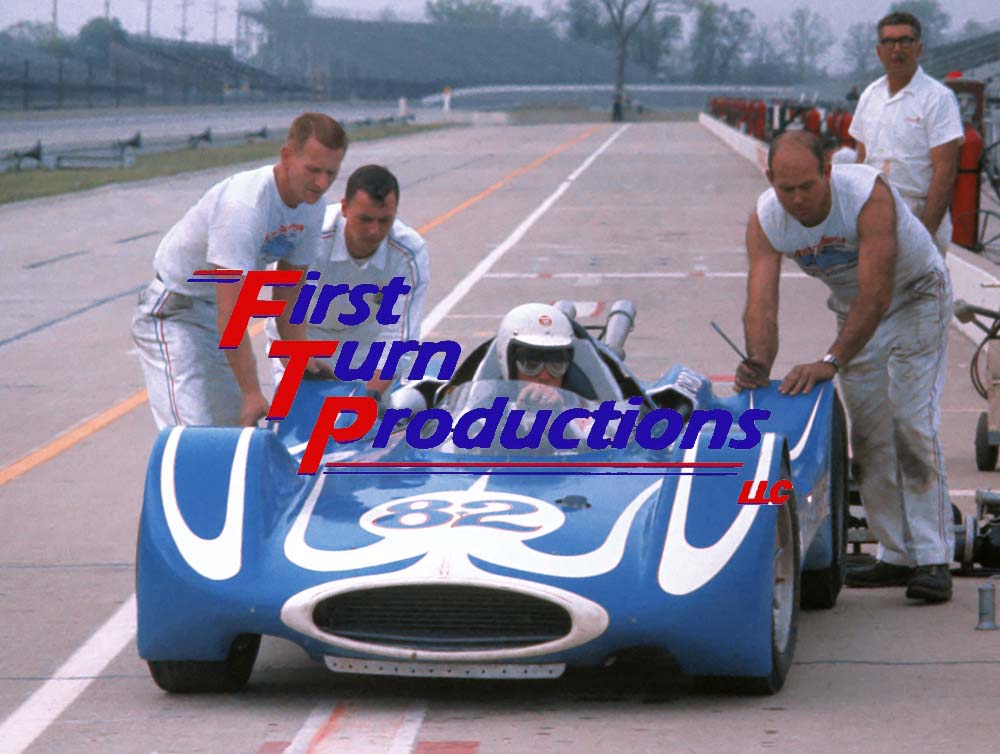
Thompson has the crew fit a new freshly painted front shell to Carter's 82 car and prepare it for Dave MacDonald. Mickey wanted Dave's
input on how the 82 was handling. Photo First Turn Productions
Sherry's notes told to her by Dave on May 6
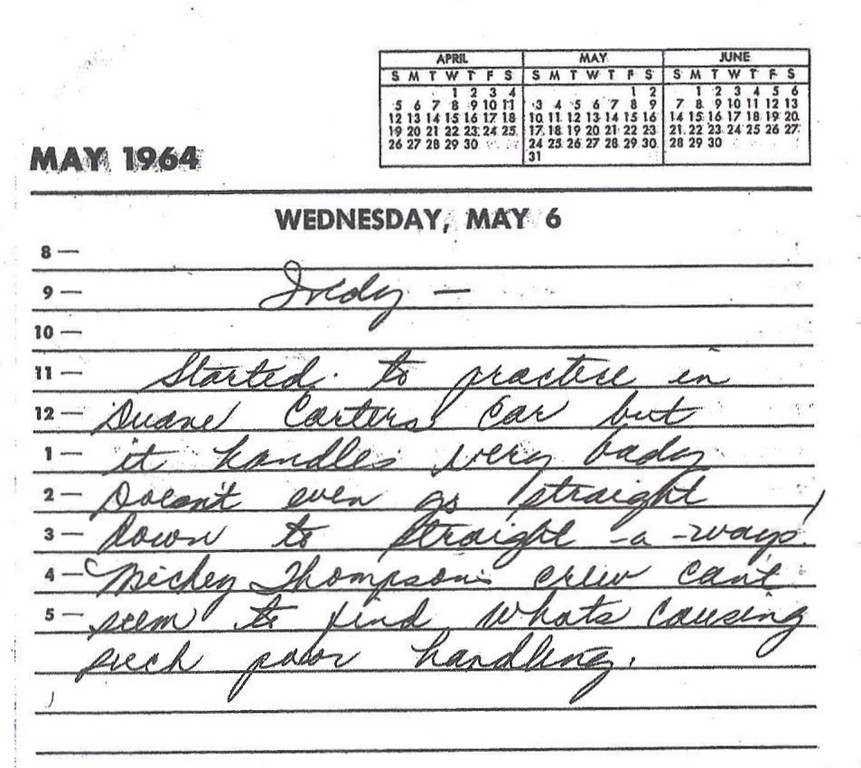
Through at least May 7, Mickey had Dave do additional testing with the 82 car trying to sort the handling issues. They could only run a top
speed of 120 mph though as anything beyond that and the car was gone.
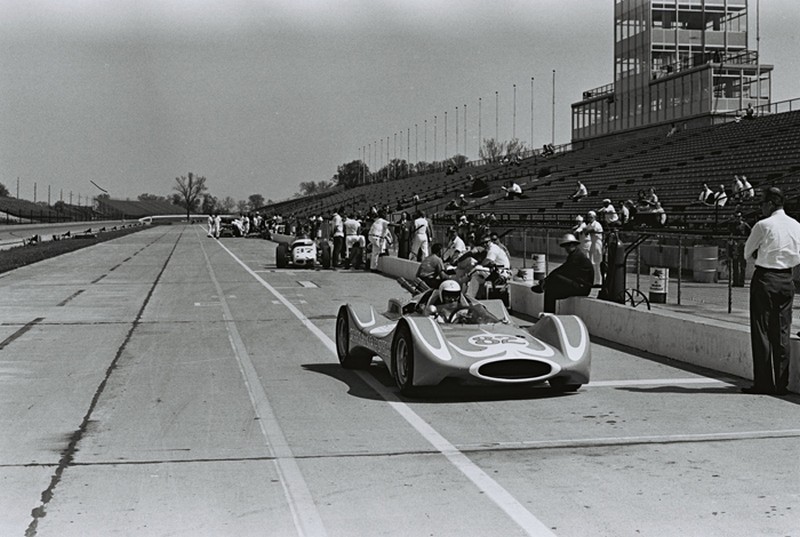
After hitting just 120MPH in the 82 car Dave MacDonald brings it back in and explains the problems to Mickey. (The Henry Ford)
.jpg)
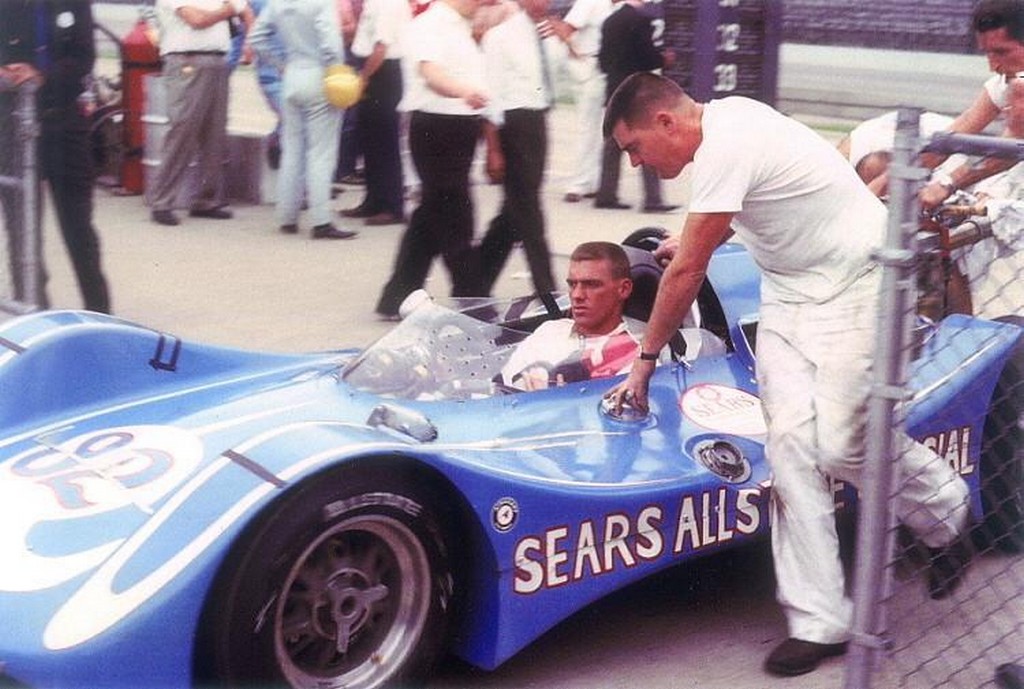
Mickey and the team push the 82 straight to the garage where Thompson chief mechanic Peter Bryant and the team would continue
brainstorming for a solution. Dave looking somewhat unsettled in this photo.
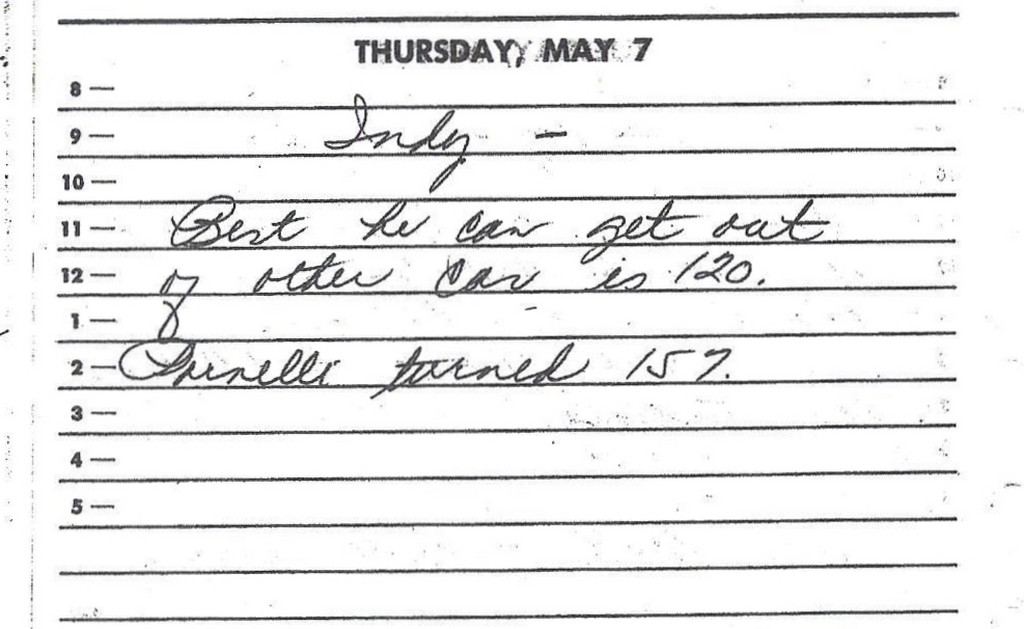
Sherry's notes told to her by Dave on May 7 (Parnelli hit 156.223 in "Calhoun", Agajanian's front engined Roadster)
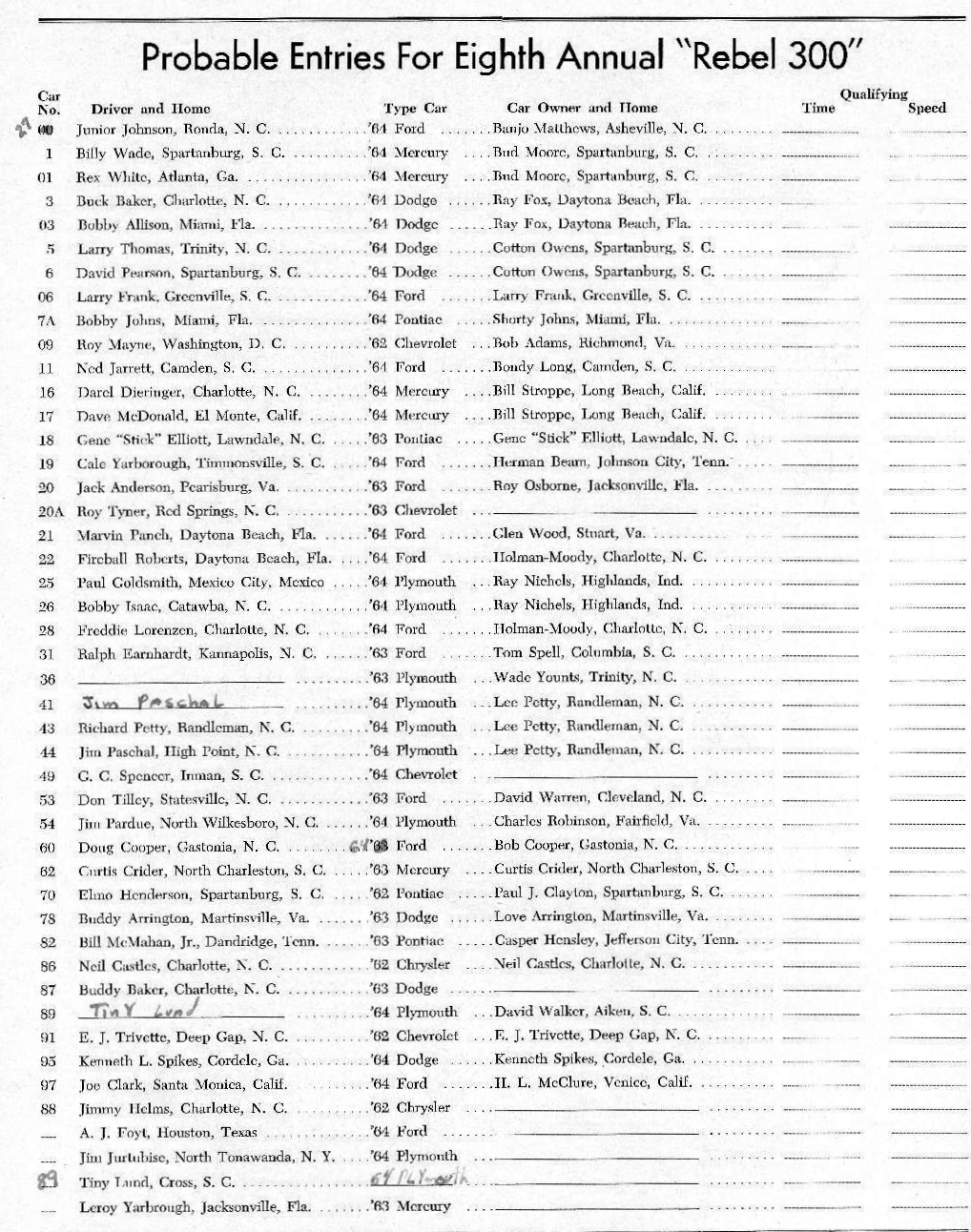
Dave MacDonald’s heavy load running three racing circuits continued as he was scheduled to run the Stroppe #17 Merc in the Rebel 300
on May 9 (below). But same situation as the previous week and Carroll Shelby pulled rank and instead rerouted Dave to the US Road
Racing Championships at Kent Washington in an attempt to recapture the USRRC Drivers Championship lead from Jim Hall
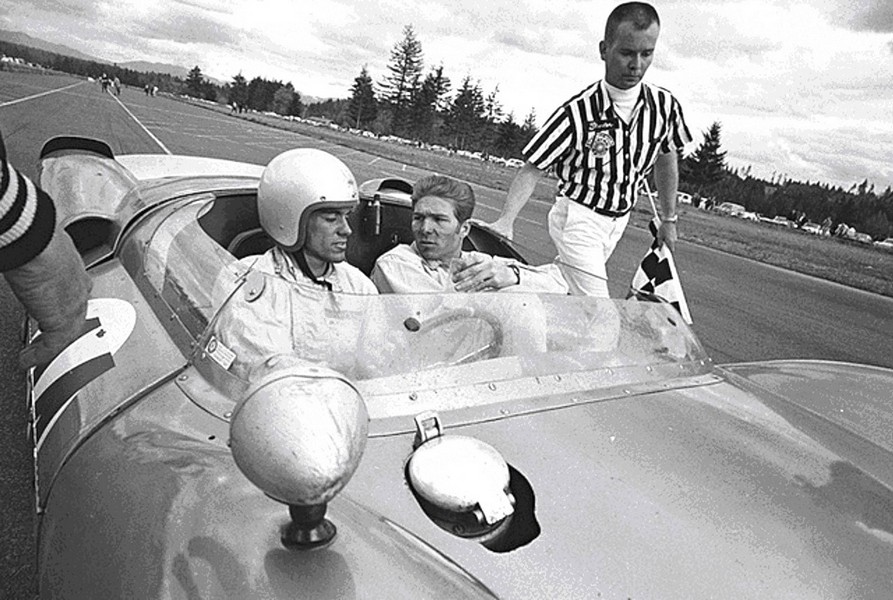
Dave hops a 5:30PM flight to Kent WA to run Carroll Shelby's King Cobra in the May 10 United States Road Racing Championships
.jpg)
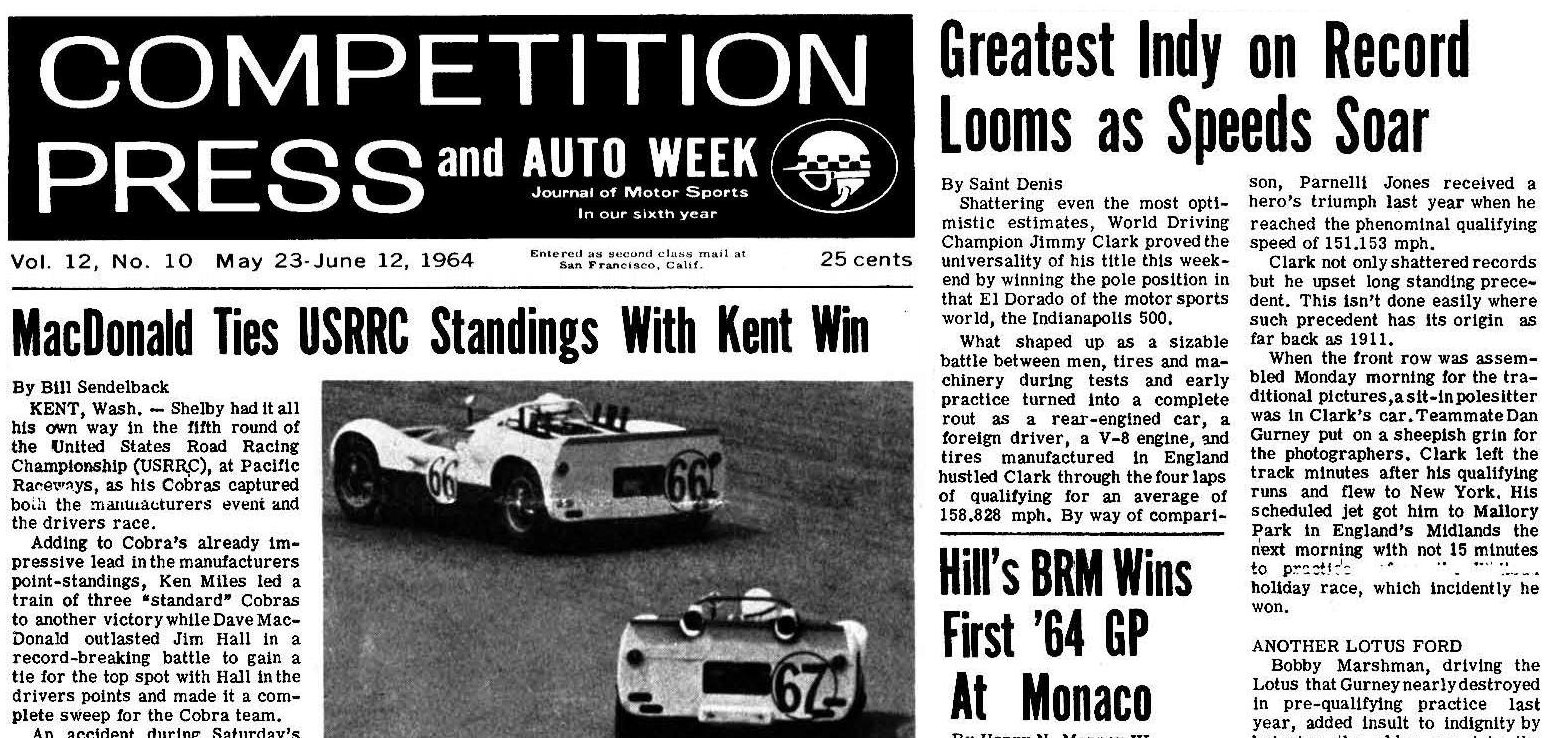
At Kent Dave ran King Cobra CM/3/63 to victory outdueling Jim Hall and his mighty Chaparral - Dave invited Jim to share in the victory
lap. While at Kent, Dave confided to friends that Mickey's Indy car still was not right. Ken Miles, Bob Holbert, chief mechanic Wally Peat,
SAI photog Dave Friedman and Corvette legend Dick Guldstrand all urged him not to go back to Indy. Carroll Shelby told Dave that others
were telling him the car needed more development with too little time. Carroll urged Dave not to run telling him he'd build him a Lotus for
1965, even offering to call Mickey personally to tell him Dave wasn't coming back. (In interviews Carroll has said Dave “Would not hear it,
any of it, he was a loyal man and he felt obliged to Mickey for giving him the ride”). Dave told Carroll the crew was working hard on the
cars and was confident they’d be sorted by race day. After the race Carroll sent Wally Peat to Indy to get a firsthand account of the situation.
[Dave Friedman/The Henry Ford].
Dave MacDonald's victory in USRRC Championships propelled him into a tie with Jim Hall atop the leaderboard in the Drivers standings.
Kent would be Dave's final race before the Indy 500
Business at hand so no time to enjoy the USRRC victory. Four hours after the race Dave is on a flight back to Indianapolis and bright and
early on the 11th he's back on the track running practice laps in the 83 - and with a new nose configuration
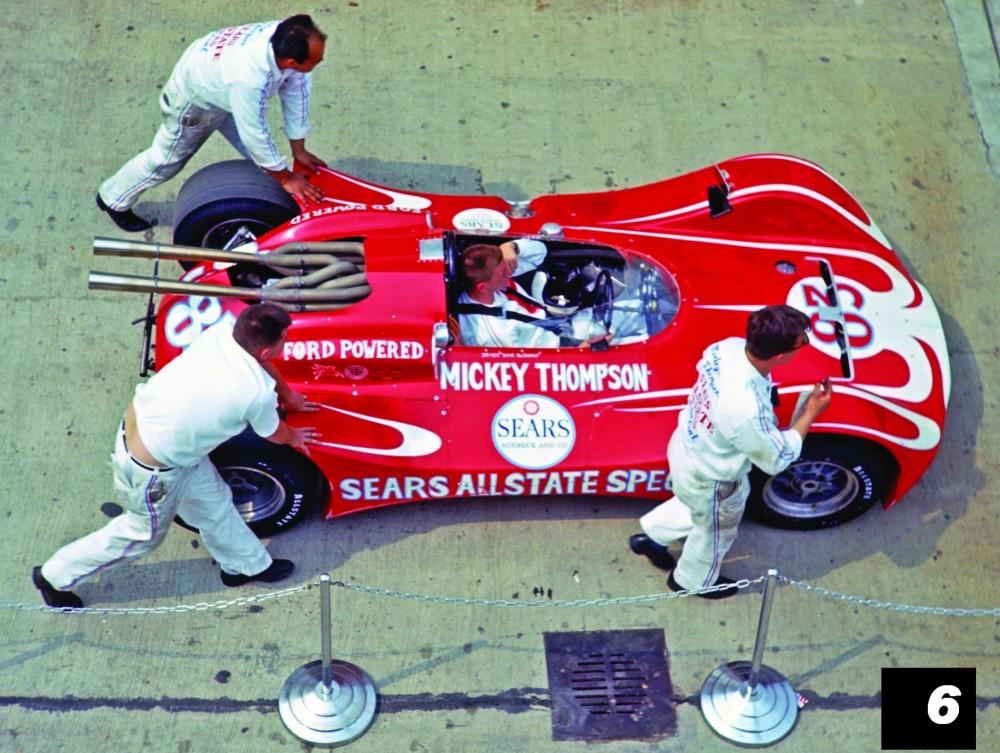
The Thompson garage was always bustling as the crew continuously worked on all three race cars throughout the month of May.
.jpg)
Dave Friedman photo from the The Henry Ford Collection
.jpg)
Photo The Henry Ford
.jpg)
Suspension and frame get a complete makeover, everything was strengthened. Dave Friedman photo from the The Henry Ford Collection
.jpg)
Photo The Henry Ford
.jpg)
Dave Friedman photo from The Henry Ford Collection
.jpg)
Dave Friedman photo from The Henry Ford Collection
While in the midst of another teardown you can see that only the left side of MacDonald's 83 carries a rubber fuel bladder. [The Henry Ford]
.jpg)
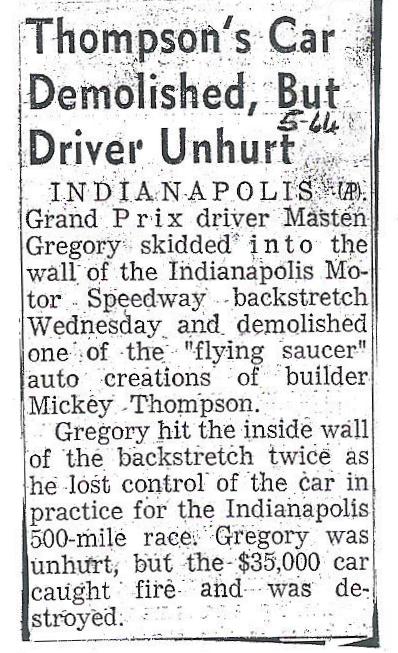
May 13 and Masten Gregory back out for a practice laps in the 84 car. He loses control and slams into the outside wall. Gregory is unhurt
but says he's had enough and leaves the Thompson team. Before storming off he tells Mickey he believes air getting trapped beneath the
enclosed fenders is the major factor in why the cars are so unstable.
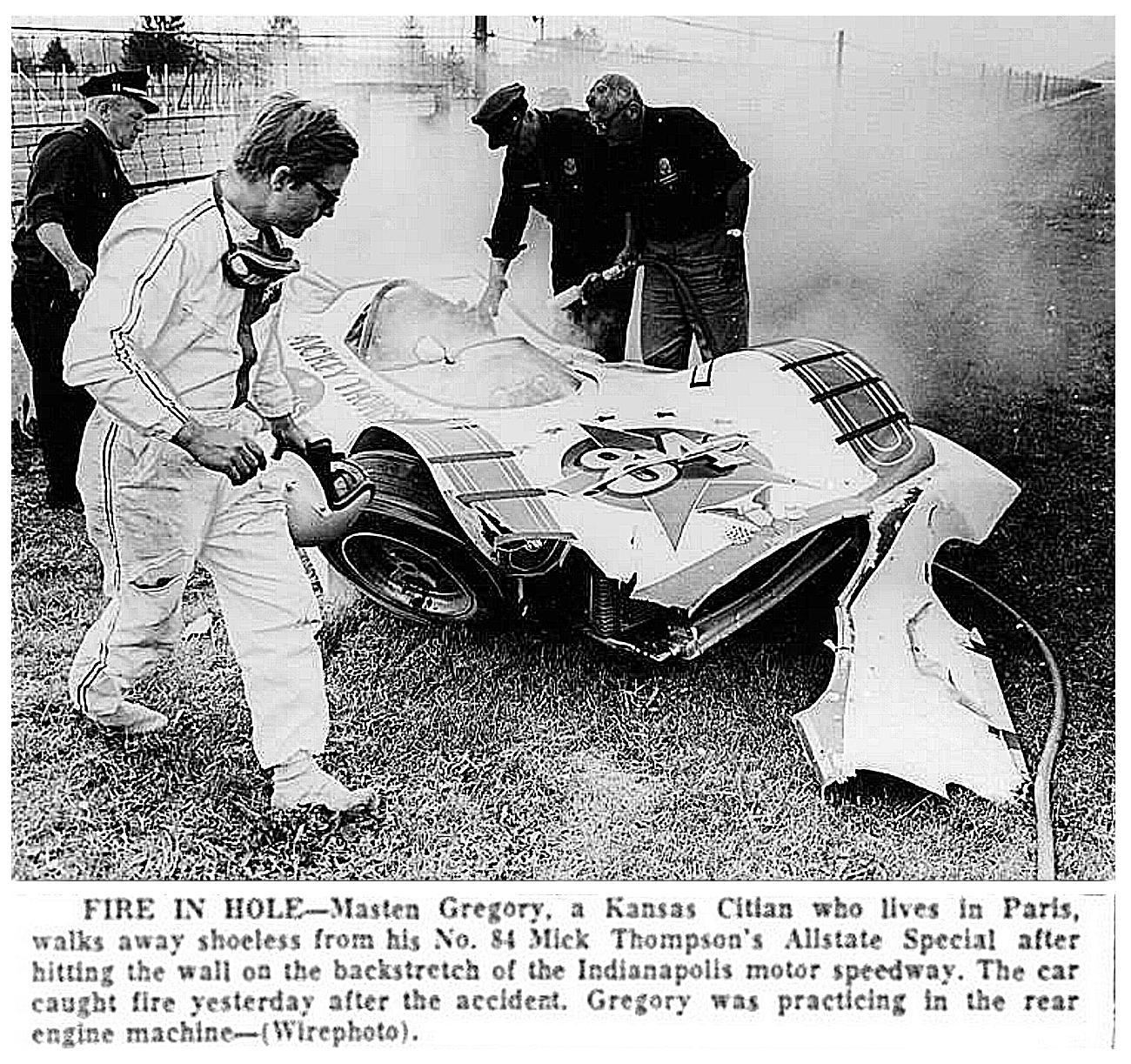
Dave MacDonald relays the day's activities to wife Sherry who notes the crash in her personal calendar.
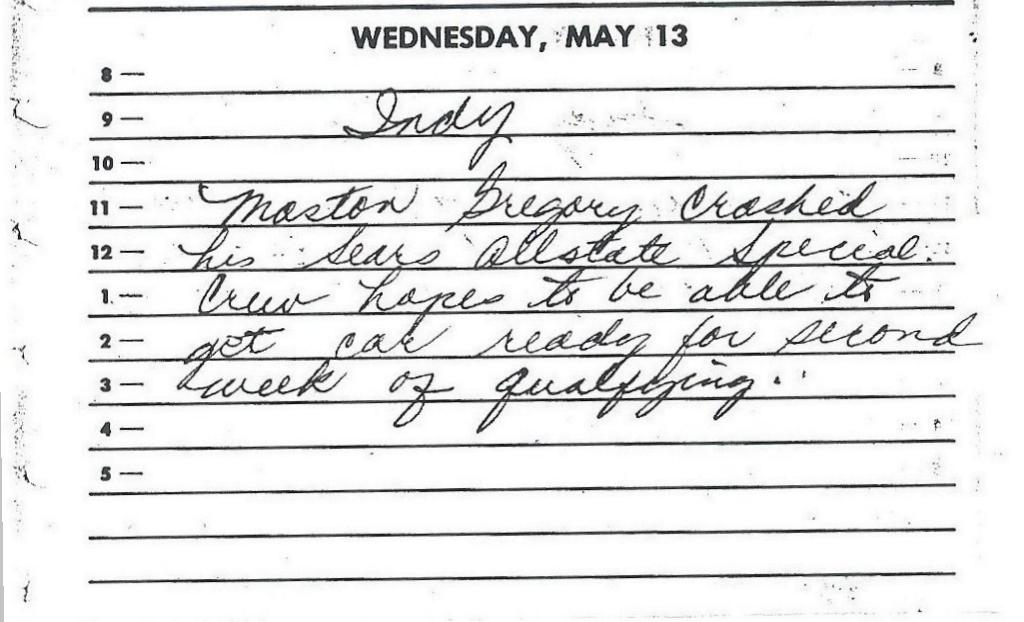
May 14th Indianapolis AP article about Masten's crash
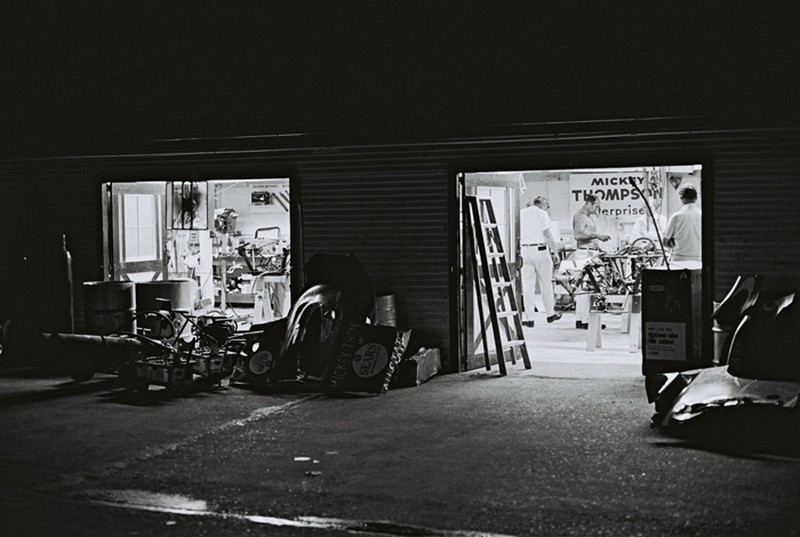
Mickey & crew gather in the garage for a look at Masten Gregory's crashed #84 racer. Photo Dave Friedman
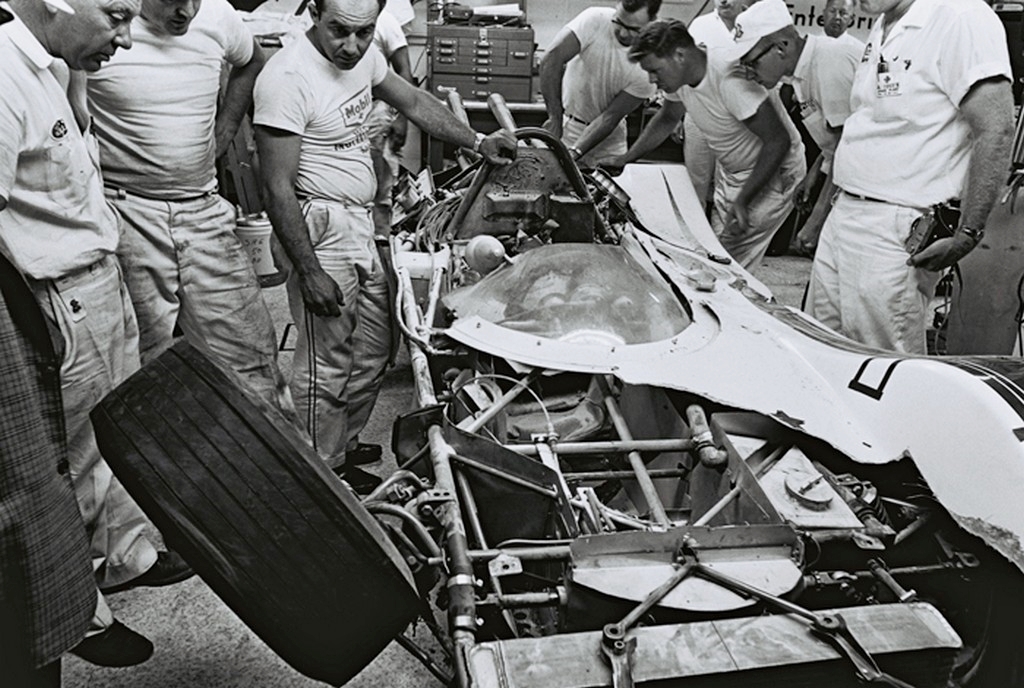
Photo Dave Friedman
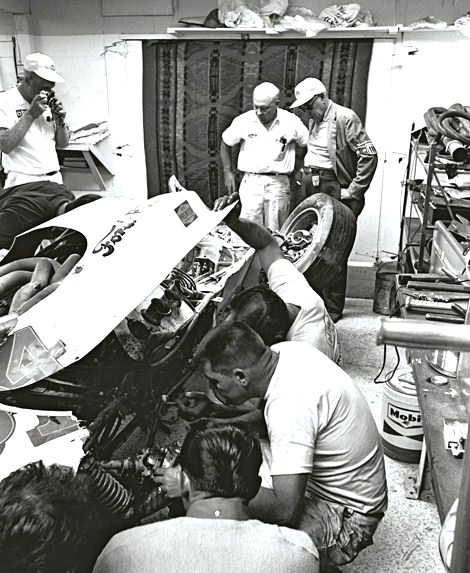
An already stretched Thompson crew realizing the additional workload getting the #84 car race ready. Dave Friedman photo
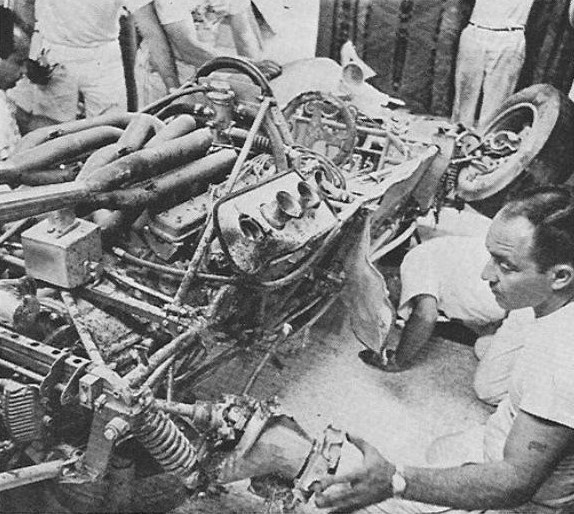
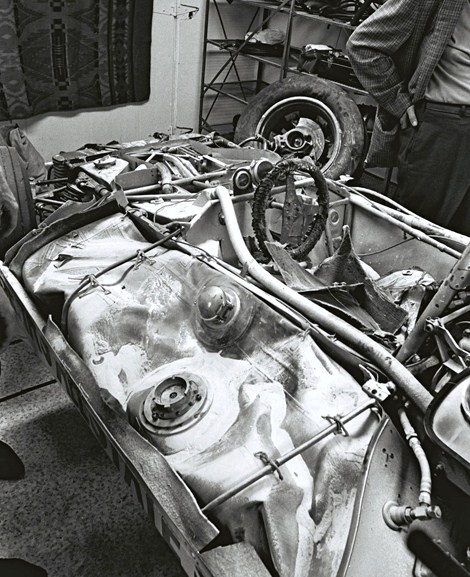
Photo of Gregory's 84 car gives you a good look at the rubber fuel bladder Mickey put in his Indy cars. In hindsight it was poorly concieved.
With his wrecked #84 racer at his side a dejected Mickey Thompson ponders his next move. Meanwhile SAI chief mechanic Wally Peat
leaves Indianapolis. Wally was perhaps Dave's closest friend and felt strongly he should walk away from the Thompson car, laying out
his concerns one by one. Dave was adamant that he would stay on and see it through. The two friends argued and Wally packed his bags
and left Indy. It would be the last time the two would speak and an encounter Wally regrets to this day.
.jpg)
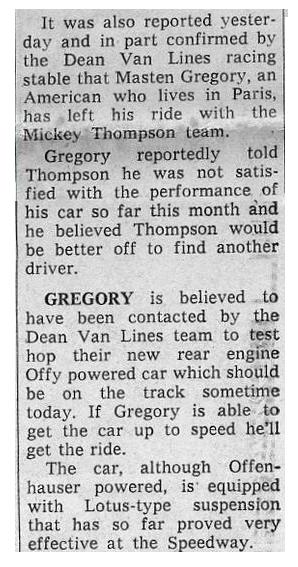
Gregory true to his word leaves the Thompson team and takes an open spot with the Dean Van Lines team. He begins to openly criticize
Mickey's race cars in the press.
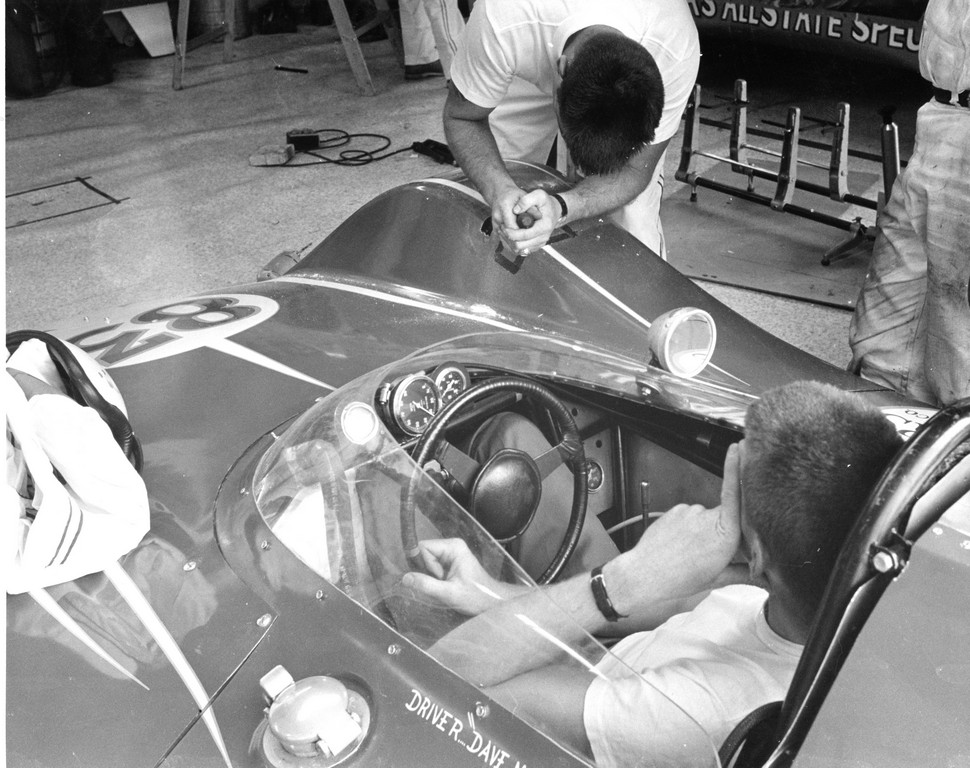
Mickey Thompson responds to Gregory's criticism of "trapped air" by grabbing a file & hacksaw and cuts fender channels in MacDonald's
#83 car. Dave watches from inside the racer. Dave Friedman photo from the The Henry Ford Collection
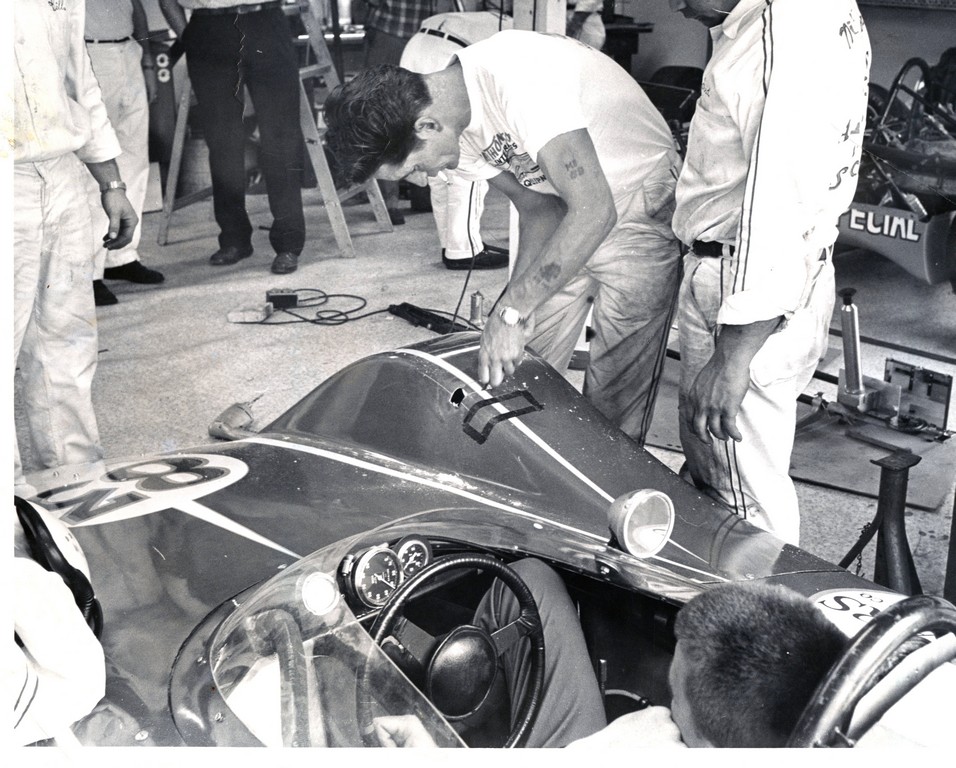
Crew chief Peter Bryant takes his turn. Dave Friedman photo from The Henry Ford Collection
The team pushes MacDonald's #83 racer to the track and with Dave still inside, and continue to cut crude fender channels. (Dave Friedman)
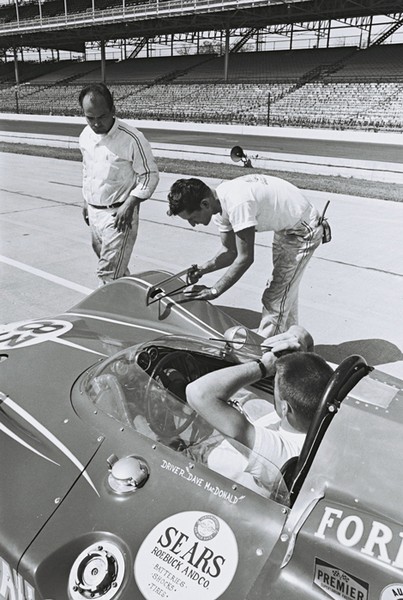
Mickey sent Dave back to the track with the fender channels and Dave promptly clocked his fastest laps of the month - a four lap average
of 155 mph. Unorthodox modification aside, MacDonald reported that it did improve the car's stability. Photo Dave Friedman
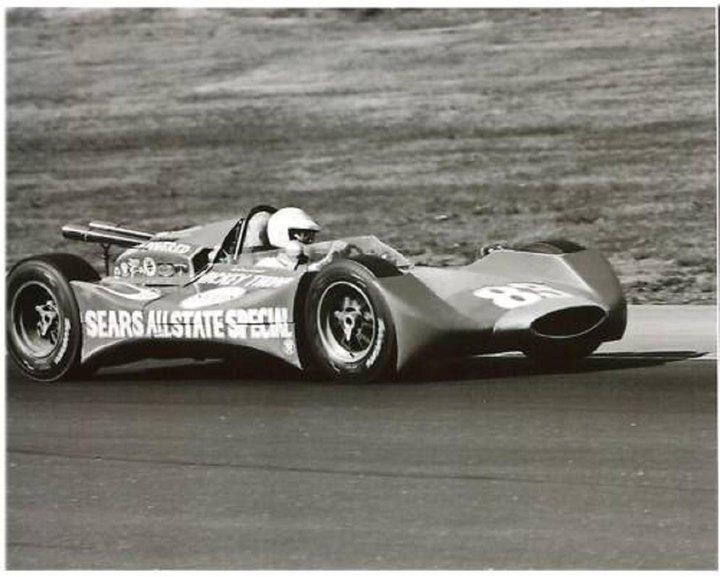
The following morning the Thompson team is back at the track ready to run the #83 car with the new fender channels. (First Turn Productions)
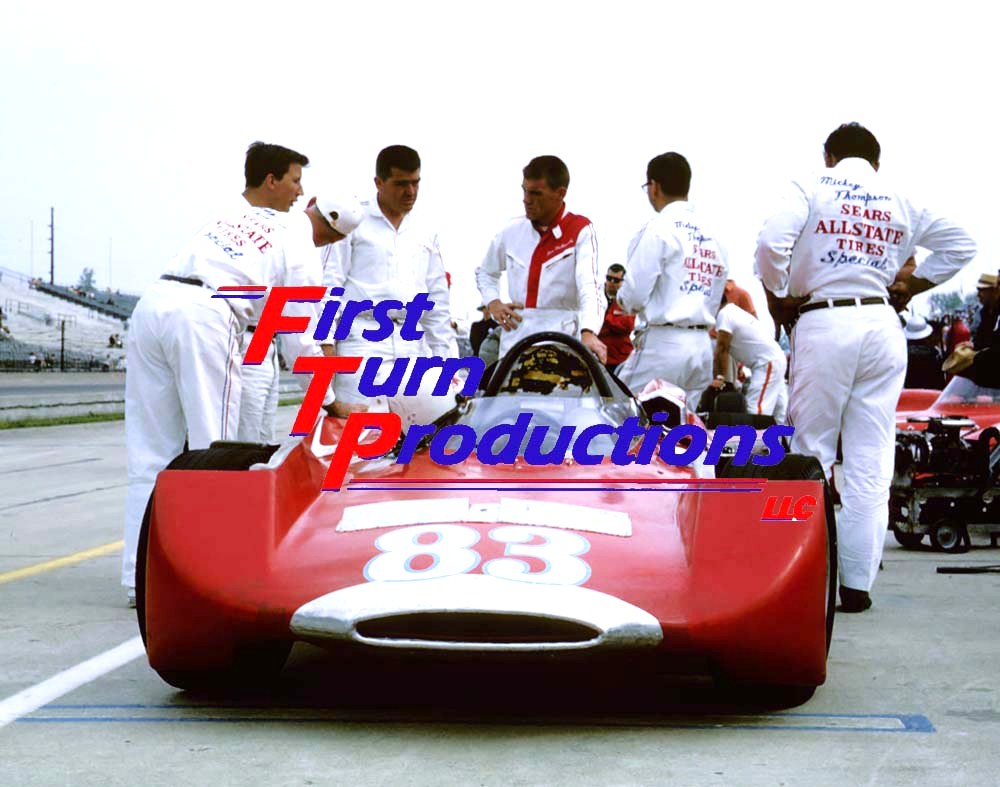
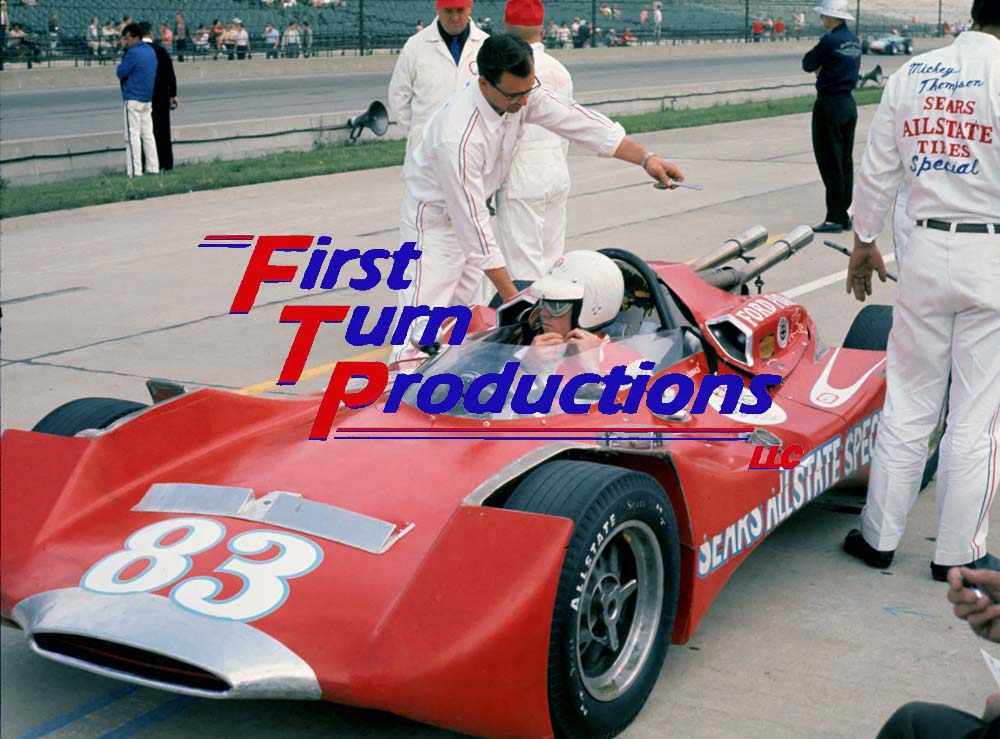
Dave MacDonald strapped in and ready to continue testing with the newly cut fender channels. On his return he would report that handling
continues to improve on his #83 car. Photo First Turn Productions
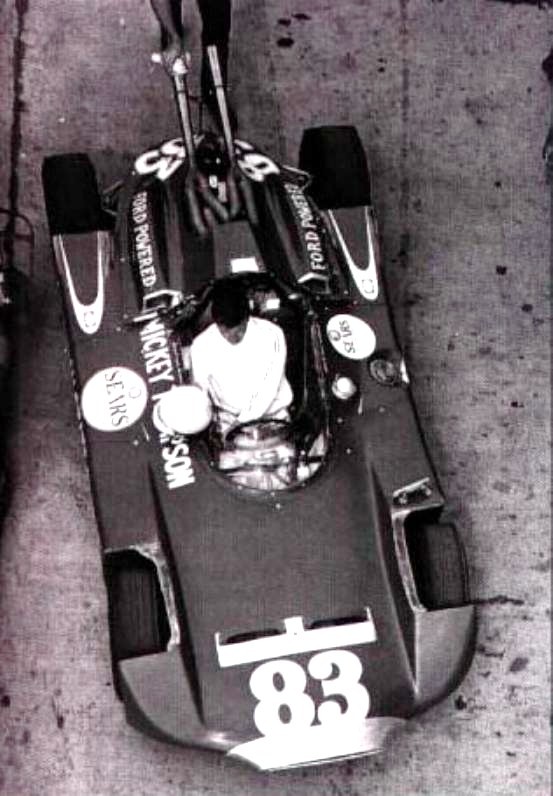
Overhead view of Dave MacDonald's #83 car shows the handmade cuts to the fenders. Intake vents were added to the cone as well.
May 15 - Sherry MacDonald receives a call from Dave who's disappointed his #83 car won't be ready for Pole Day tomorrow, the first day
of qualifying. Sherry notes this in her personal calendar.
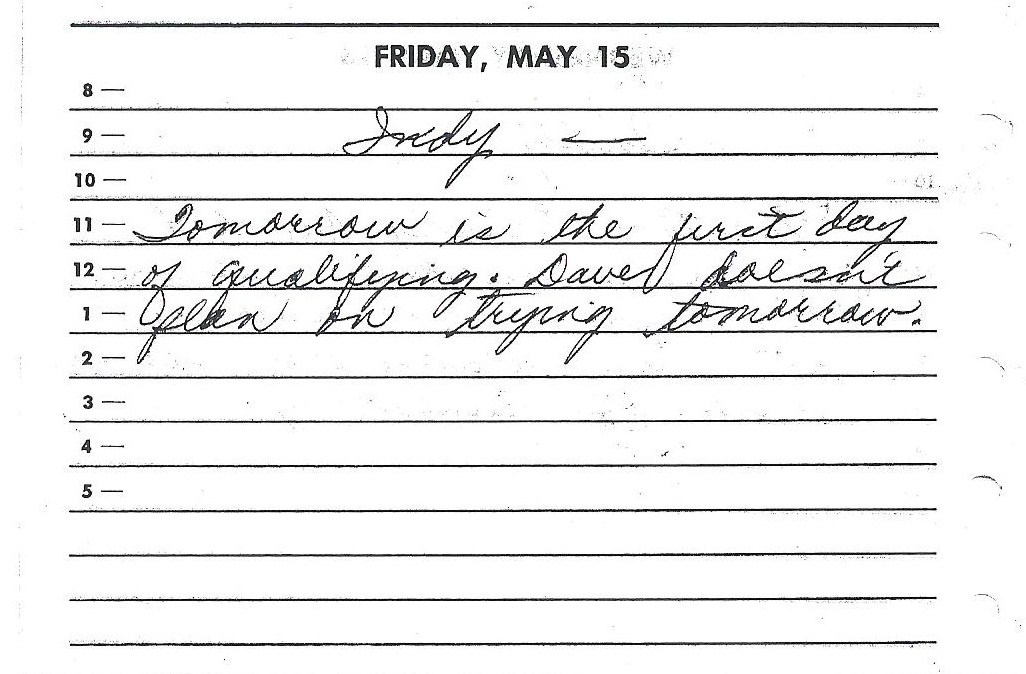
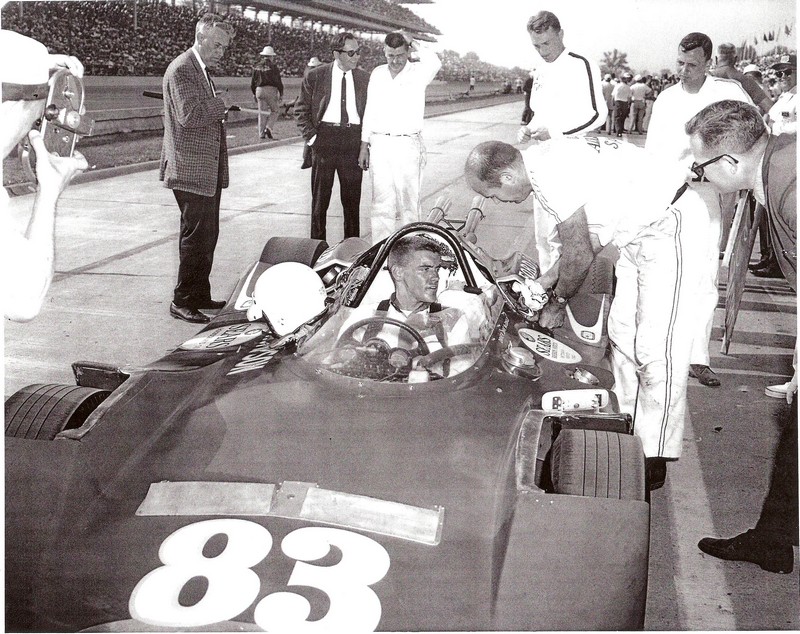
May 16th, Pole Day! Dave MacDonald learns that Mickey Thompson has changed his mind and decided to attempt a qual run in the #83
car. The crew worked throughout the night and Mickey feels it's worth a shot. He wants to take advantage of first day qualifying benefits
and says if speeds aren't where they need to be he'll decline the attempt and try again on Sunday. The crew pushes the car ti the pit area

Out on the track MacDonald nestles in for his qual attempt. A record crowd of more than 200,000 fans turn out to see what promises to be
a day of record breaking speeds. Dave. Getty Images
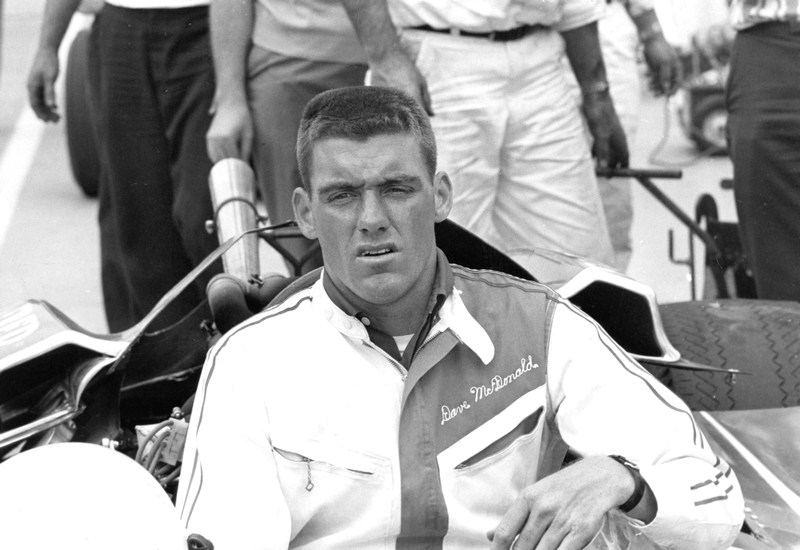
Dave Friedman photo
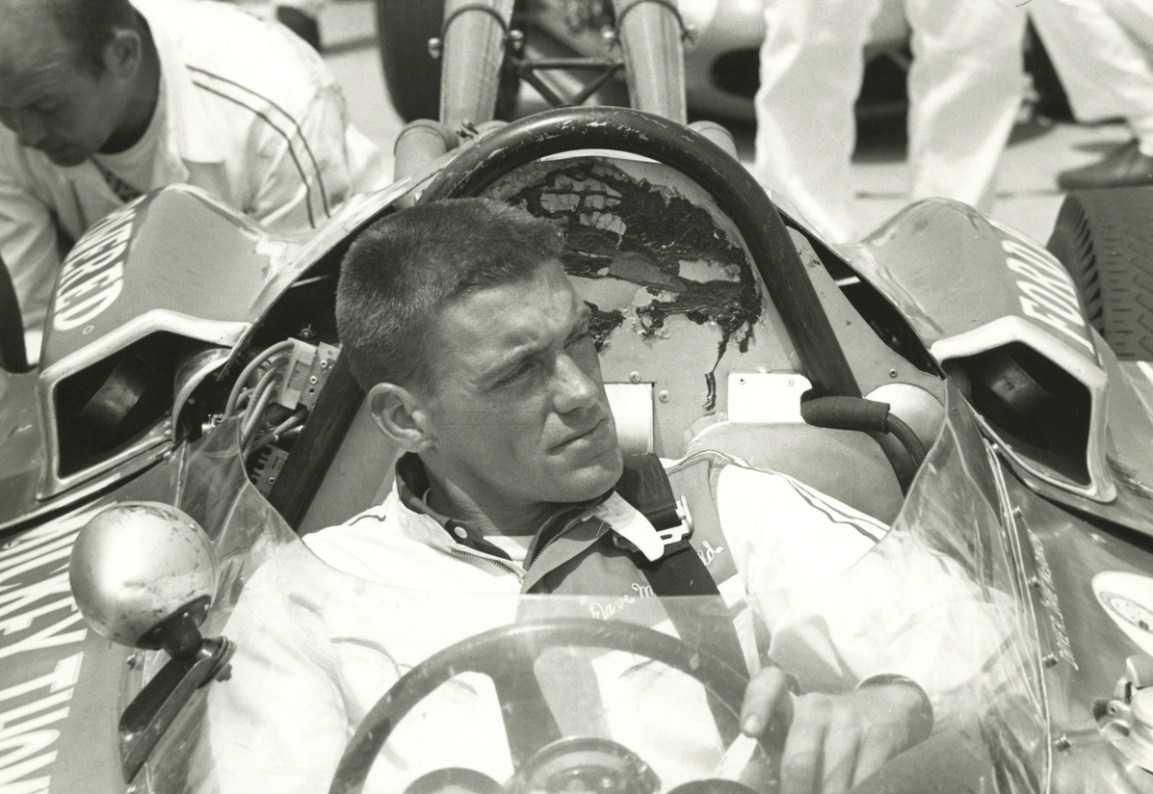
Broadcaster Chris Economaki sneaks in a word with Dave before his qual run. Mickey Thompson & Dan Gurney look on. (Dave Freidman)
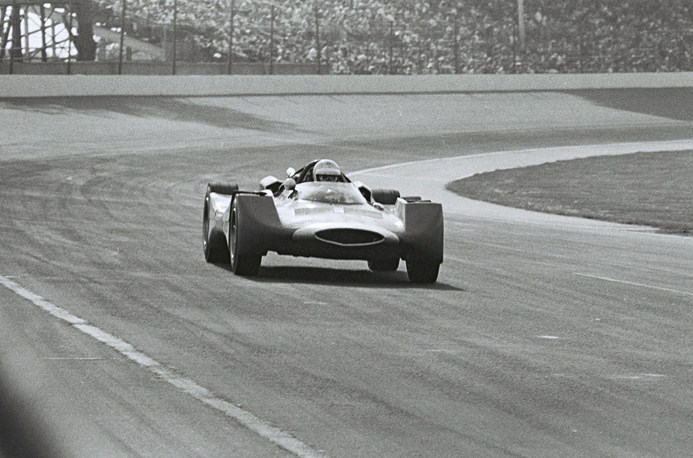
Dave MacDonald exiting turn 4 on his Pole Day qual run. Noticeable difference between this photo - with the car at speed - and the photo
above leaving the garage area. As MacDonald comes out of turn 4 and onto the straight, air is beneath the car and you see much more
tire tread below the front fender, front fender channels have risen above the tire line. Photo The Henry Ford
Dave bring the Thompson 83 back in ater a great run
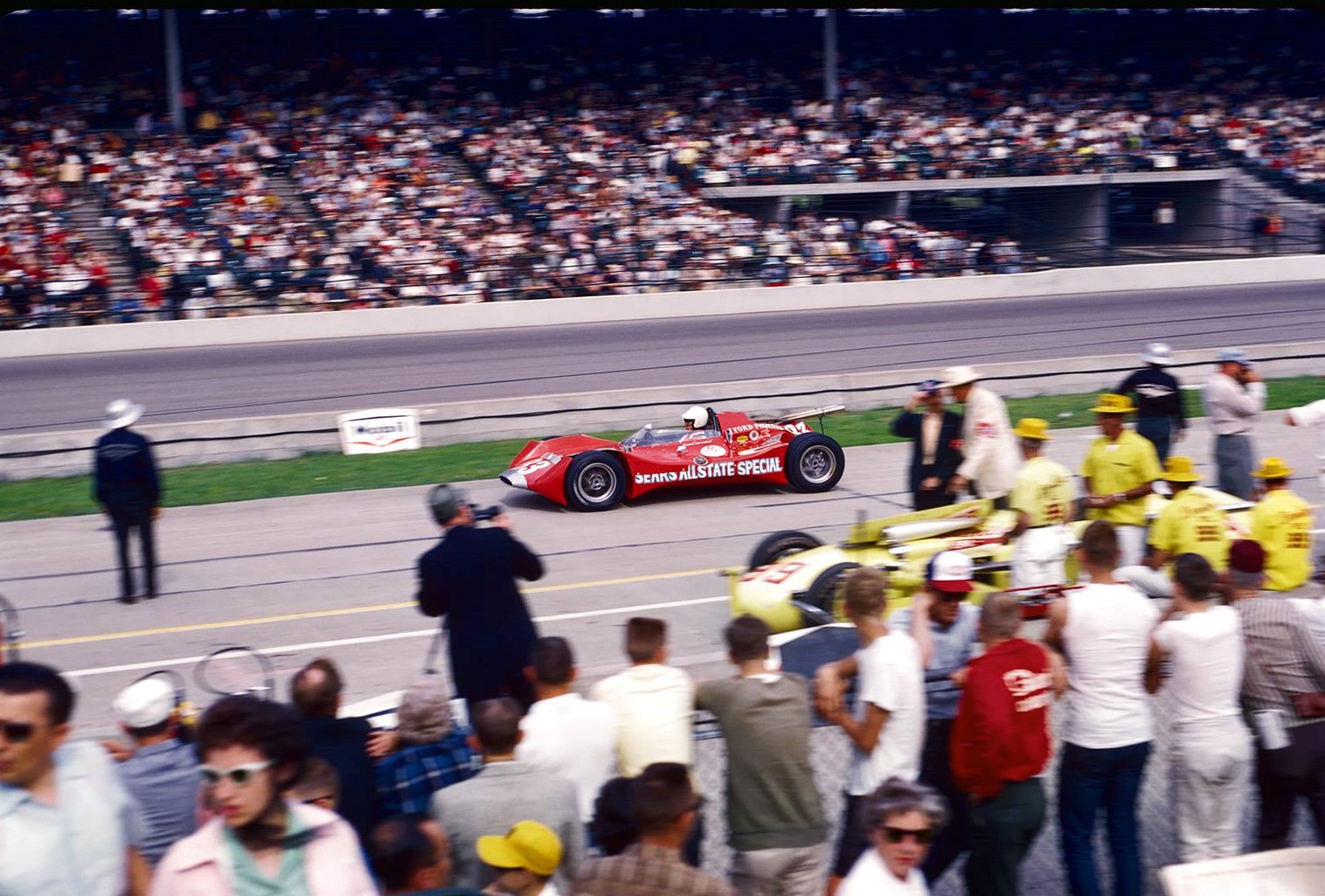
The recent modifications, especially the fender channels have the 83 running the best its run all month and Dave MacDonald qualifies
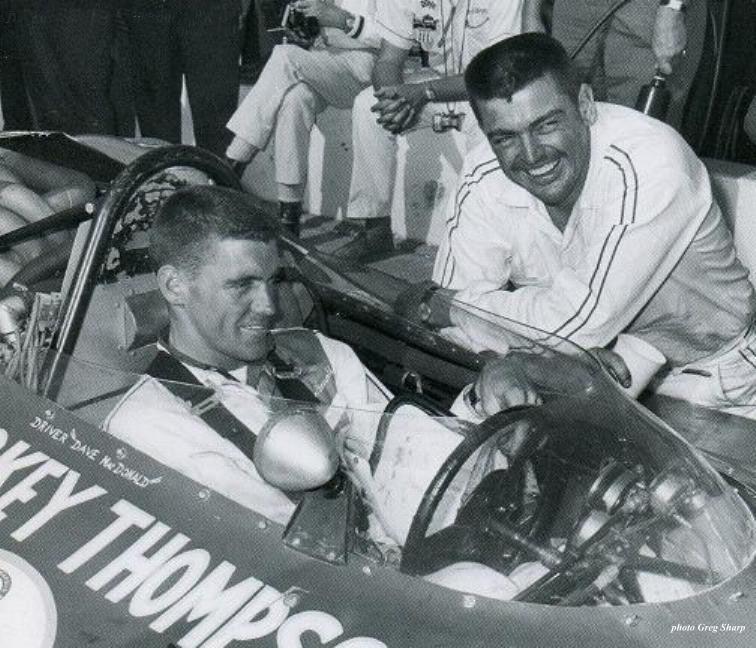
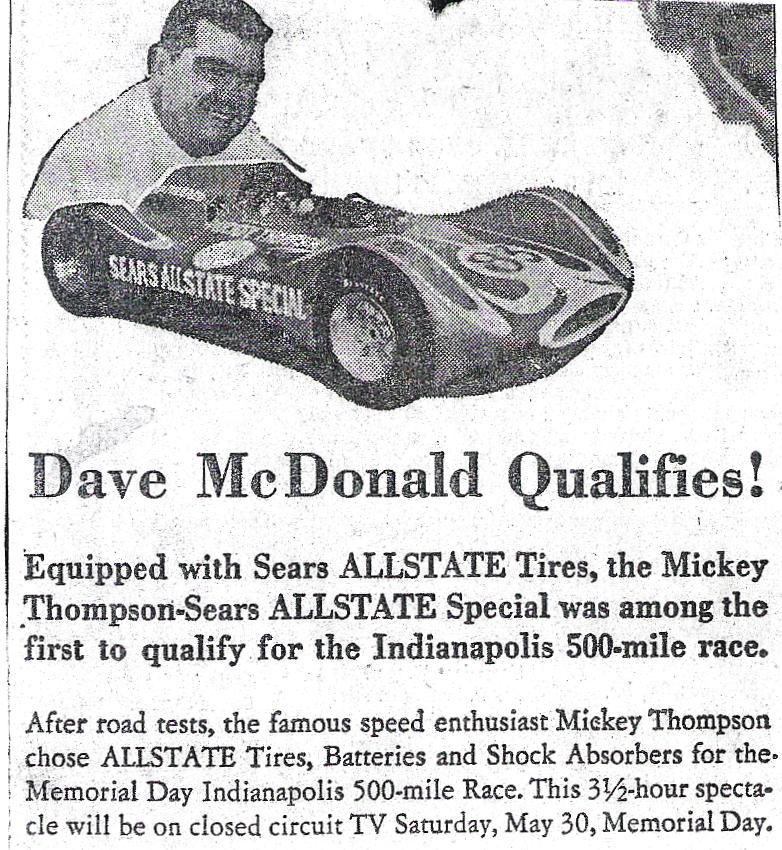
Mickey Thompson's Sears Allstate Special at an average 4 lap speed of 151.464 MPH. Mickey and Dave in a celebratory mood after Dave
becomes the first rookie in the field of 33. [Dave Friedman]
Mickey Thompson's 83 car is successfully into the 1964 field. (Dave would eventually be placed in the middle of row 5, in 14th position).
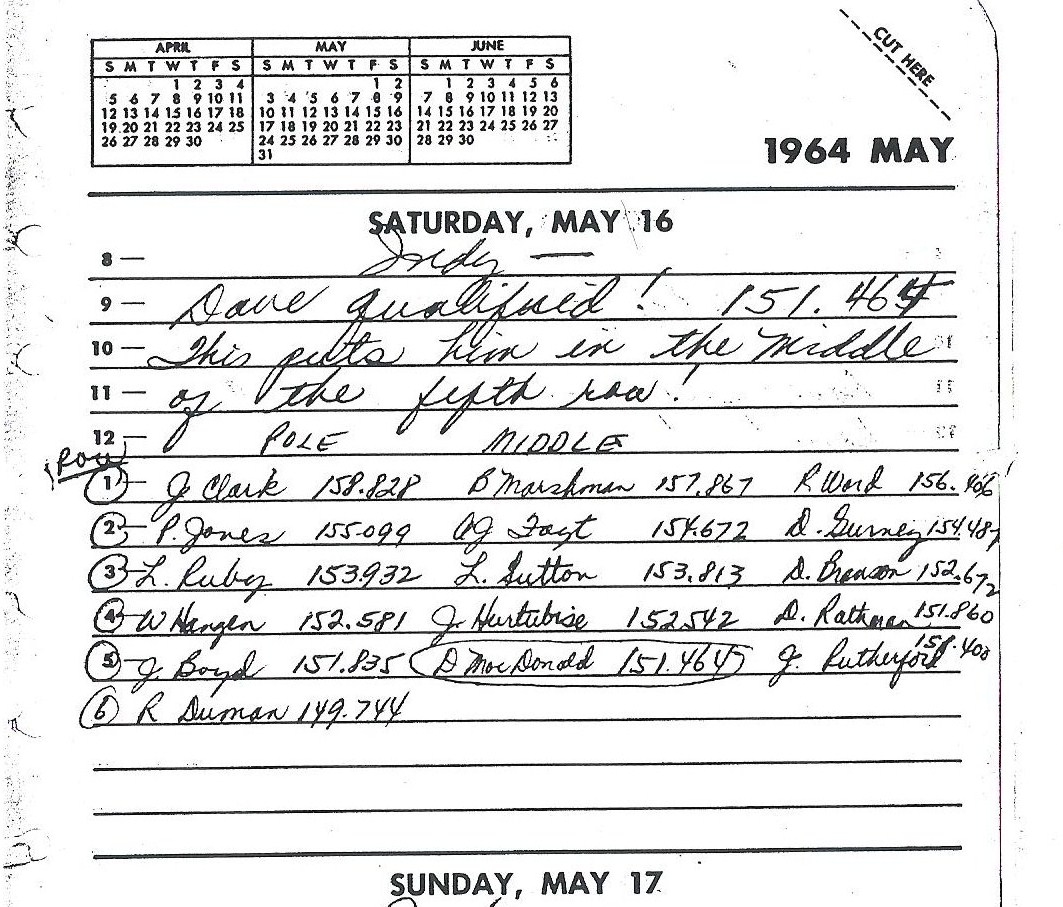
Dave tells Sherry the good news! She was caught off guard thinking they weren't going to run a qual attempt that day. She happily noted the
milestone in her personal calendar. First day qual speeds also listed below.
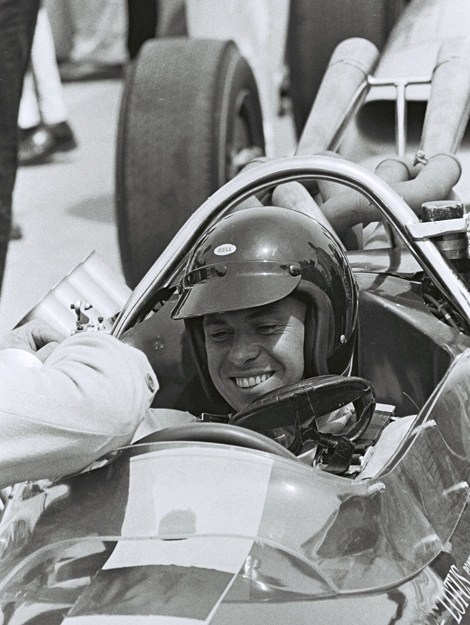
Jim Clark also happy after cranking an average speed of 158.858 MPH, which would be good for the Indy 500 pole. Photo The Henry Ford
Dave MacDonald's Shelby Cobra teammate Dan Gurney gets word from Colin Chapman that he's just smoked the oval with a four lap
qualifying average of 154.487 mph. (It would be good enough to put his Lotus on the outside of row 2 in 6th position).
Later in the day Dave MacDonald is pushed out for more practice runs in the 83 car. Mickey Thompson checking his custom-cut fender
channels for tire clearance. Photo Dave Friedman from The Henry Ford
.jpg)
Photo Dave Friedman from The Henry Ford
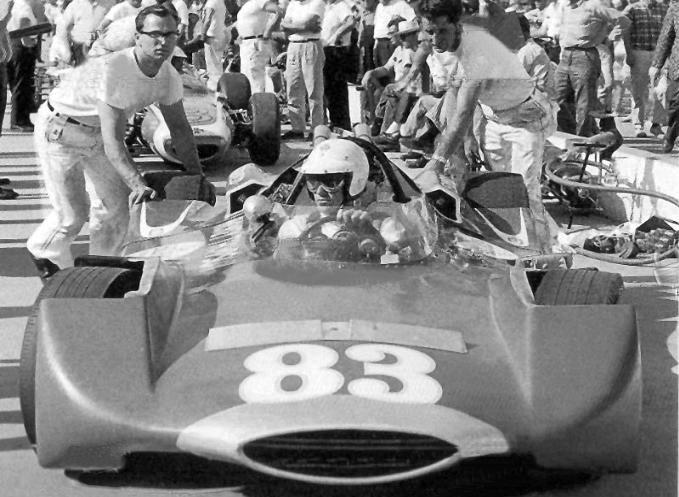
Photo Dave Friedman from The Henry Ford
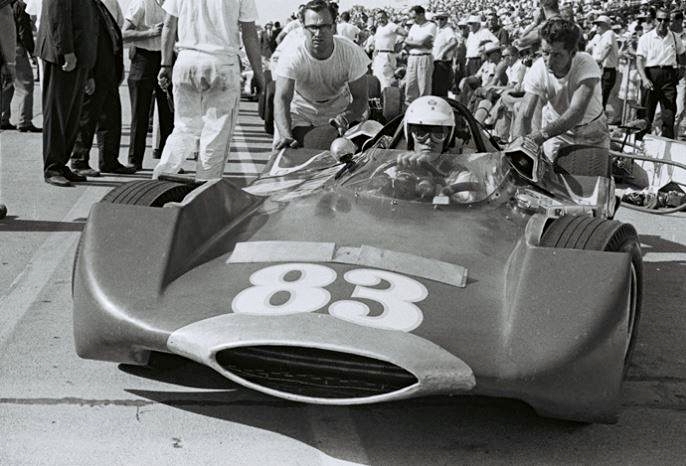

Late in the day on May 17th Dave MacDonald is out practicing between sporadic day 2 qualifying. He rounds turn 2 and the engine on
his Sears Allstate Ford gives out. The Thompson team tows Dave back to the garage. The team had no more engines available and a Ford
engineer told Mickey it would be days, maybe a week before Detroit could send another. Mickey was not allowed to use an engine from
the #82 & 84 cars as Detroit made it clear the priority was to keep those cars running and get them in the field too. MacDonald wanted the
track time but with nothing to do he flew back to California later that evening to be with his family. Photo Indianapolis Motor Speedway
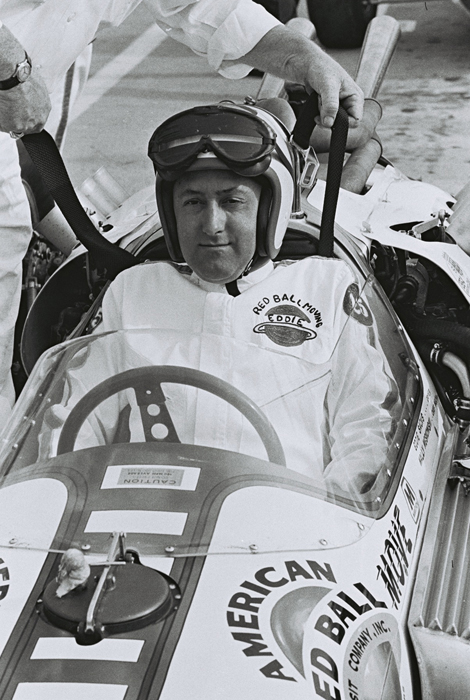
Towards the end of day 2 qualfying on May 17th, Eddie Sachs runs his Ford powered American Red Ball Special to a four lap average of
151.439 mph and the team officially accepts the run. Eddie planned to qualify on day 1 but during practice that morning he crashed into
the outside wall damaging his car. He credited his crew's round the clock efforts for having it ready for day 2. (Eddie's run was ultimately
good for the middle of row 6). Dave Friedman photo from the The Henry Ford Collection
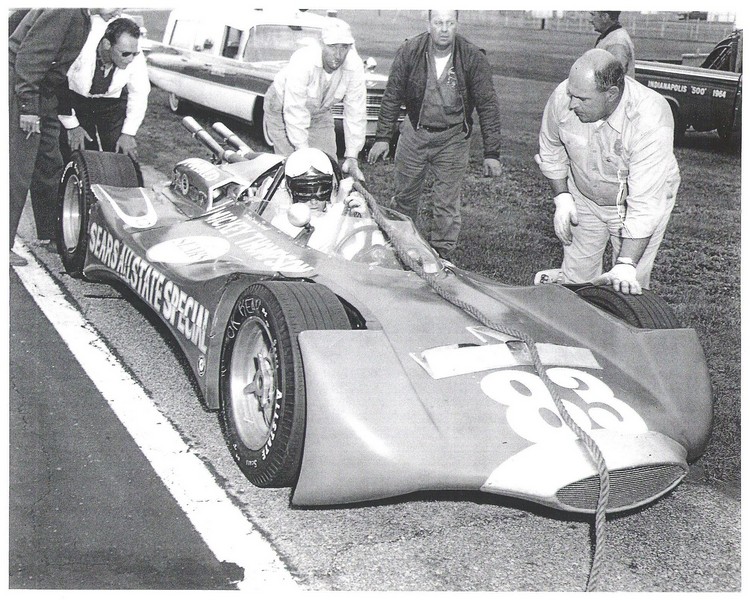
Still down a racer after Gregory's departure, Mickey Thompson put word out he was looking for an available driver. Bobby Unser brought
young 24 yr old Mario Andretti by the Thompson garage and Mickey immediately offered him the ride. Andretti agreed to come by the next
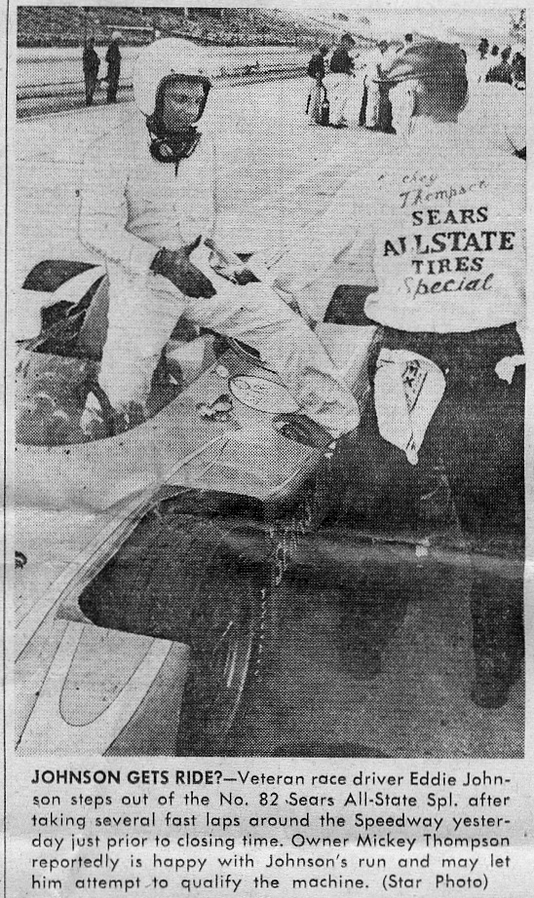
day and test the car but never showed. Thompson then turned to 15-time Indy 500 competitor Eddie Johnson and invited him to the team.
Johnson accepted but during his initial runs with the 82 car he was only able to get into the mid 140's.
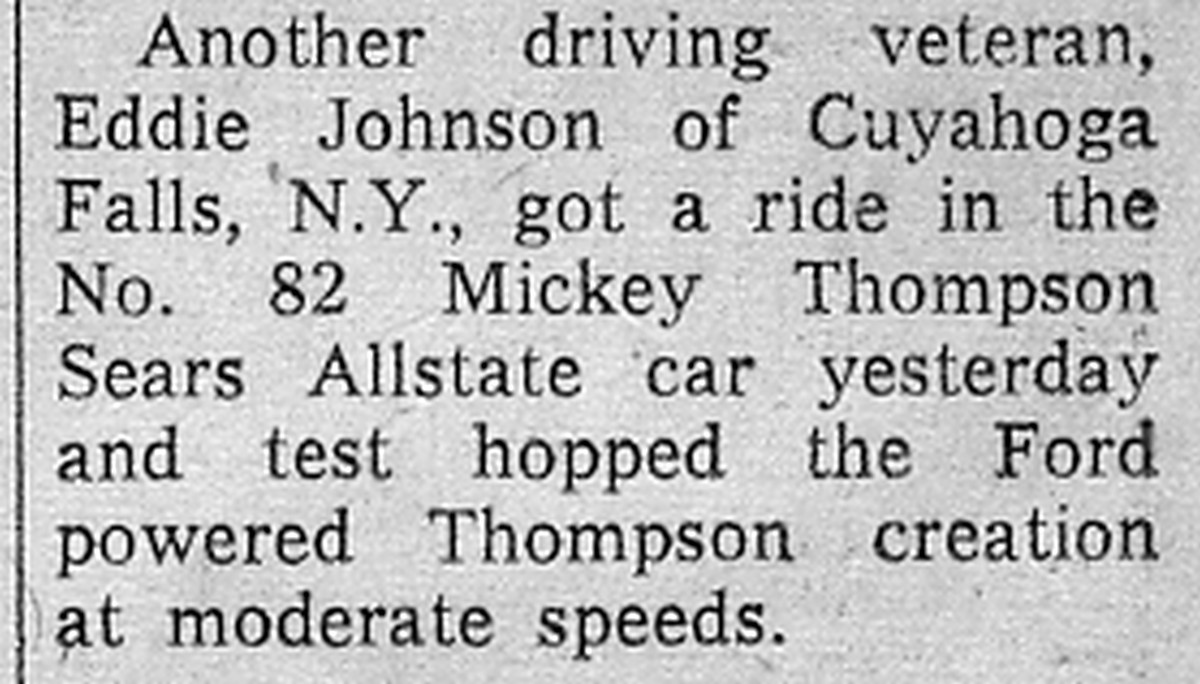
Later in the day as Johnson ran considerably faster as he continued to familiarize himself with the Thompson 82 car. Mickey was pleased.
Meanwhile over in the Van Lines camp Masten Gregory was having trouble getting the Offy up to speed. Photo Indianapolis Star
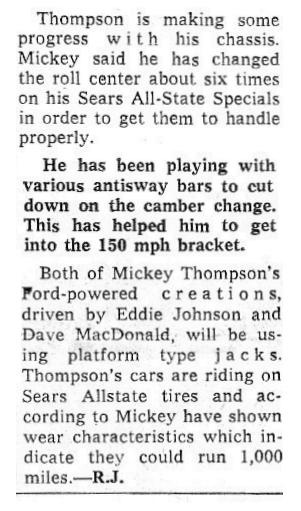
Mickey and the team continue chassis mods
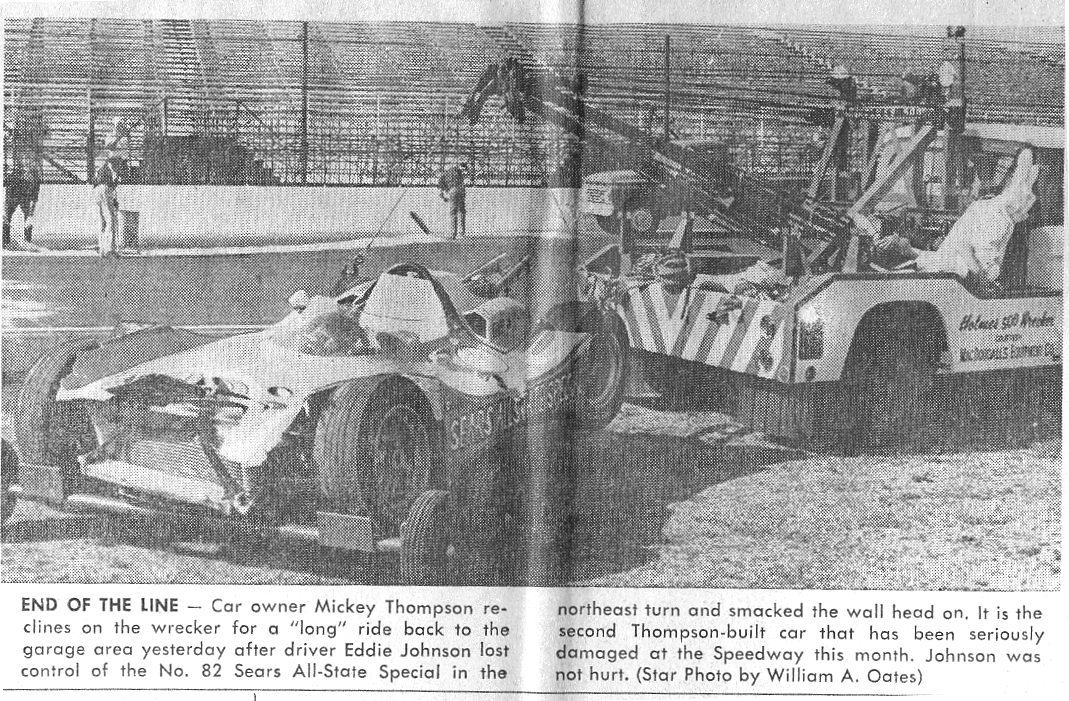
On May 19 Eddie Johnson discovered that even with the improved stability of fender channels the cars were still a work in progress. In a
late morning practice run in the #82 car Johnson lost control at speed and put it into the outside wall. Already overworked, Peter Bryant
and his crew would now need to put the #82 car back together. Photo William Oates
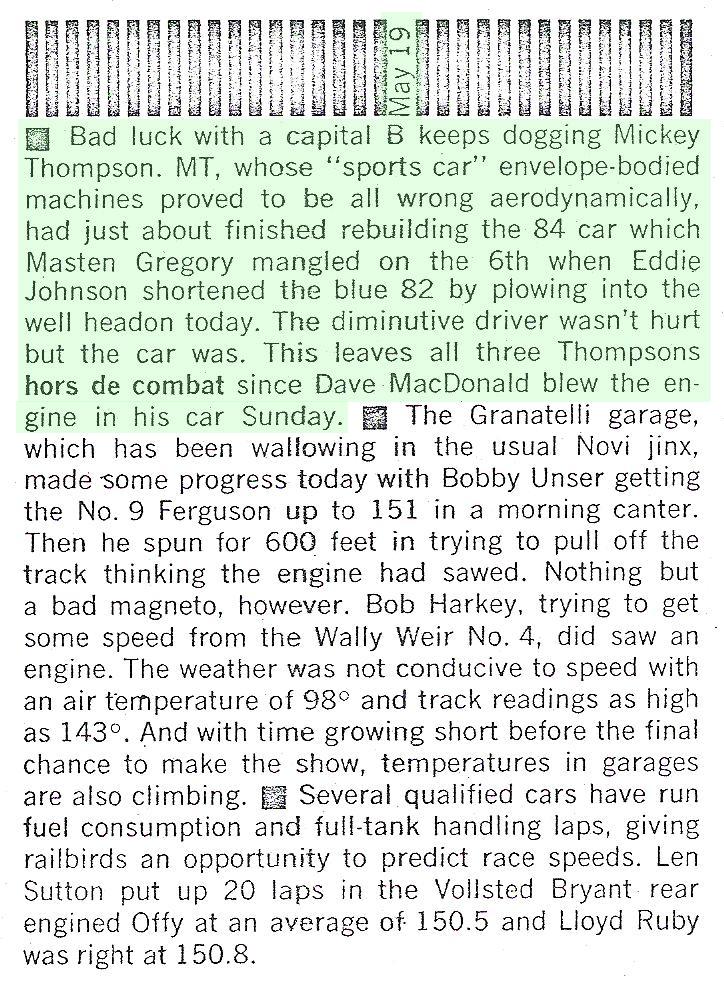
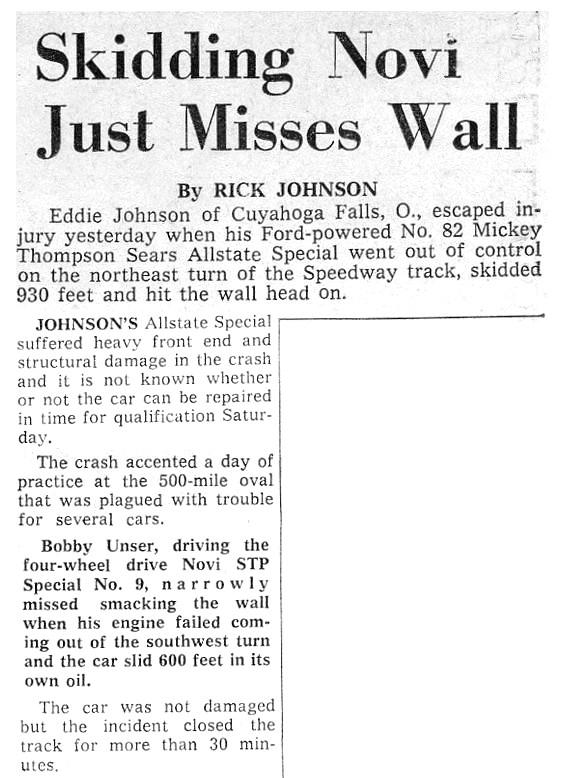
May 19 blurb from Motor Trend writer George Moore's "Indy Diary" referencing Eddie Johnson's crash in the #82 car. Eddie was unhurt
but this latest incident meant all three Thompson racers were now out of commission.
The Thompson crew removes Eddie Johnson's crashed #82 racer from the tow truck and pushes it to the garage. Photo The Henry Ford.
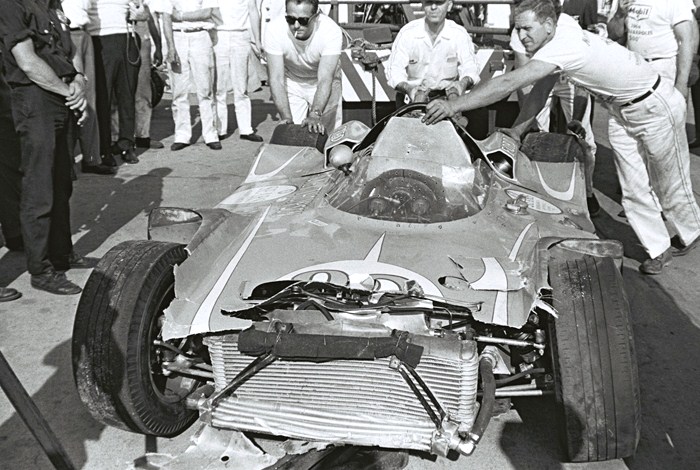
Mickey and crew work feverishly in the hopes of qualifying two, or even all three cars into the field. Eddie Johnson will try to qualify the
previously wrecked #84 car on May 23rd. A final attempt with #82 depends on whether or not they can get it ready.
.jpg)
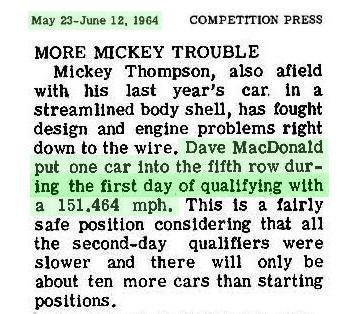
May 22 - MacDonald's engine is back from Detroit and Dave wastes no time getting additional practice laps. In the afternoon session the
team prepares the 83 for more yarn tuft testing as they continue looking for the ideal aero setup. Great photo by Russell Phillips
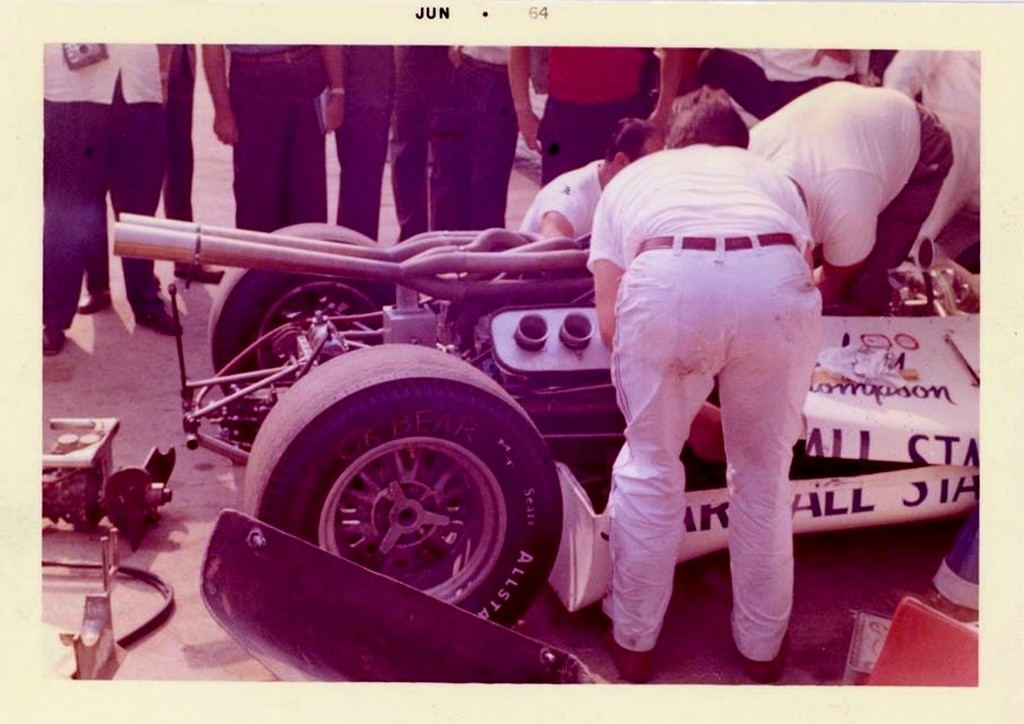
Saturday May 23rd. The final weekend of qualifying had arrived and if drivers were going to get their cars into the '64 field it would have
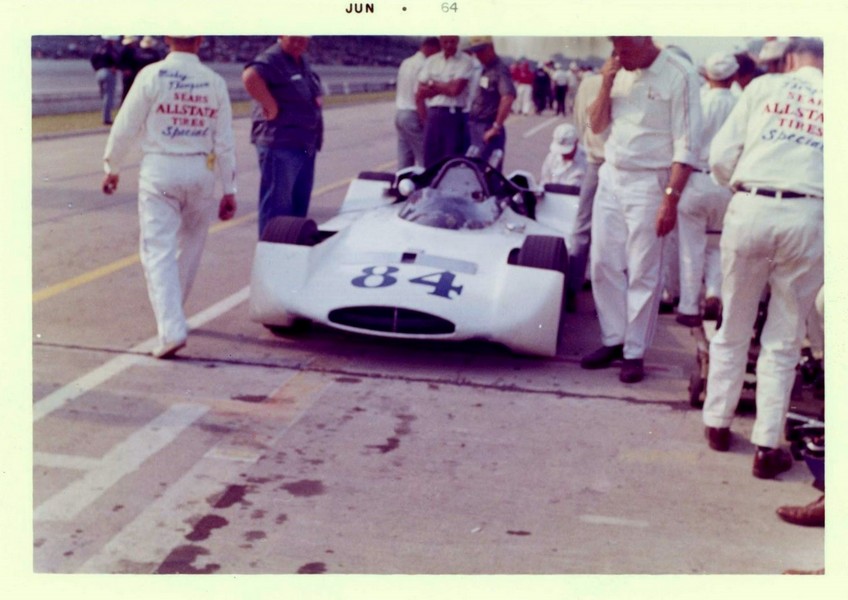
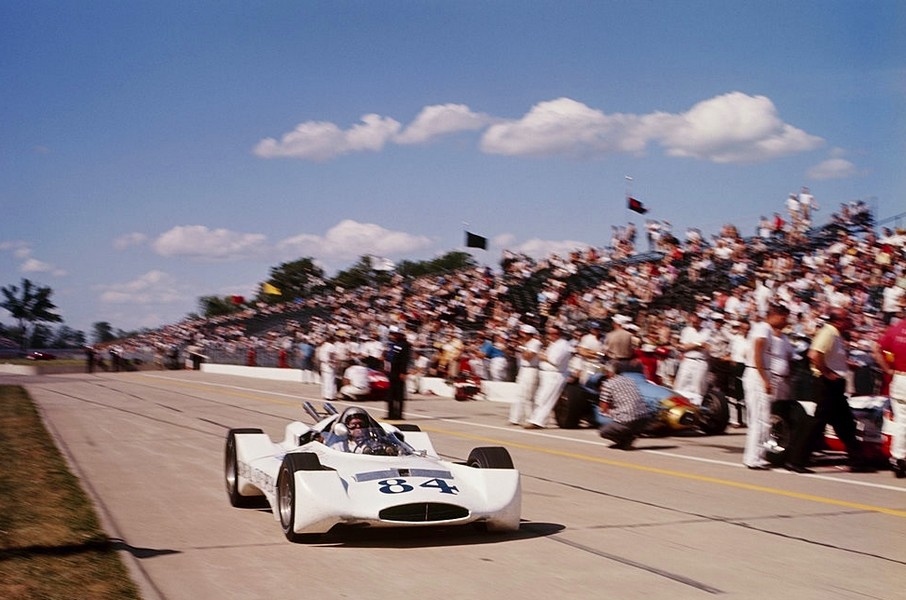
to be now. The Thompson team prepares Eddie Johnson's 84 car for Eddie's last day attempt to make the field. Photo unknown
The Thompson crew put fresh new body panels on the #84 for Eddie Johnson.
Eddie could only manage a mid 140's average and Thompson, knowing it wouldn't be fast enough to make the field did not accept the
run. Eddie would have to try again later. Getty Images
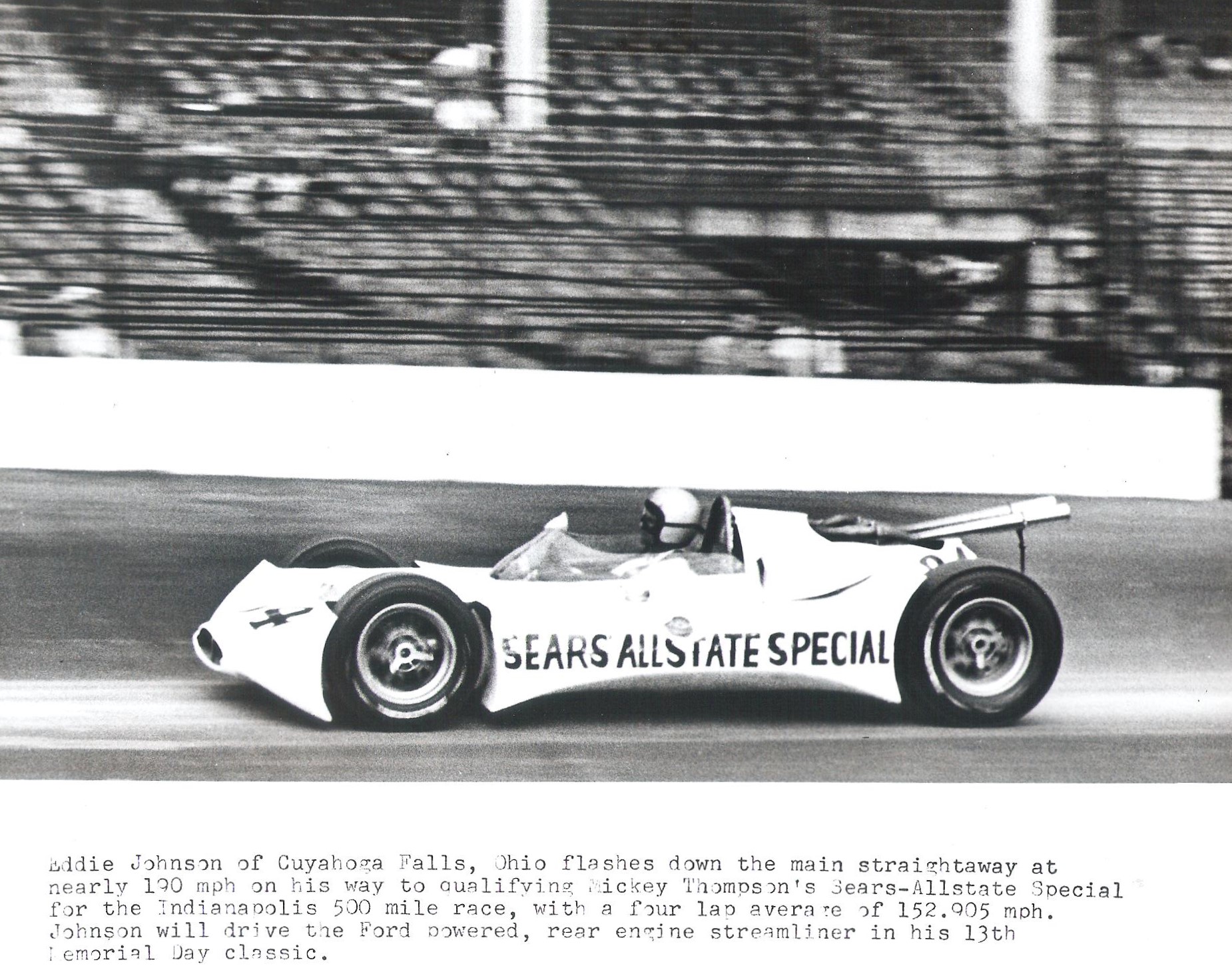
Dave MacDonald's teammate Eddie Johnson heads out for a final qual attempt in the Thompson 84 car. Getty Images
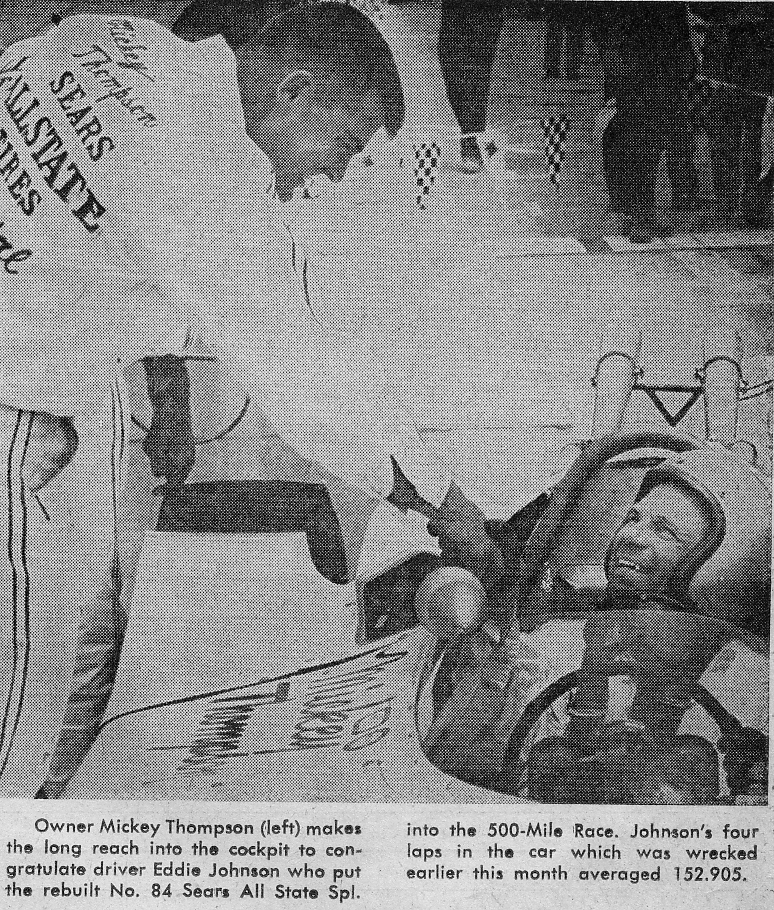
Eddie Johnson looking very happy with his run
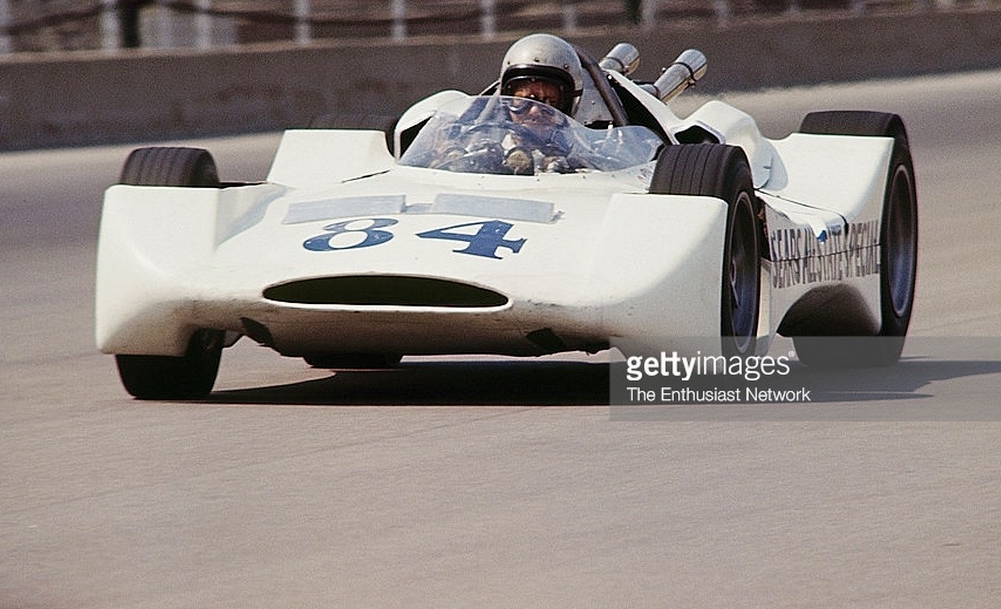
Eddie had a great run averaging 152.905 mph and Thompson was confident it was fast enough to avoid getting bumped from the field on
Sunday and he quickly accepted the attempt. Mickey and Eddie are happy men...as are Ford execs to have a second Thompson Ford in.
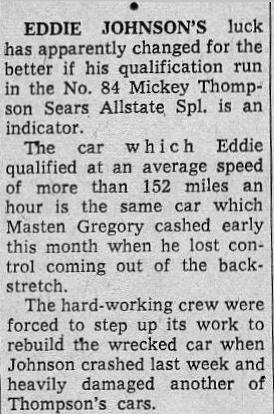
Article noting that Eddie Johnson had put a second Thompson racer in the field.
Veteran racer Chuck Arnold was out of a ride after his Chevy powered MRC Special failed to make speed. After seeing Johnson qualify
Thompson's #84 car he went to the Mickey's garage to check the availability of his third racer - the #82 car. Thompson told Arnold his
team hoped to have the car ready for Bump Day on Sunday and offered Arnold a shot at qualifying. Arnold took it.
.jpg)
Bump Day on the 24th and MacDonald takes the Thompson Ford Sears Allstate Special 83 car down pit road and onto the Speedway for
some early practice laps before heading back to the garage. Getty Images
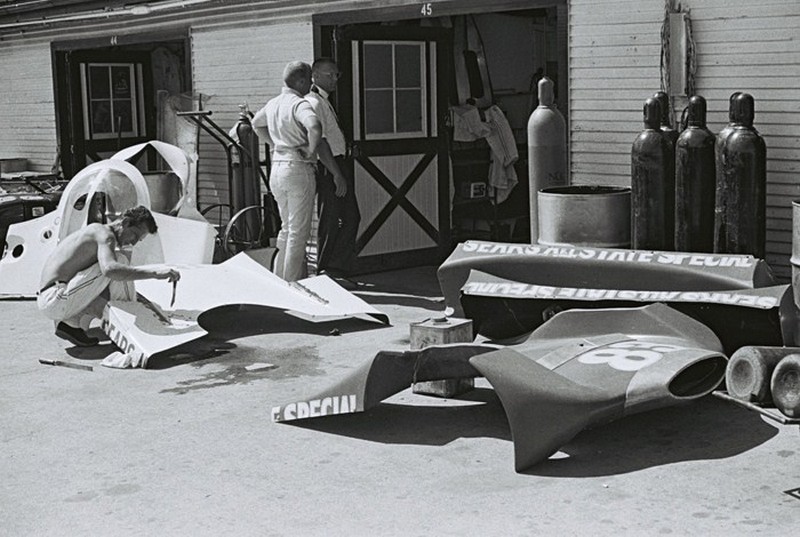
Peter Bryant knew the crew didn't have time to prepare the #82 car for a Sunday qual run and he told Thompson as much. Mickey,
under intense pressure from Ford to get all 3 cars in the race allegedly made the descion to "bend" the rules. Closing the garage doors he
reportedly instructs the crew to quickly remove body panels from the #82 car and place them on MacDonald's already qualified #83 racer.
Risky move for sure but Mickey figured track inspectors wouldn't be thoroughly checking the cars at this late stage. Ph The Henry Ford.
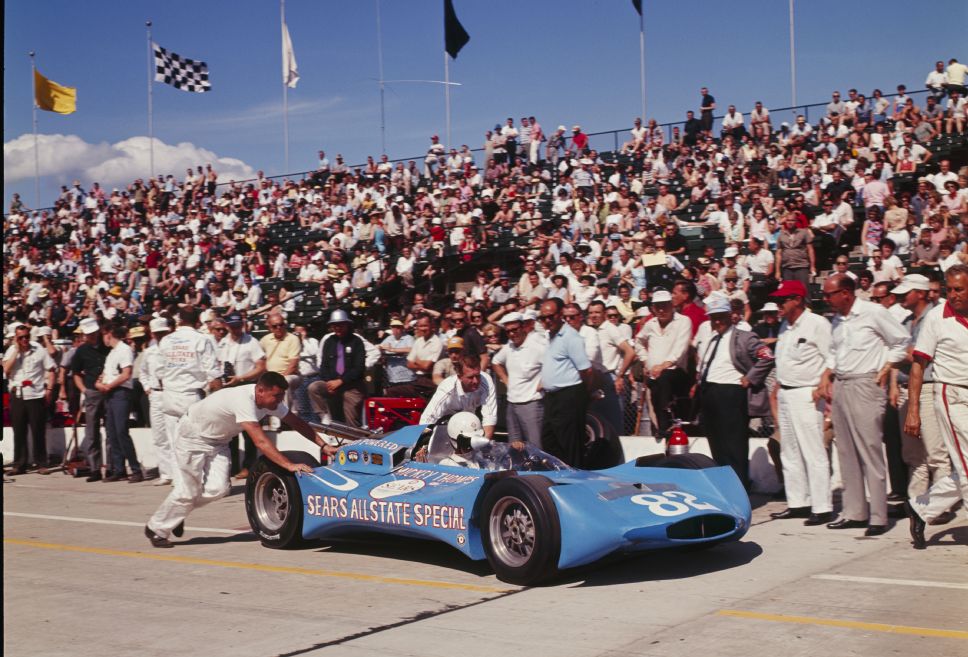
With the #82 body panels reportedly on MacDonald's #83 car Mickey sends driver Chuck Arnold out to get familiar with the car.
Photo courtesy HotRod.com
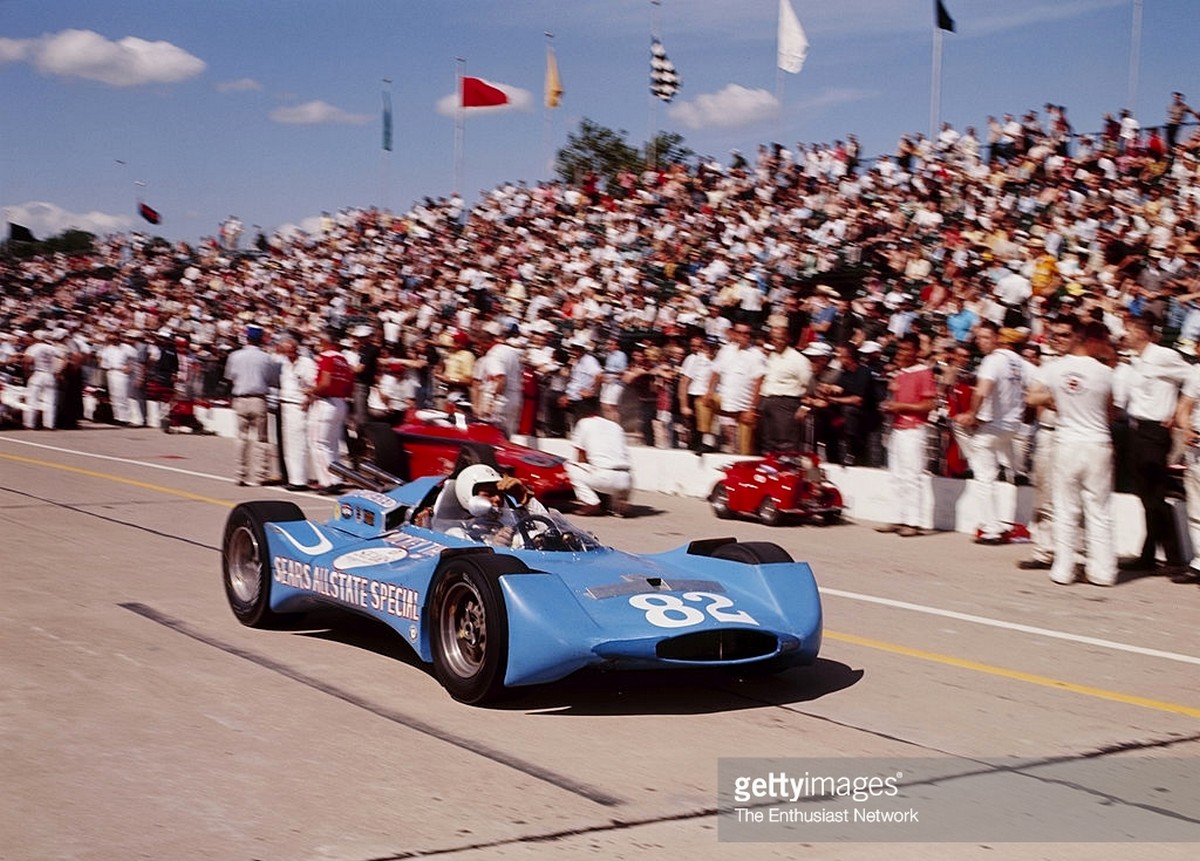
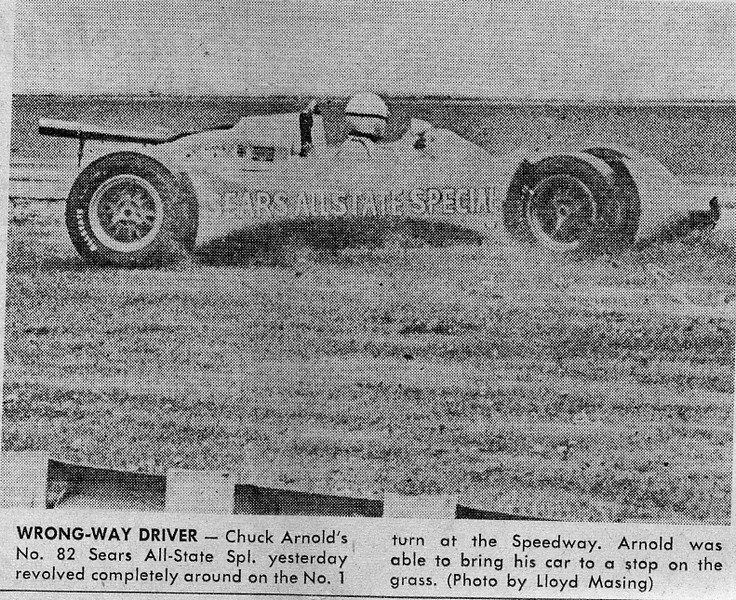
After spinning the low-slung car heading into turn 1 on his second practice lap Arnold quickly brings the car back to the garage. While
fortunate to miss the wall the mishap nonetheless brought out the caution flag halting both practice and qualifying. . Getty Images
Arnold put it back on the track for his second practice run at 2PM and spun again, this time in turn 3. Two spins in one day was enough for
Arnold and he left the Thompson garage in search of another ride. Photo Lloyd Masing
Typical Bump Day at the Brickyard, fast paced car hopping was in full swing. Drivers and car owners frantically searched each other out
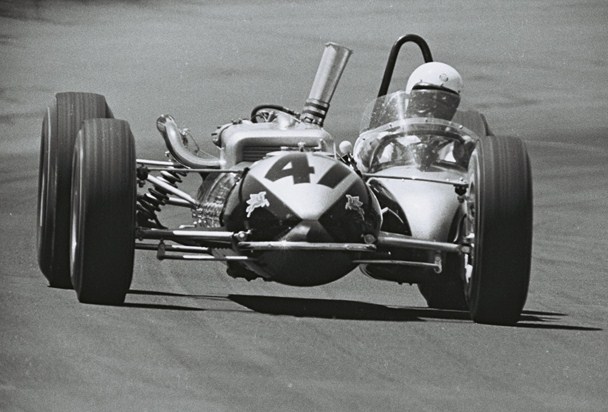
in hopes of getting an available car into the field. Bobby Johns was one such driver after crashing Smokey Yunick's unique "sidecar" racer
(shown below). After hearing Chuck Arnold had walked away from the Thompson team Bobby headed straight to Mickey's garage to check
on the #82 car before the final gun on qualifying went off. But after sititng in the #82 car (actually MacDonald's #83 car) he decided "The
car just didn't feel right" and passed on the opportunity. Dave Friedman photo from the The Henry Ford Collection
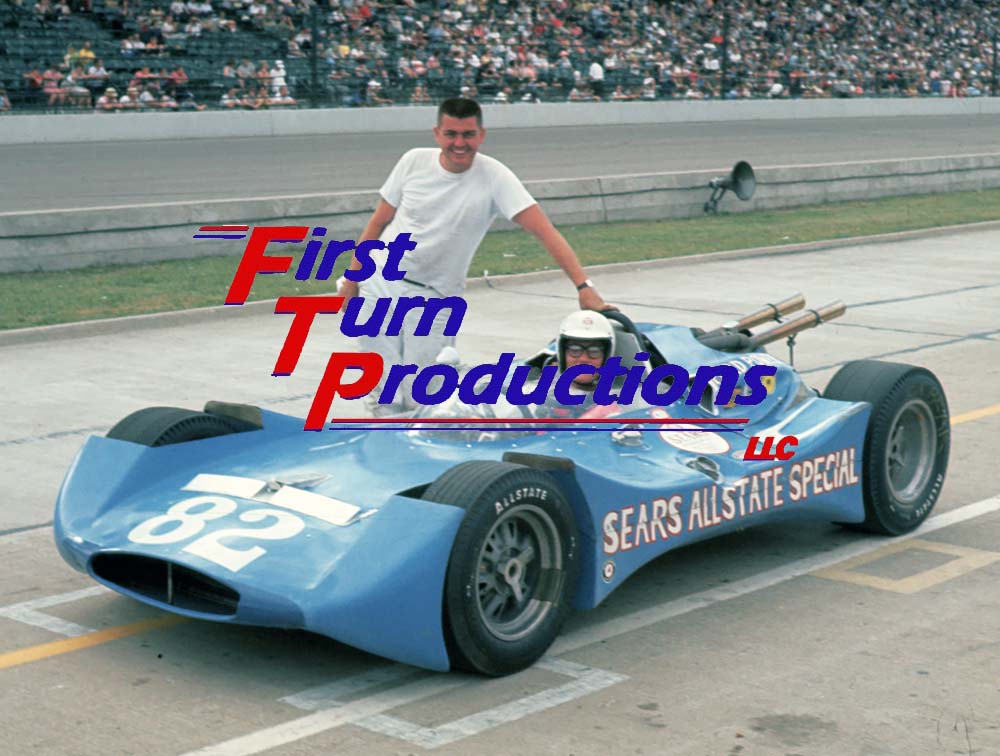
With less than an hour left in qualifying Mickey Thompson went looking for of all people, Masten Gregory, who was at the Brickyard to
watch Bump Day festivities. Mickey asked him to give one last chance at qualifying the #82 car (which was really MacDonald's #83 car).
Gregory agreed to try to qualify the car but said he would not drive it in the race. Mickey had no other options and agreed. Gregory was
only able to muster a 147 mph average in the car but with several other cars in line to qualify Thompson had to accept the run. It was
ultimately good for the 34th position, the first alternate should a car not be able to run. Photo courtesy First Turn Productions.
Bump Day excitement and the joy of Eddie Johnson qualifying ended quickly for Dave MacDonald when he learned good friend Glenn
Fireball Roberts is hospitalized after a serious crash in NASCAR's World 600 on 5/24. (Glenn would succumb to his injuries on July 2nd).

Days later famed journalist Chris Economaki hears rumors about body panel swapping in the Thompson camp. Econamaki wrote about
it National Speed Sport News, although his version was a bit off. Courtesy National Speed Sport News
.jpg)
Carb Day May 28th and drivers get one last day of practice to dial in their cars before the big race. Dave MacDonald fueling up before one
of his runs. Dave Friedman photo from the The Henry Ford Collection
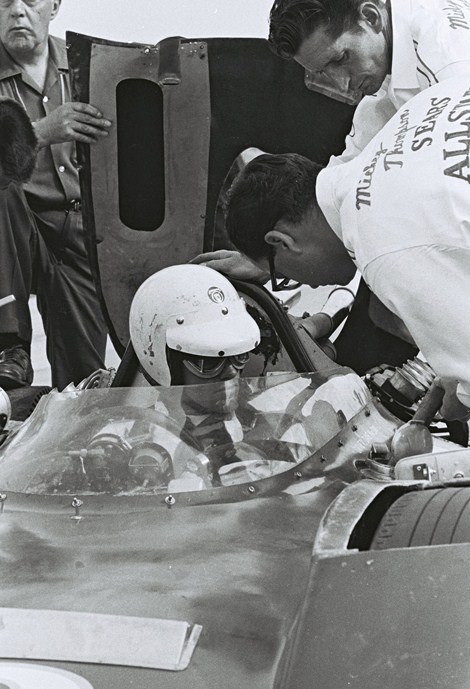
He’s in and out most of the day getting much needed track time in the #83 Thompson Ford. He would twice however be forced to the pits
after body panels flew off his racer.
.jpg)
Some reports say that at one point during the day World Driving Champion Jimmy Clark was running his Lotus directly behind MacDonald
and after seeing unusual action from Dave's car followed him into the pits and urged him to "Get out of the car mate, just walk away".
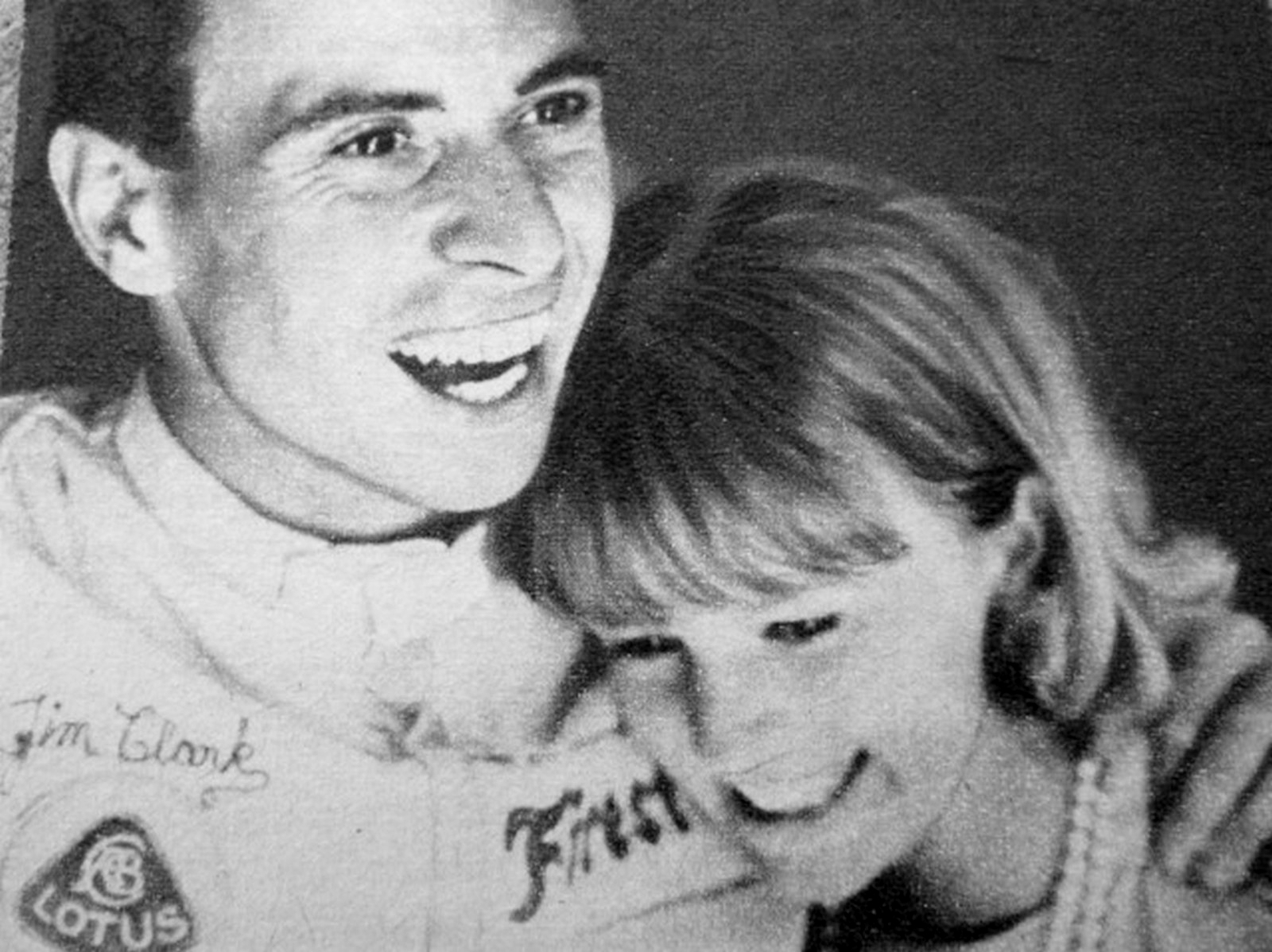
Some have questioned this account. Jim's girlfriend at the time, Sally Stokes is on record saying she absolutely remembers Jim telling
her that he had said that to Dave.
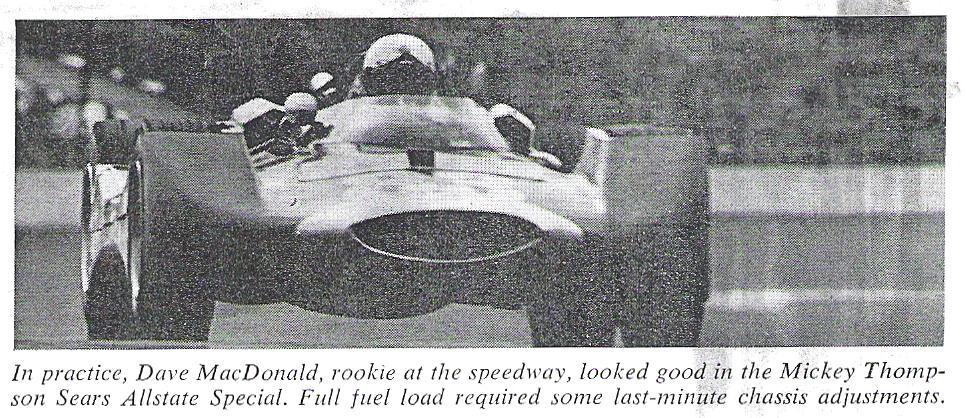
Dave MacDonald wraps up his final practice run in the Mickey Thompson 83 racer. Caption below mentions late adjustments for a full fuel
load but that is a subject of debate. General consensus is he did not run any practice laps with a full fuel load
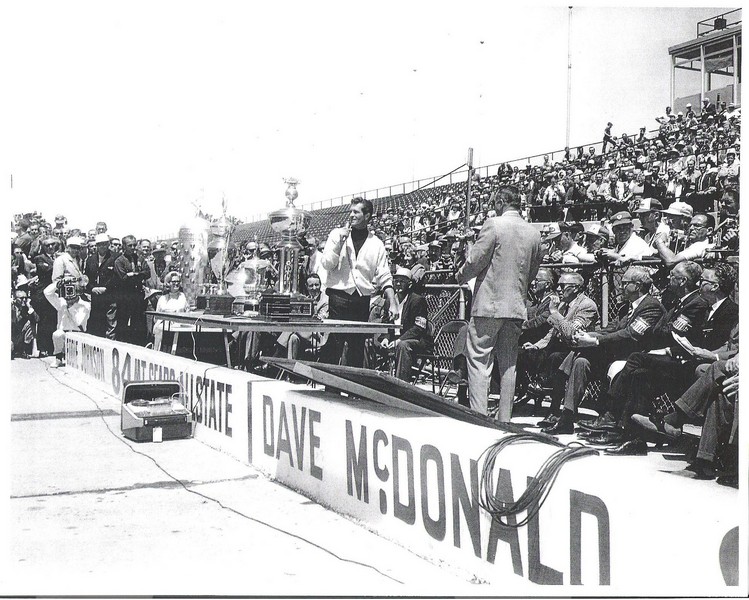
The field is set and IMS introduces 33 of the best drivers in the world at the 1964 Indy 500 media day festivities. You can see on pit wall
that Dave's last name was misspelled, this was a common occurance in newspapers throughout his racing career. Photo Dave Friedman.
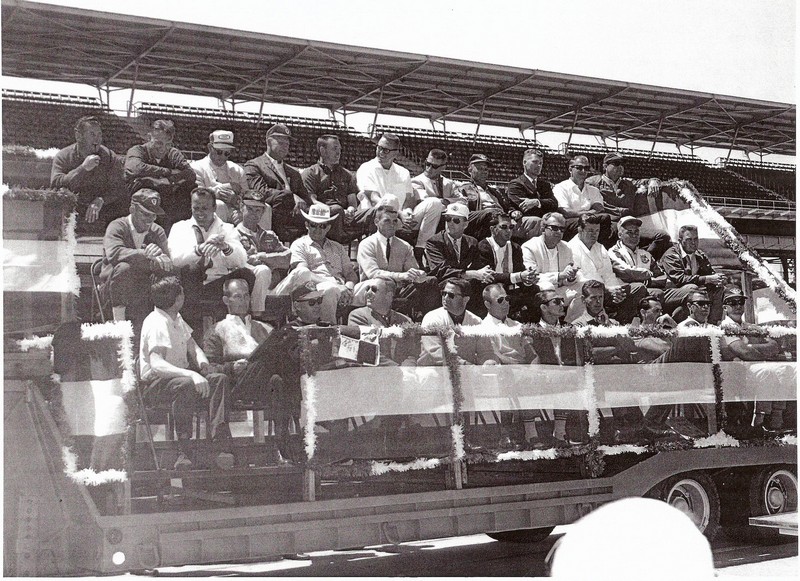
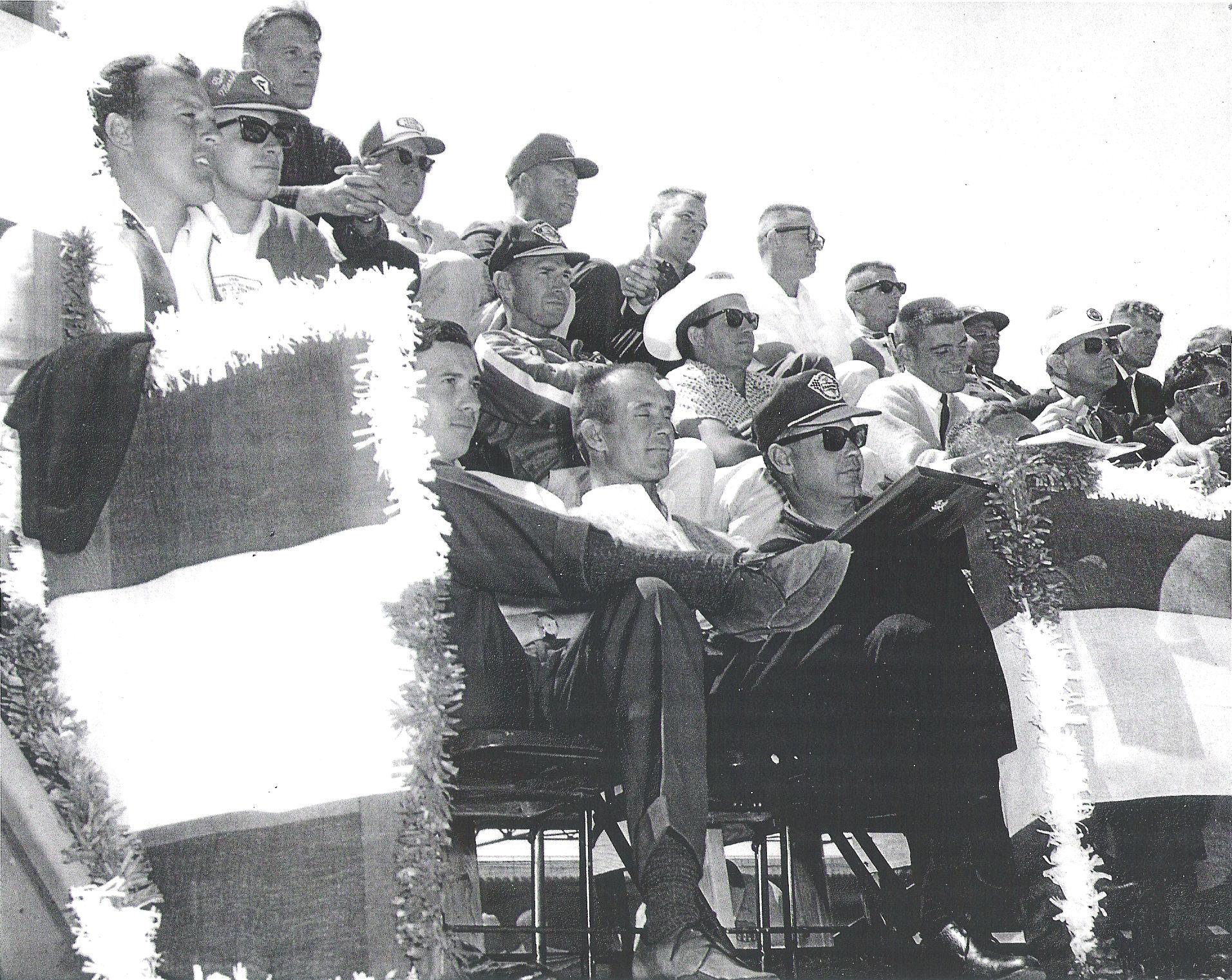
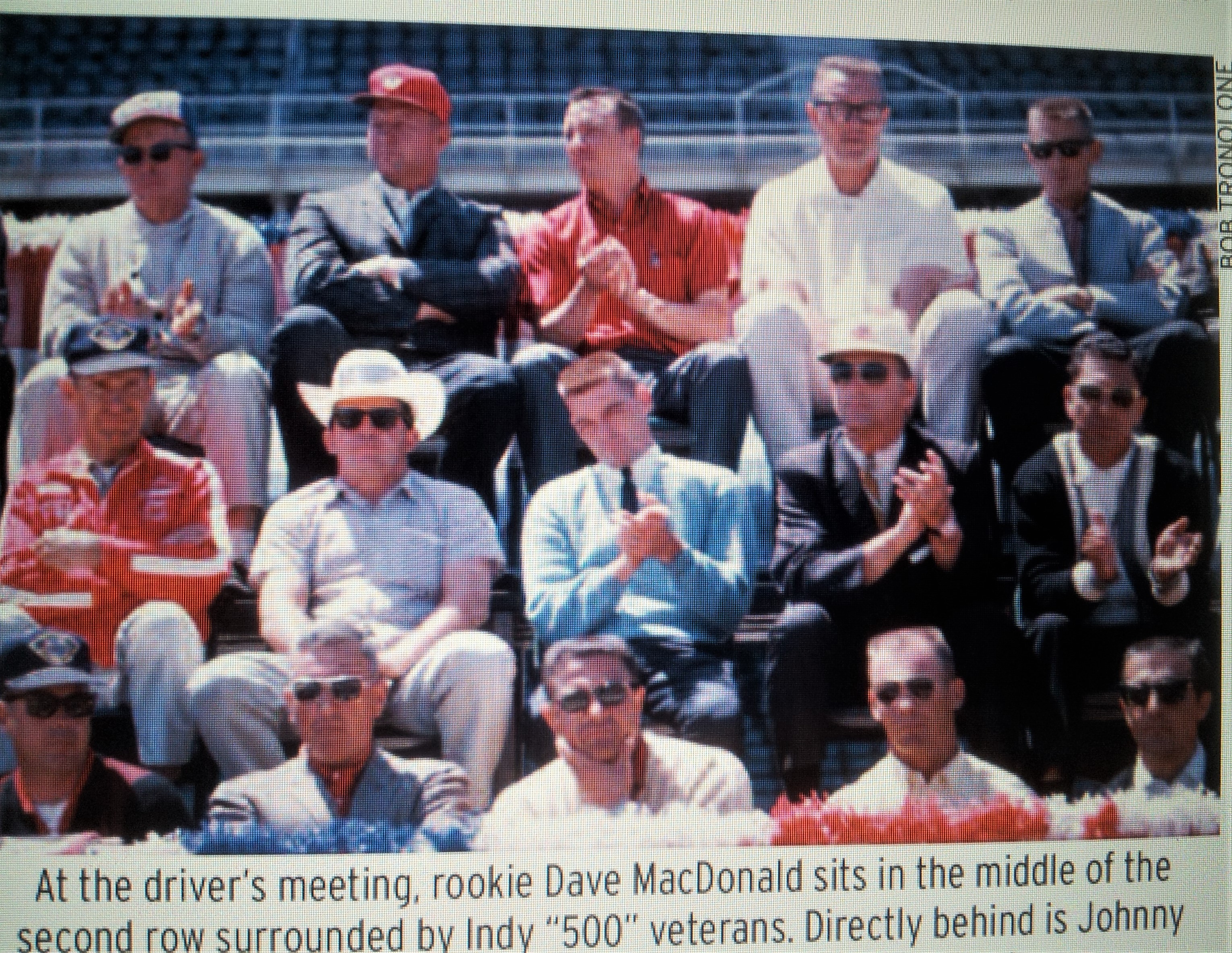
Drivers seated in makeshift stands enjoying the festivities. Dave MacDonald and Eddie Sachs are next to one another (middle of row 2)
as they prepare to take the drivers photo. Dave is wearing a sweater & tie and Eddie a hat. Photo Dave Friedman.
A closer look at some of the drivers. Photo Dave Friedman.
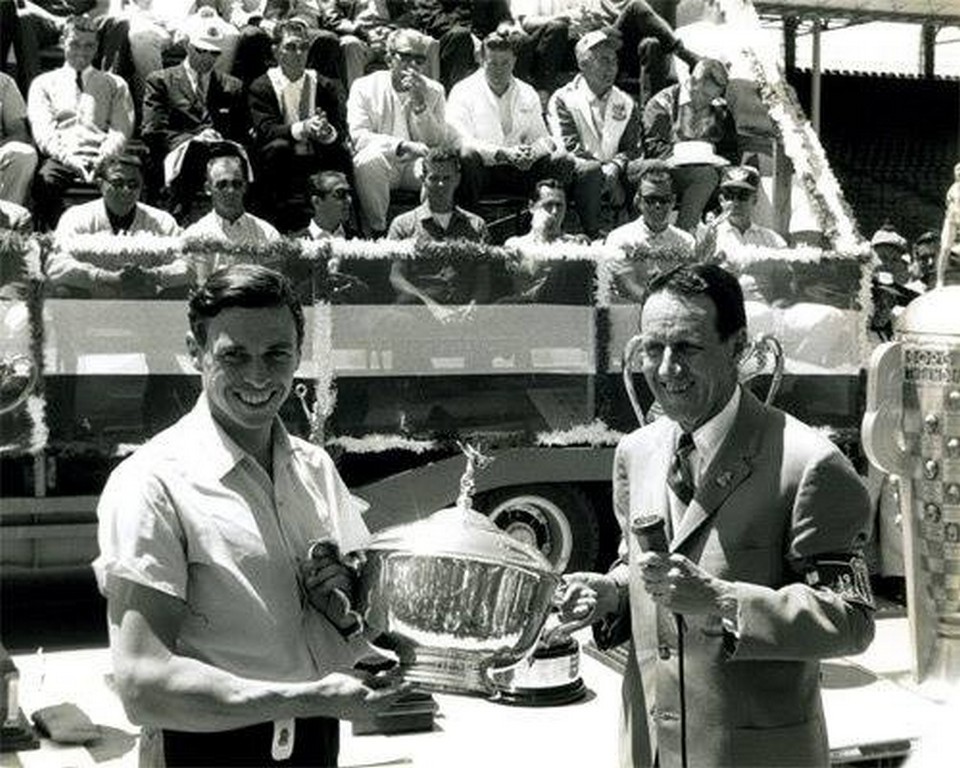
Polesitter Jim Clark receives trophy for fastest qualifier. [IMS]
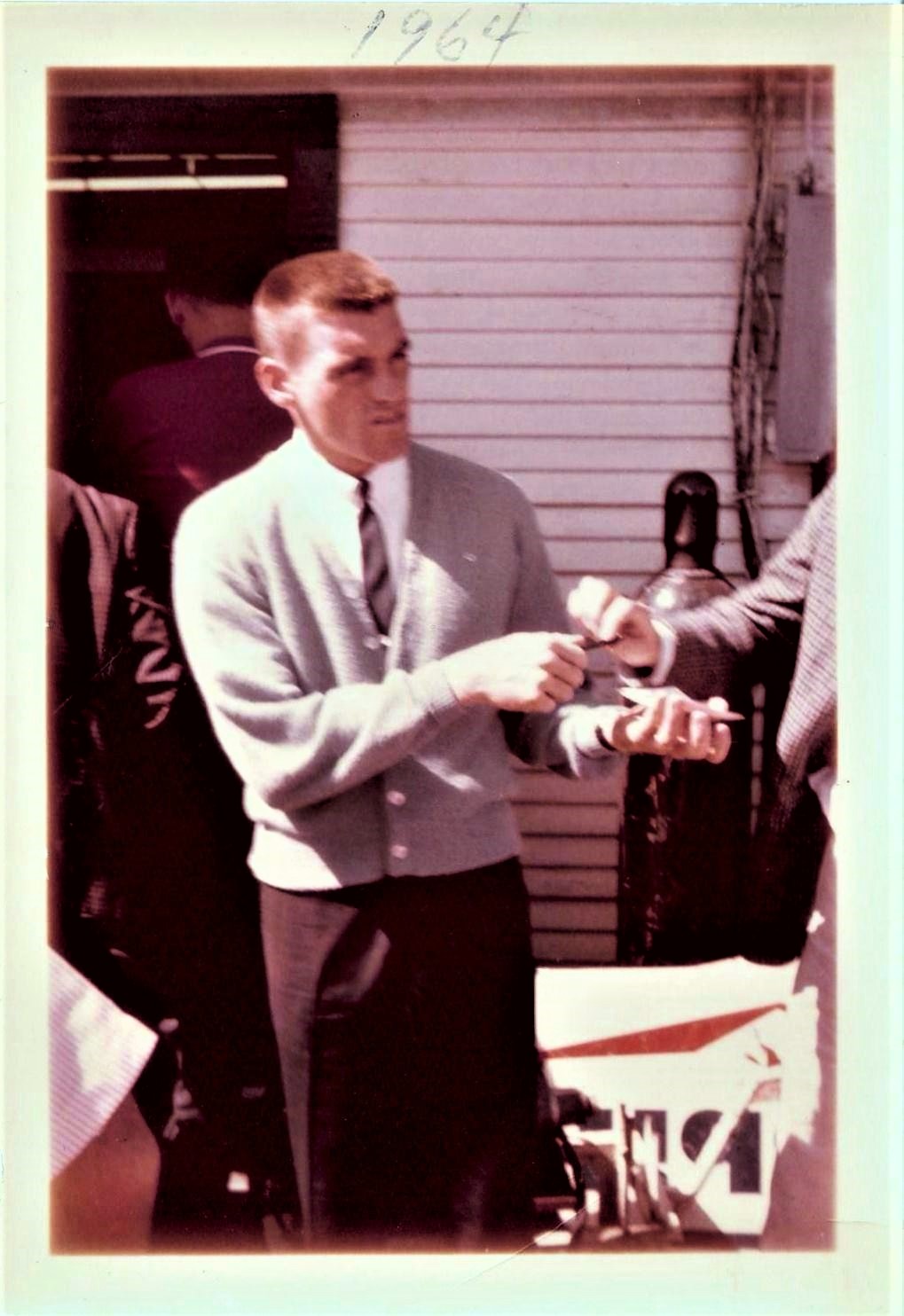
Still in his sweater & tie Dave MacDonald is back at the Thompson garage signing autographs.
Thompson, Bryant and the rest of the crew worked tirelessly to get the cars ready, right up until the night before the race. (Flip Schulke)
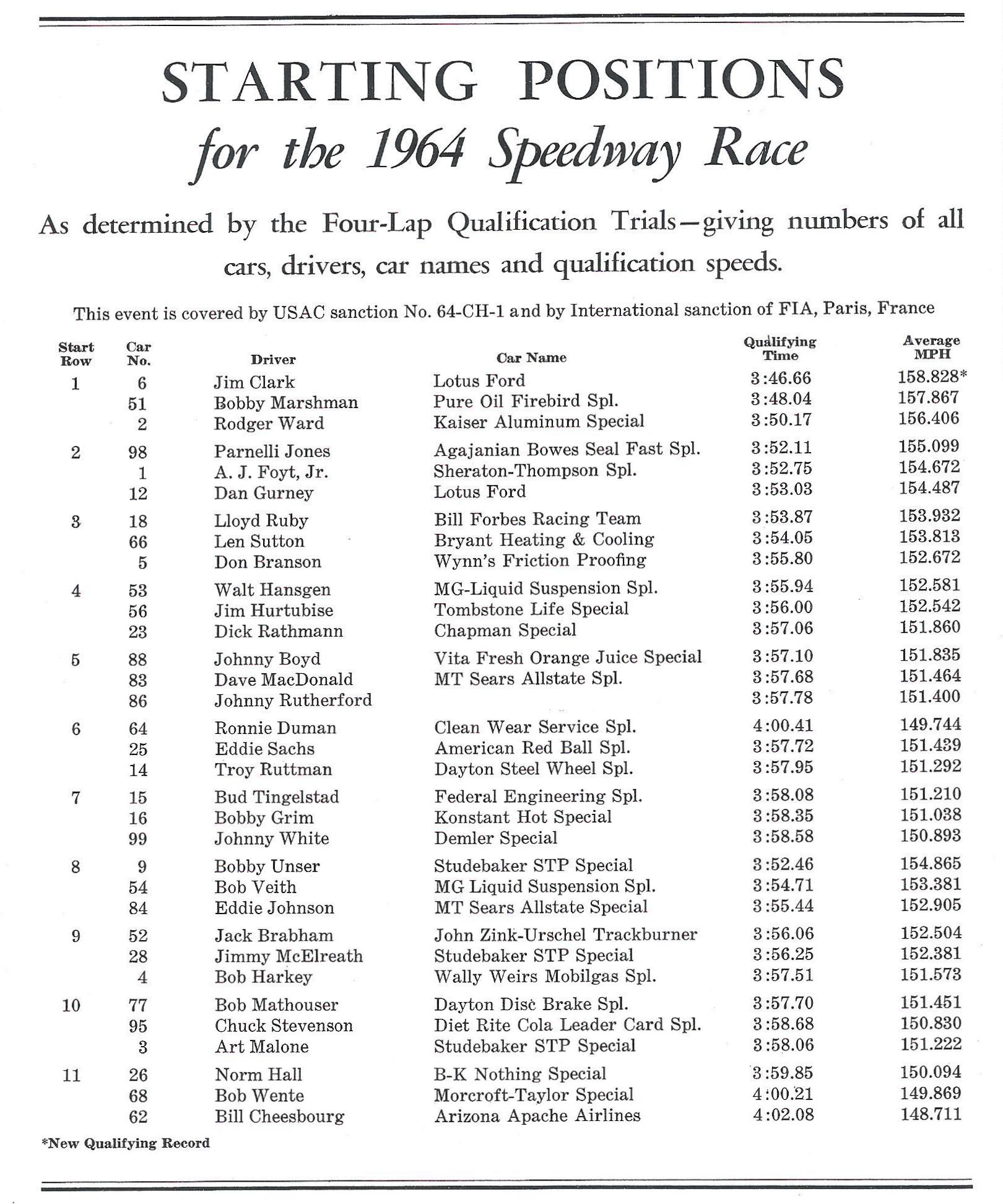
Final starting positions for the 1964 Indianapolis 500. Dave MacDonald is in the middle of the 5th row
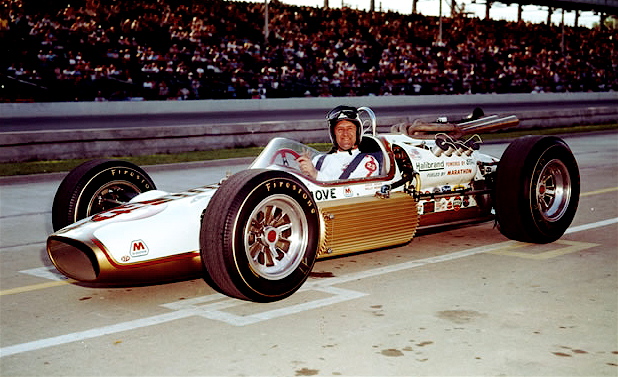
Indy veteran Eddie Sachs in his rear engine Ford will start in the 17th position. Photo courtesy IMS.
Len Sutton will start in the middle of row 3
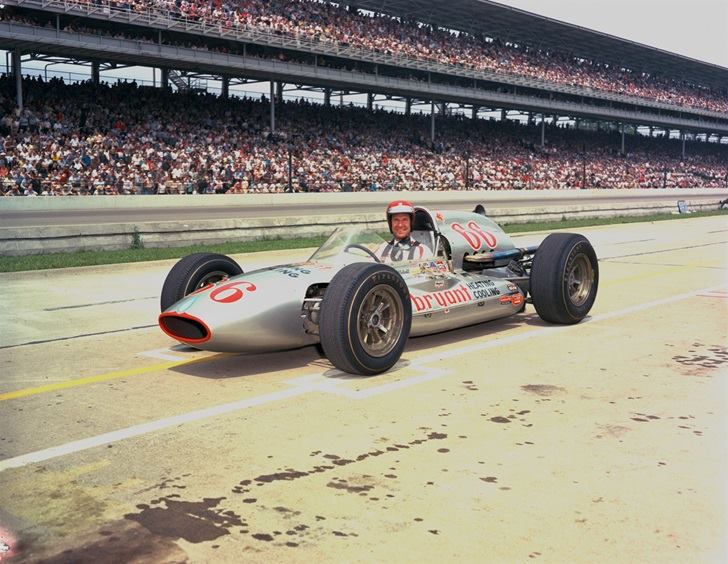
Eddie Johnson will start the Thompson #82 in the 24th position. Photo courtesy IMS.
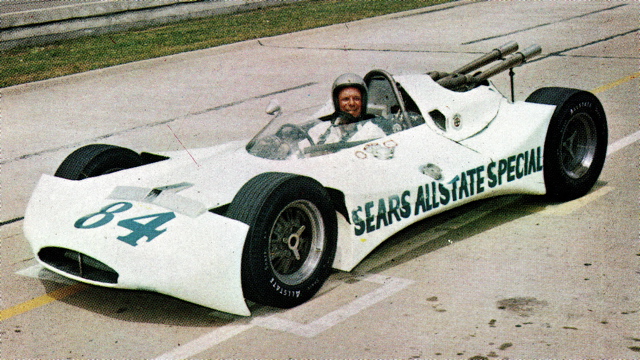

Dave MacDonald will start the Thompson #83 in 14th position. Photo courtesy IMS.
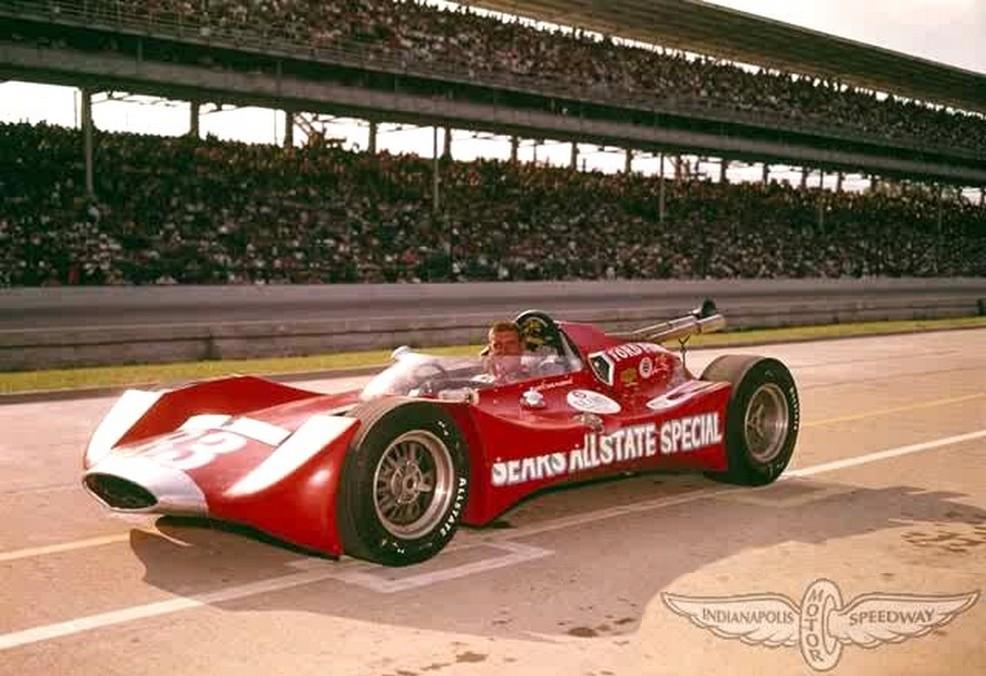
Dave's autographed Indy photo. From the collection of John Douglas, used with permission
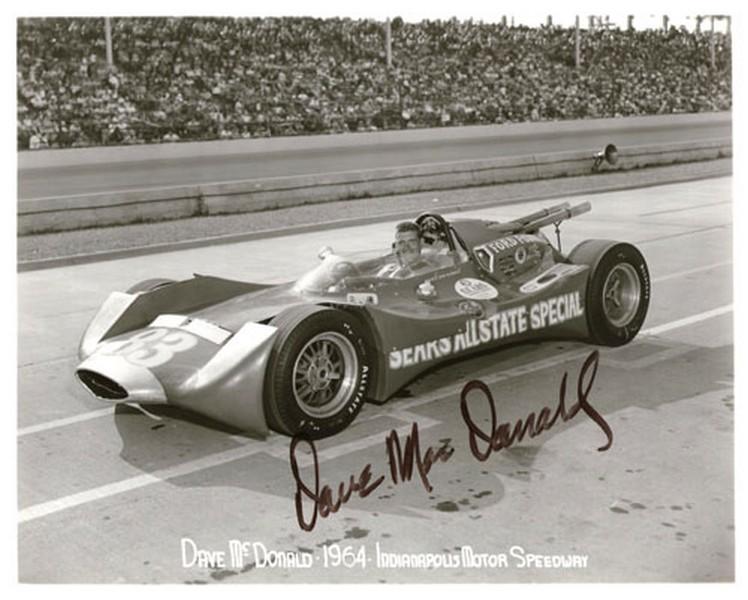
Another nice autographed print of Dave from the Gordon Bandemer collection.

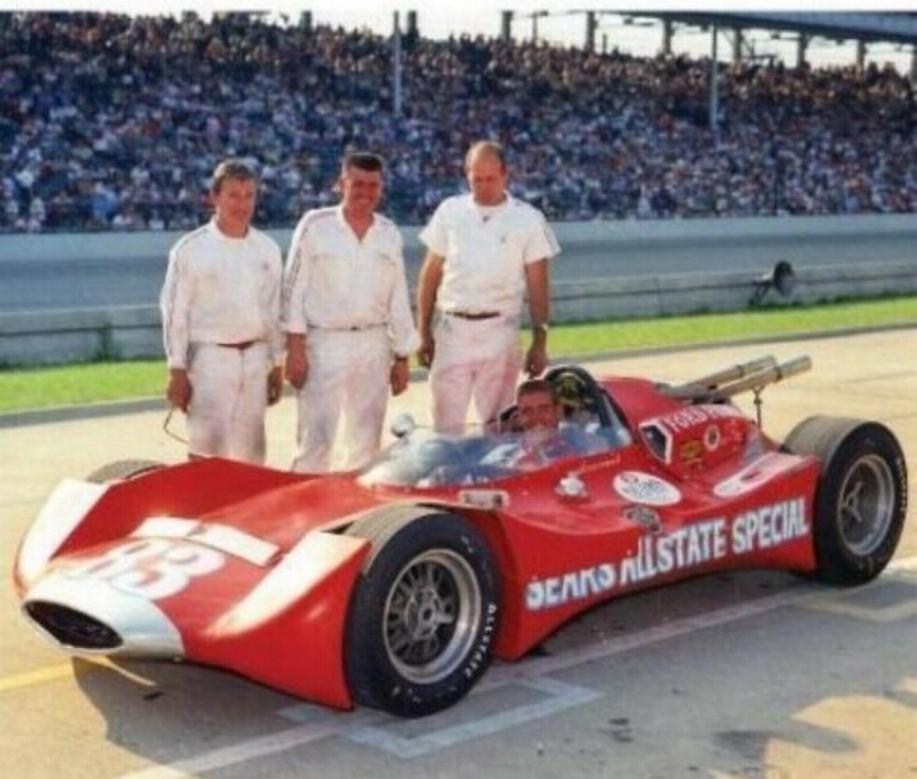
L-R Peter Bryant, Mickey Thompson, Fritz Voigt
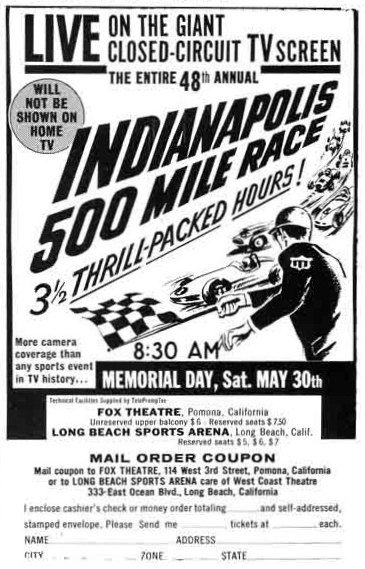
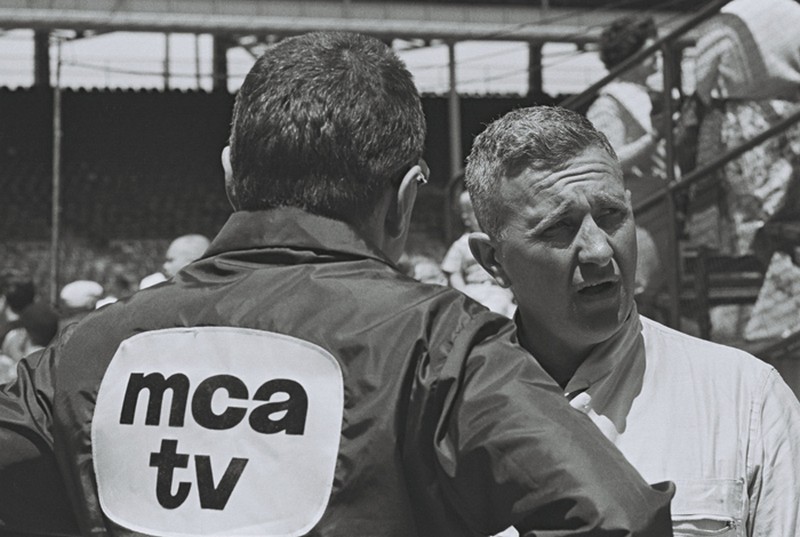
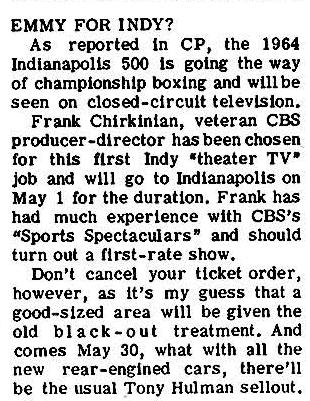
MCA-TV (Music Corporation of America) announced the first ever Indy 500 broadcast to a national closed-circuit TV audience
.jpg)
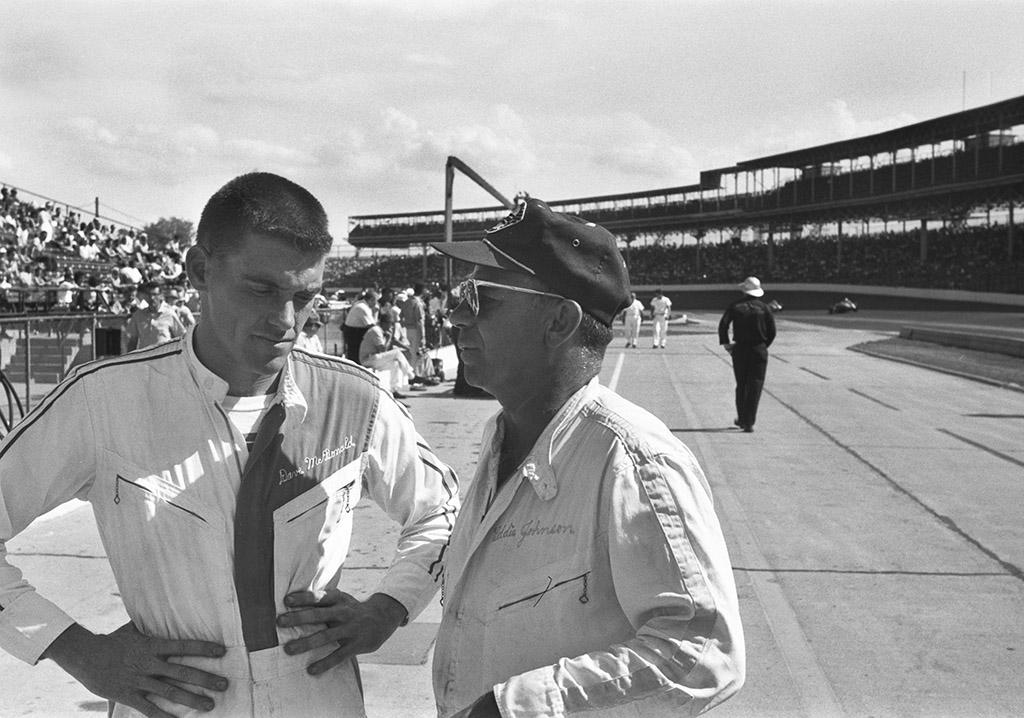
Race day. As pre race activities get underway Thompson teammates Dave MacDonald and Eddie Johnson appear to be engaged in a
serious conversation. Photo Gordon Martin courtesy MotorBinder by Roy Spencer.
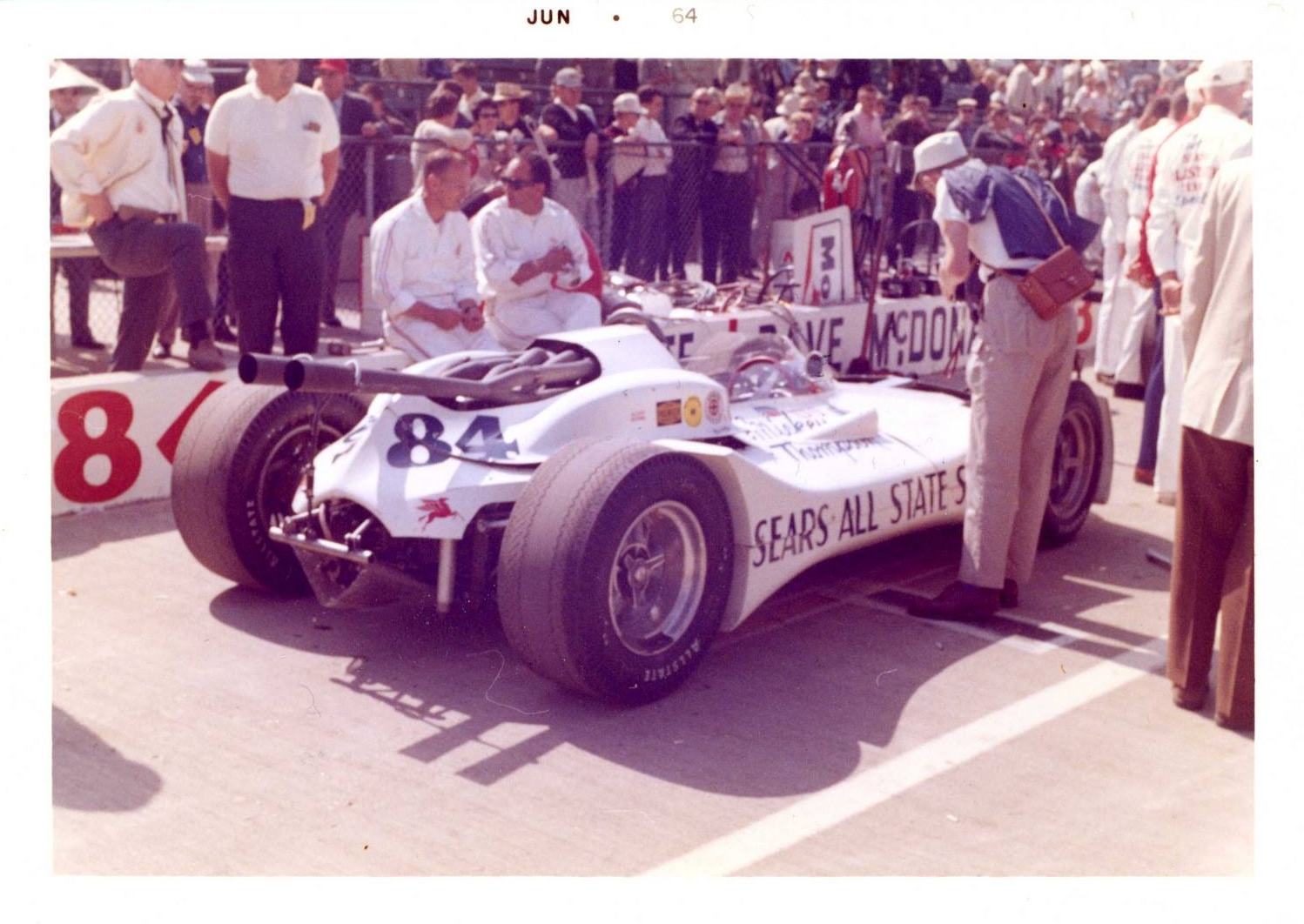
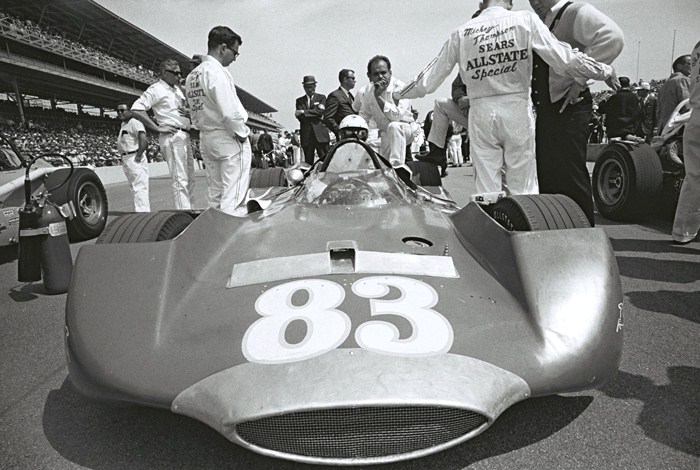
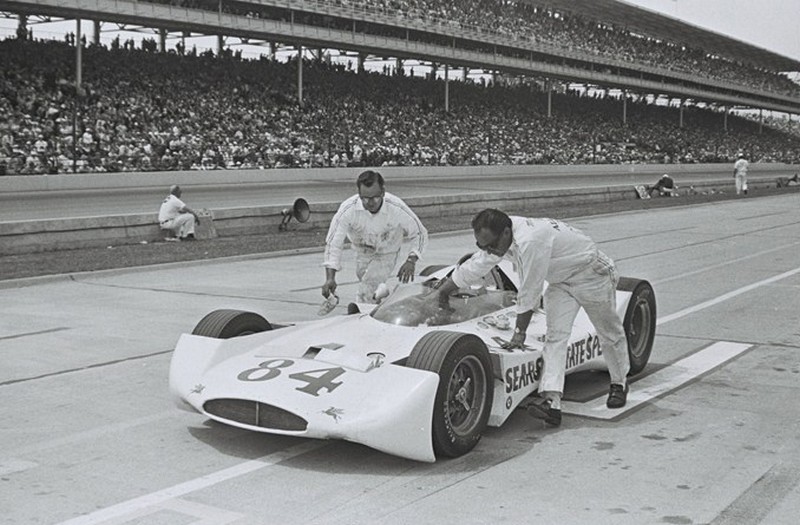
Eddie Johnson's 84 car along pit road. Notice the last minute air scoop addition to the right of the driver. This late modification appears
only on race day photos of Mickey's cars. Photo unknown
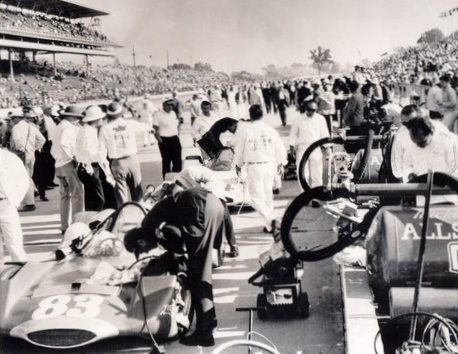
Both Dave MacDonald's #83 car Eddie Johnson's 84 car along pit road as fans begin to fill the stands. Photo unknown
Indianapolis Motor Speedway is brimming wth excitement as nearly three hundred thousand fans on hand for the 500. Photo The Henry Ford
.jpg)
Cars and drivers begin to fill the grid for the start of the race. Dave MacDonald and John Mecom (R) in pre race chat. Photo Dave Friedman
John Mecom (L) and Dave MacDonald (C). Photo Dave Friedman
.jpg)
Eddie Johnson's 84 car ready to go and pushed out to the track. Dave Friedman photo from the The Henry Ford Collection
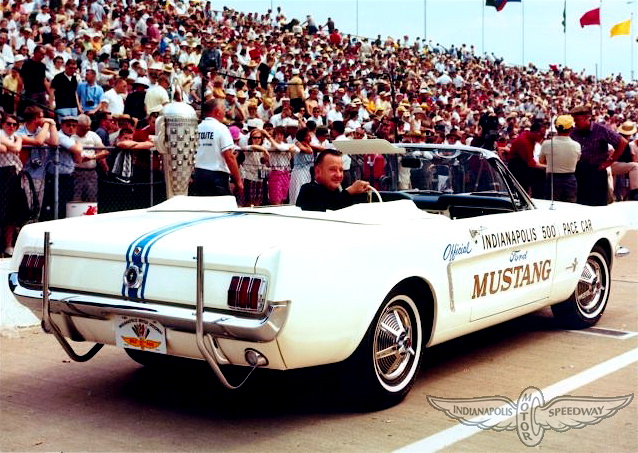
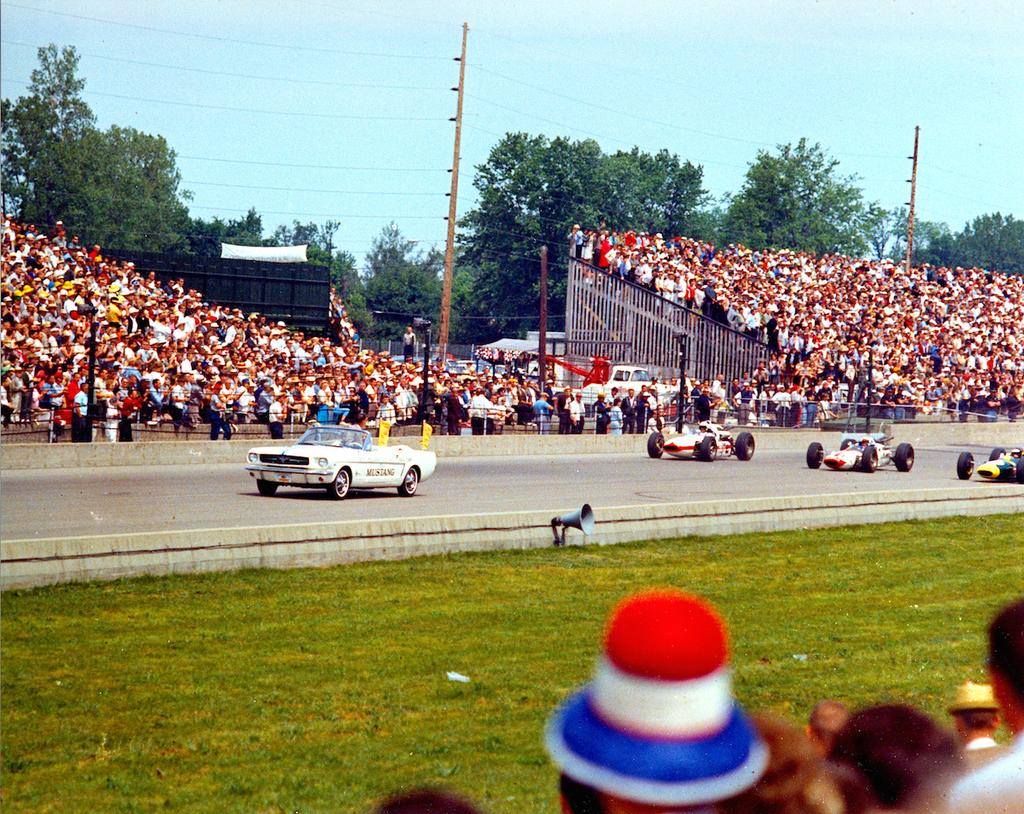
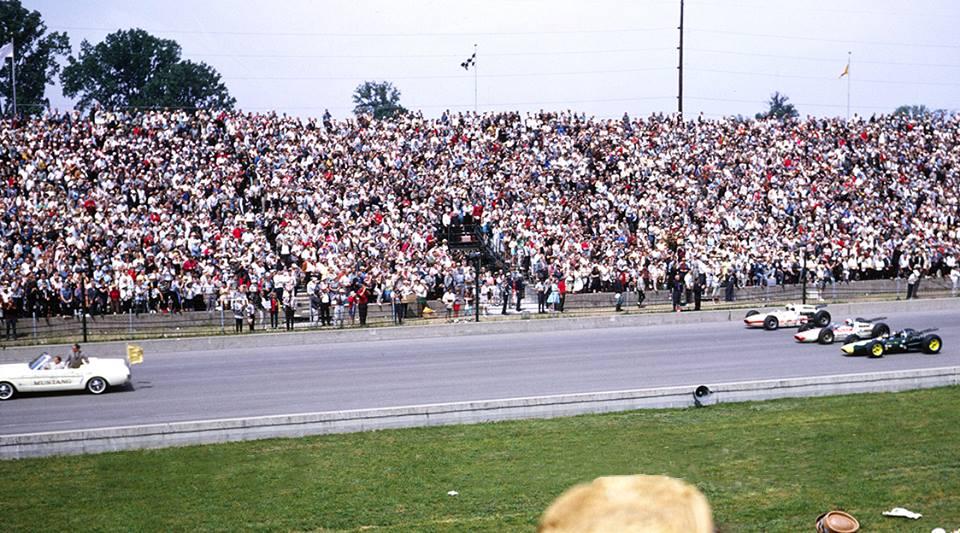
Benson Ford sits in sparkling new Ford Mustang - 1964 Indy 500 pace car. Photo courtesy IMS.
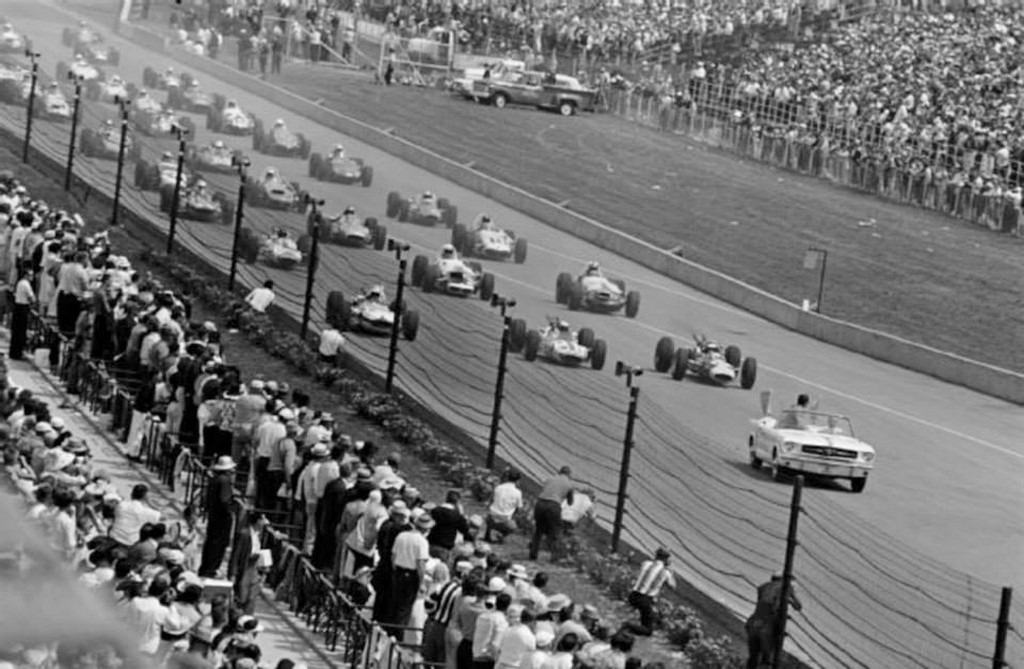
Several more Ford Mustang Pace Car's would circle the track before the race. Photo unknown
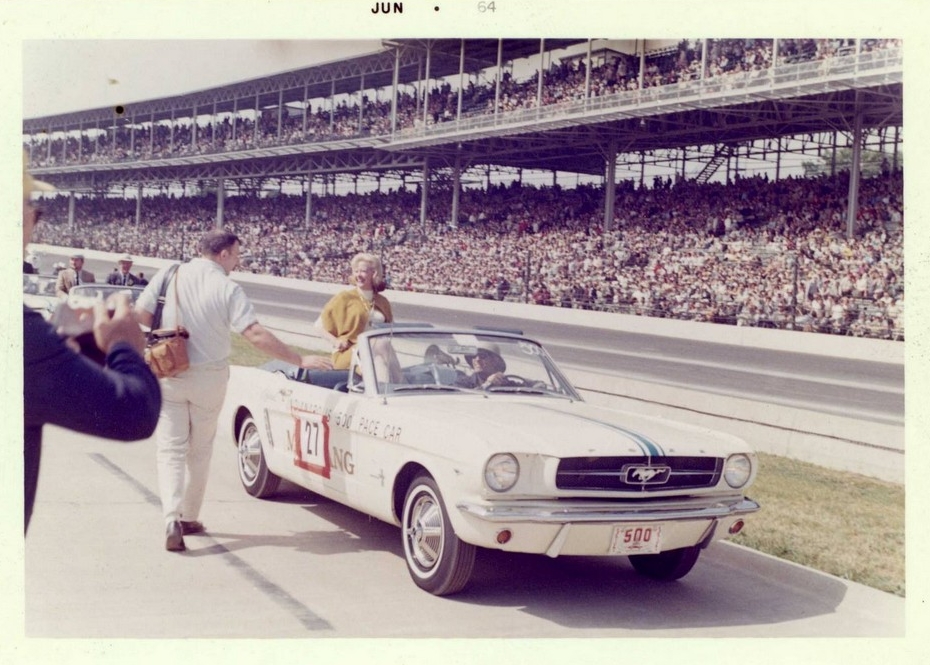
Photo The Henry Ford Collection
.jpg)
Official Ford Mustang Pace Car taking the cars around the track before start of the '64 Indy 500. Jim Clark on the pole. Photo Ed Maudlin
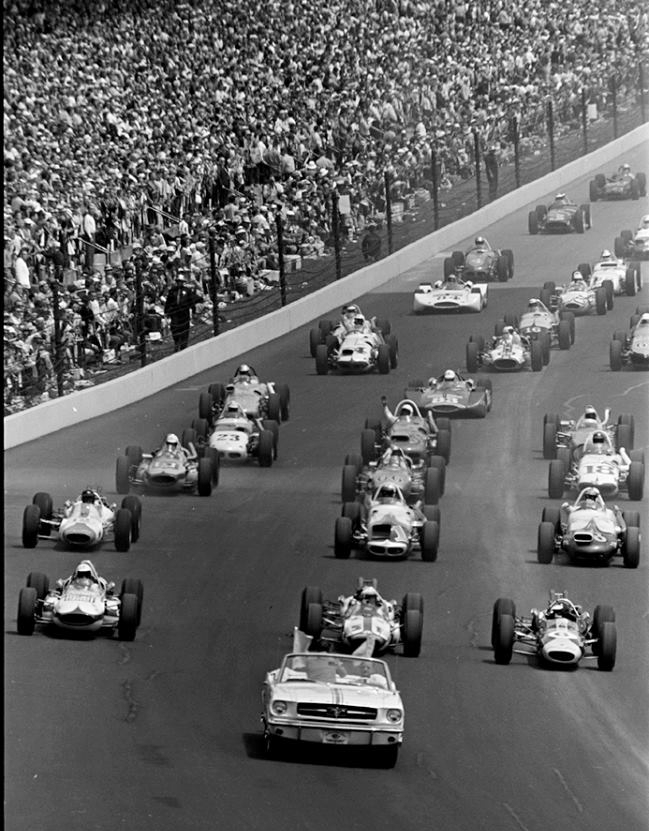
Dave MacDonald in the middle of row 5 with Eddie Sachs Behind him
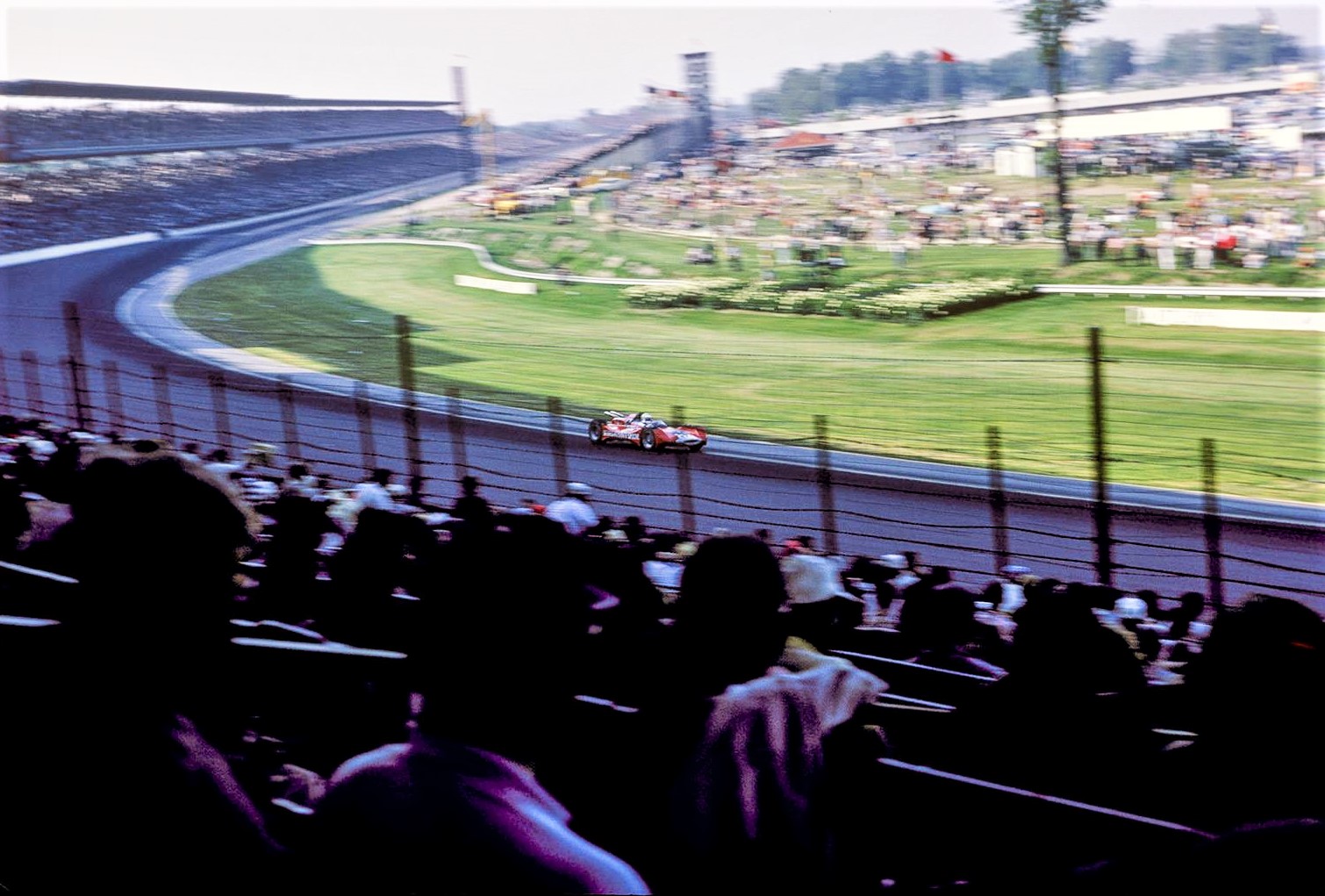
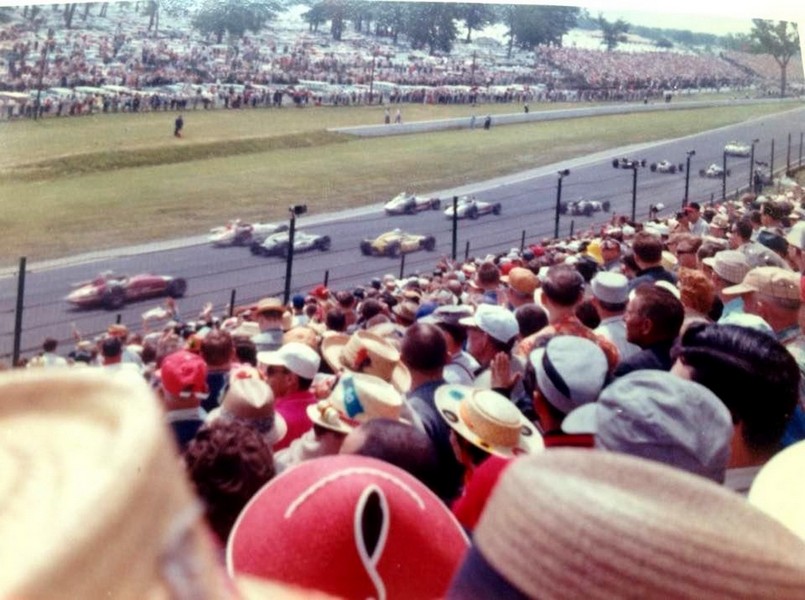
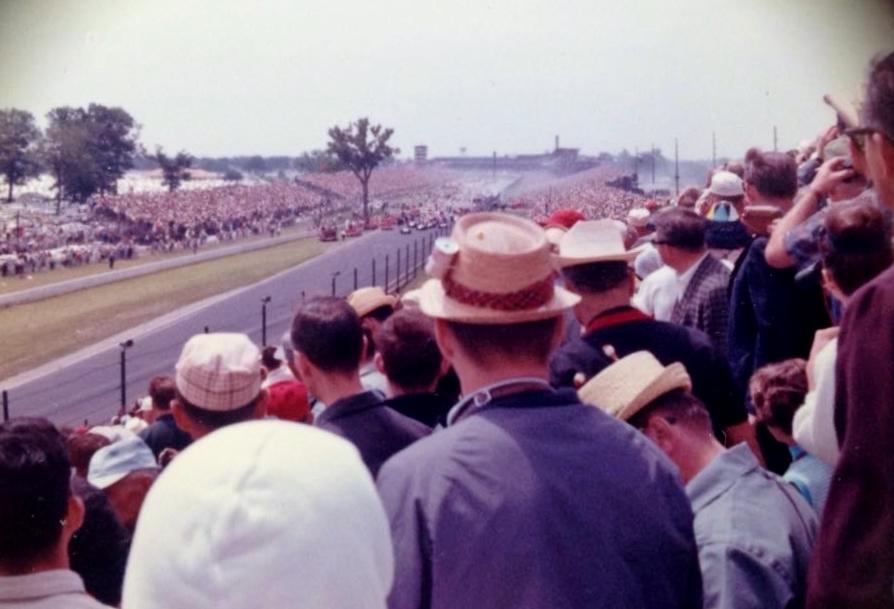
Beautiful color image showing the view out of turn 4 and onto the front straight. The big tree on far left of photo is where Dave MacDonald's
car would impact the wall. Photo Walter McCarty
.jpg)
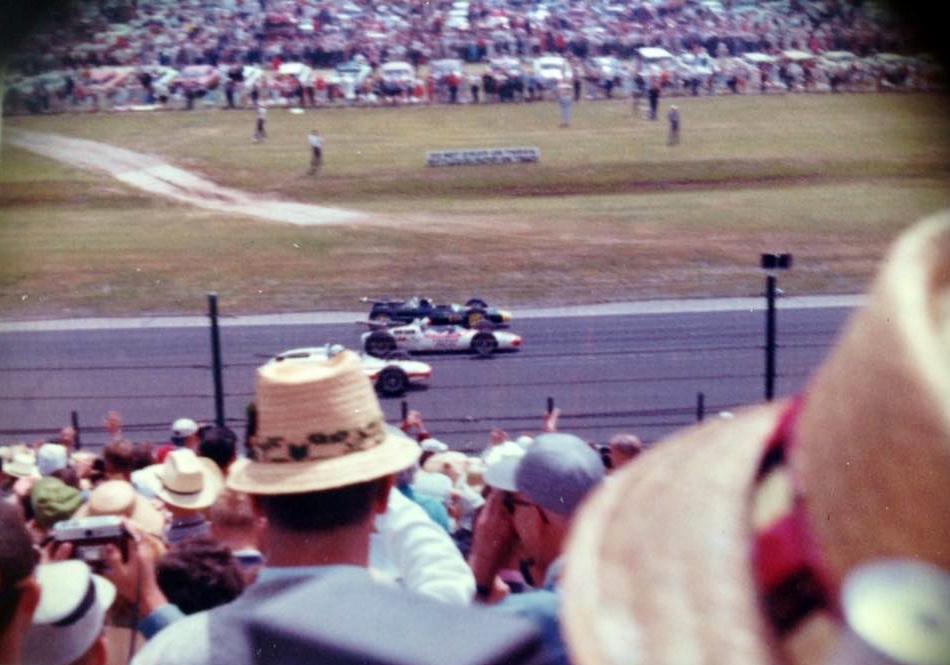
You can just see the second Thompson entry deiven by Eddie Johnson - the 84 car.
.jpg)
Front row of Jim Clark, Bobby Marshman & Rodger Ward.
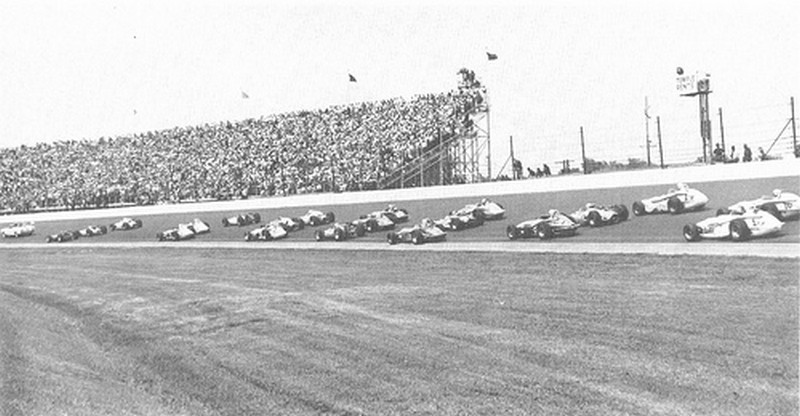
Pace Car off and the race goes green. Rear of Jimmy Clark's Lotus barely visible as the field enters turn 1. Getty Images
Jim Clark in the #82 Ford Lotus gets a great start and is already separating from the pack.
.jpg)
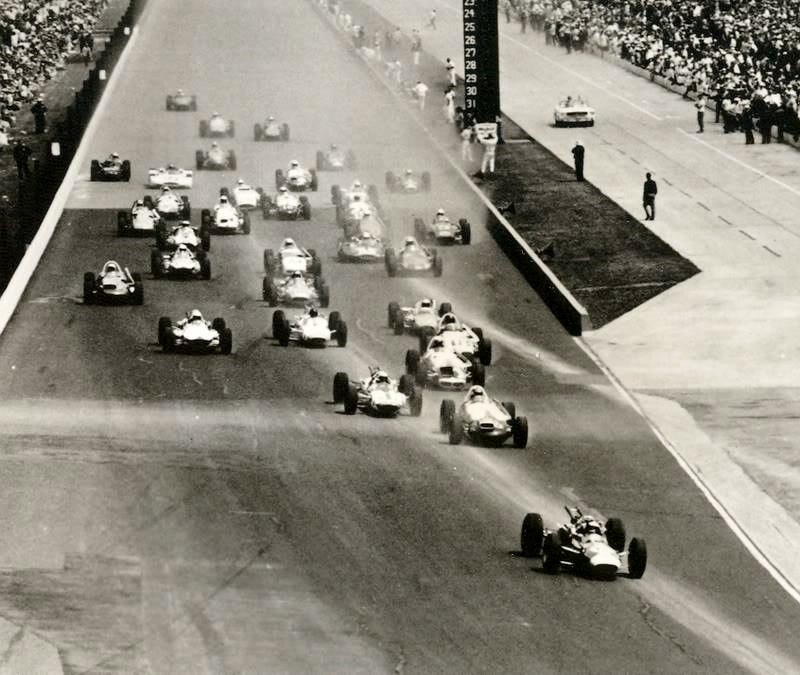
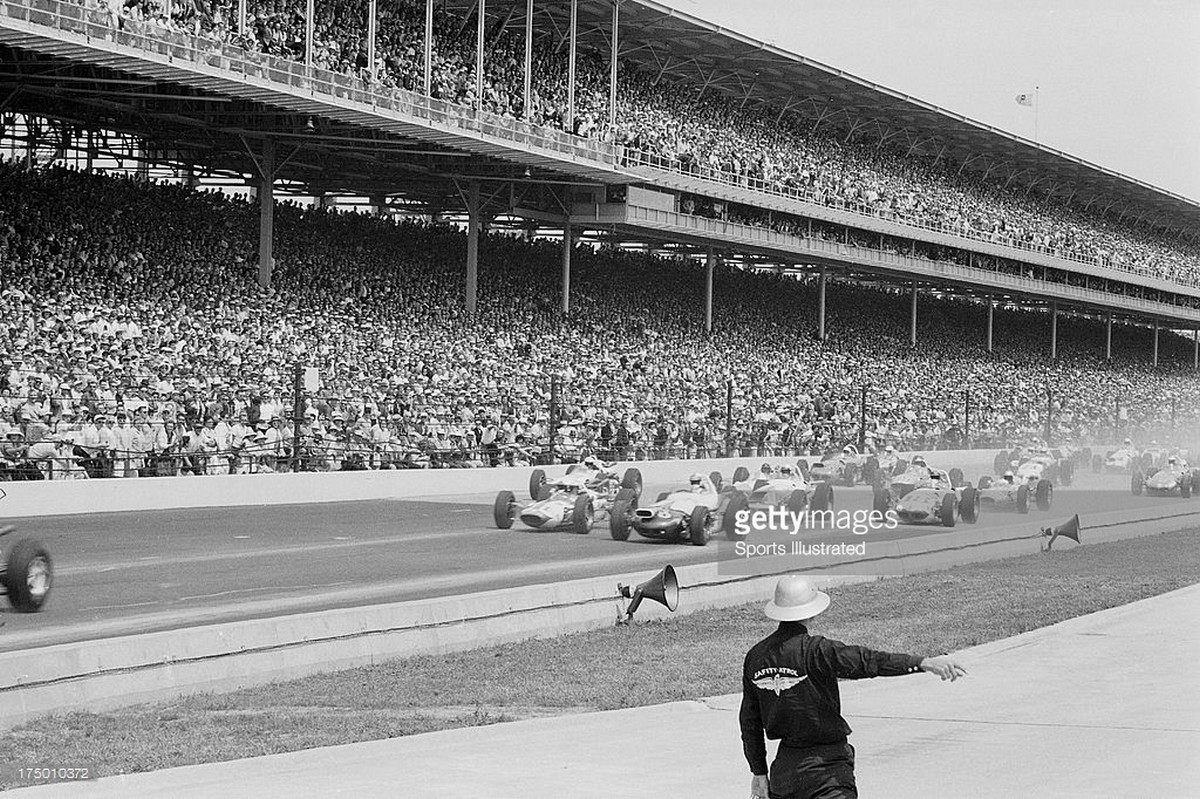
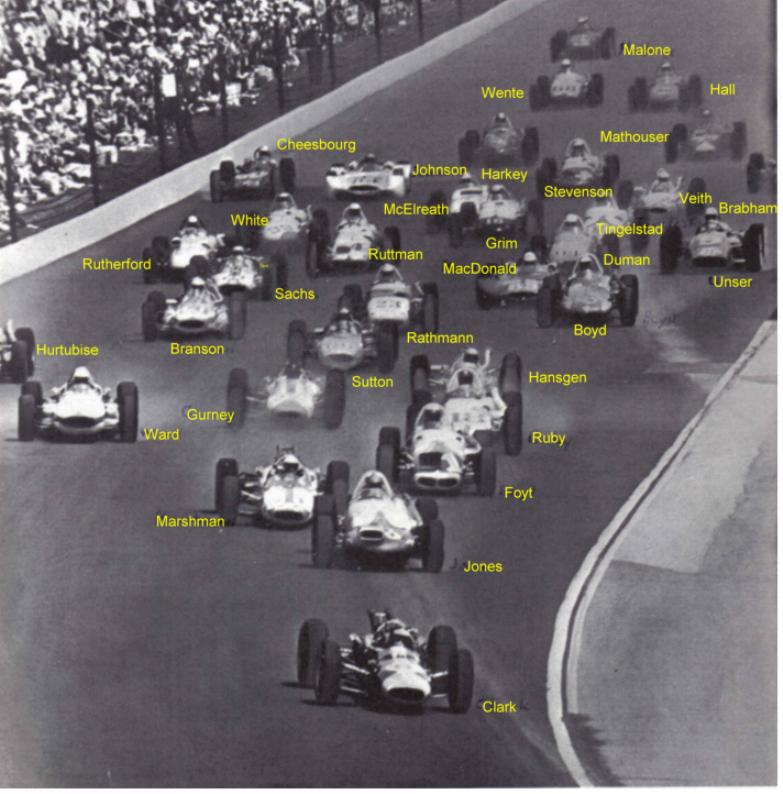
Eddie Sachs makes an early move to the outside and jumps Dave MacDonald, Johnny Rutherford and Ronnie Duman and was 13th as the
field went into turn one. In the shuffle MacDonald still looks to be in 14th position and '63 world champion Jim Clark leads the pack.
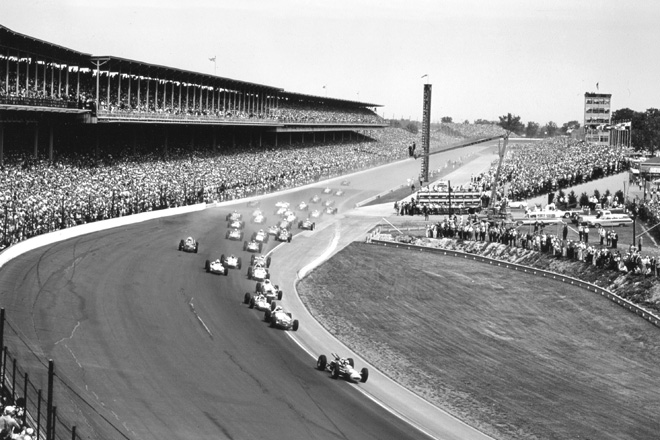
Jim Clark with a comfortable lead as the field goes thru one and toward the short chute. [IMS]
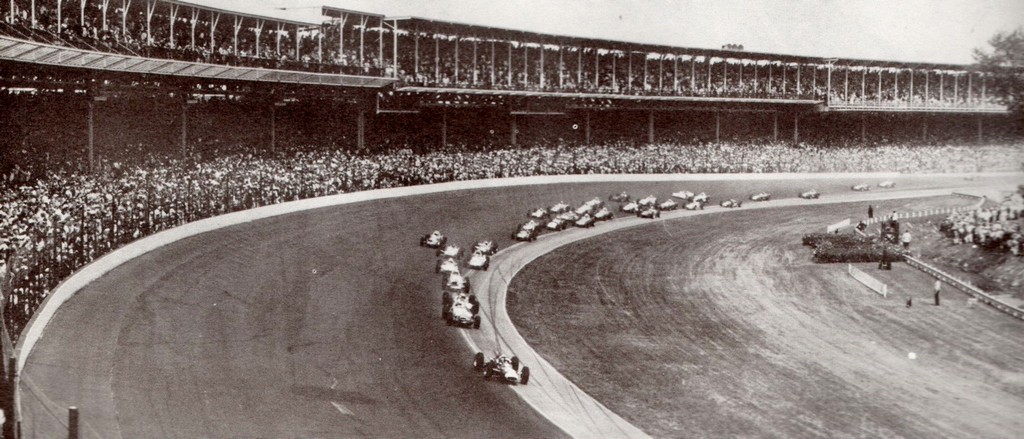
Entering the short chute between 1 and 2, Dave MacDonald still in 14th position.
Deeper into one you see Dave MacDonald tucked in behind Johnny Boyd (88) with Ronnie Duman (64) directly behind. Eddie Sachs
(25) has jumped Johnny Rutherford (86) and both are in the process of surging past MacDonald and Boyd. Bobby Unser (9) with all
four below flies by Bud Tingelstad (15). David Parker photo
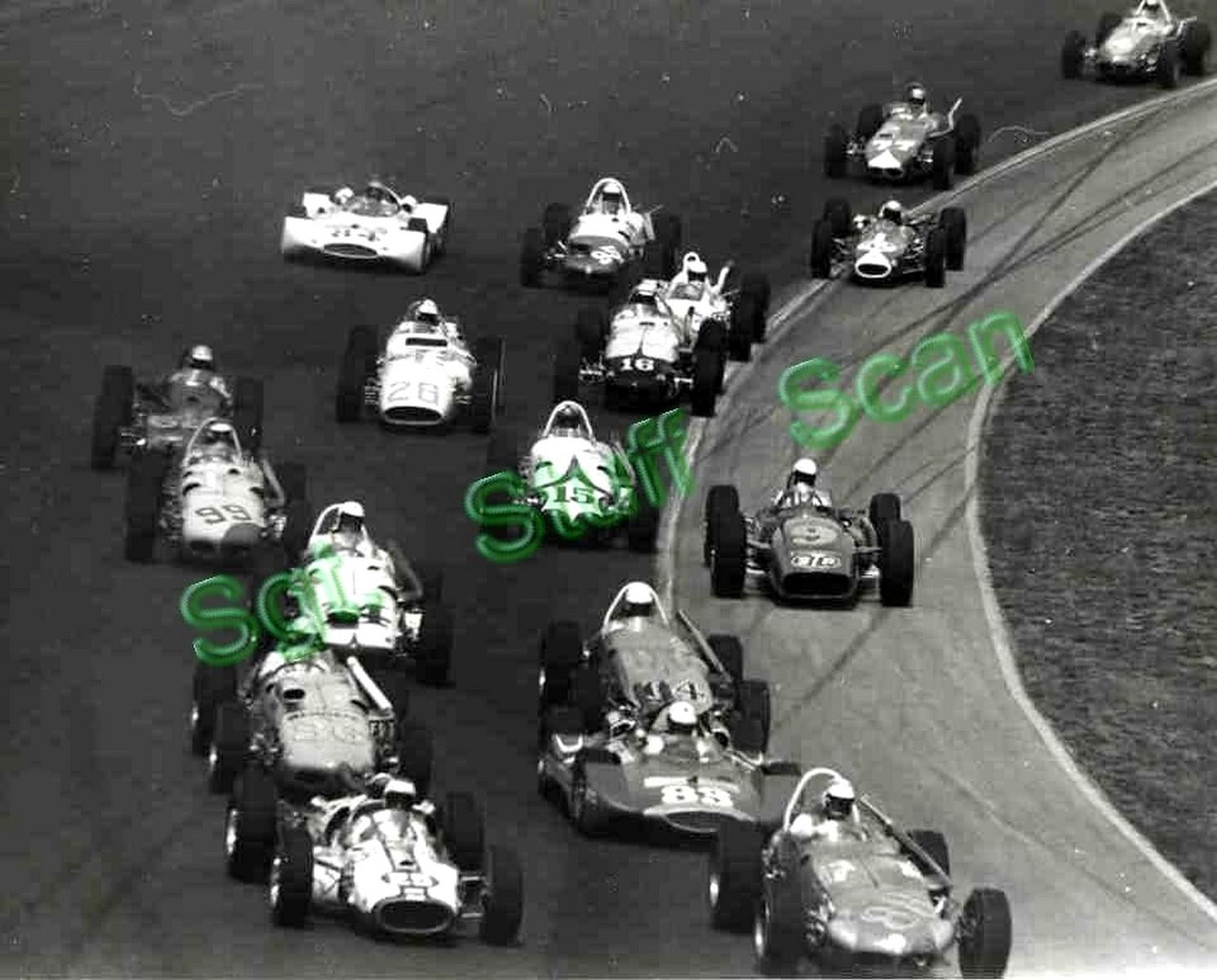
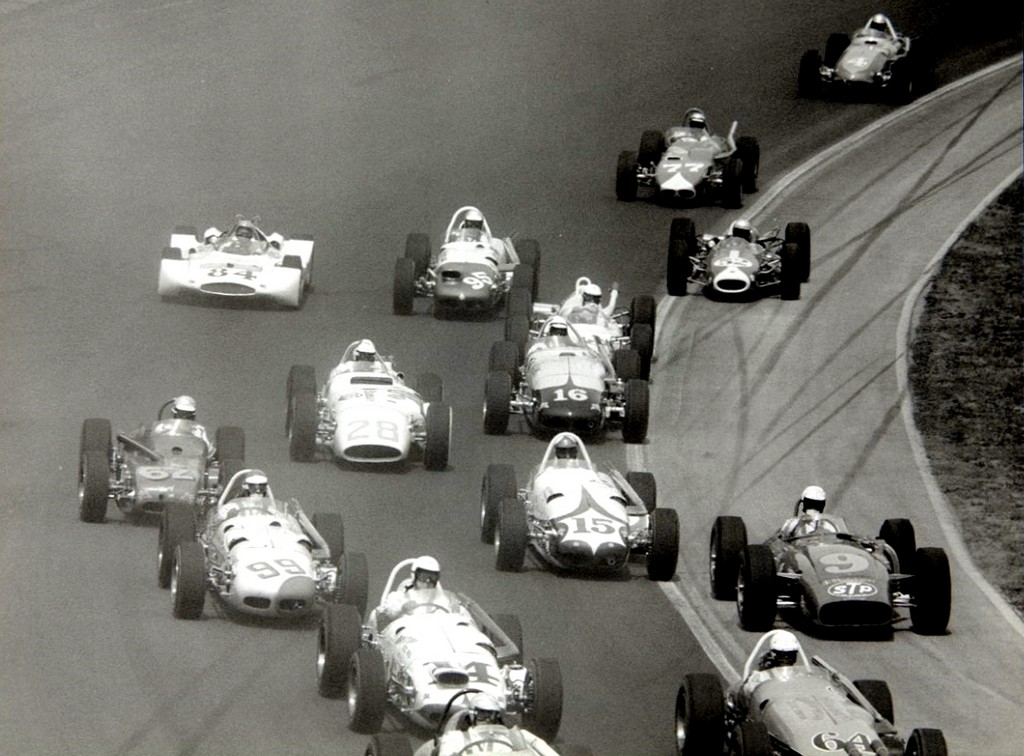
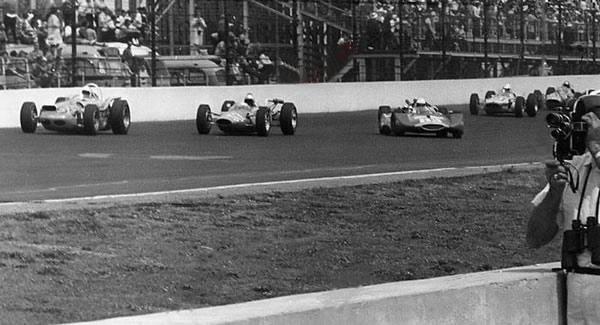
During laps 1 and 2 Dave MacDonald had moved past Don Branson, Len Sutton & Dick Rathman and repassed Eddie Sachs and Johnny
Rutherford in the process. As leader Jim Clark crossed the line to start lap 3 Jim Hurtibise, Walt Hansgen & Dave MacDonald were coming
out of turn four running 8-9-10. As Dave exited turn 4 and onto the front straight he pulled driver's left to make a move on Walt, and perhaps
Herk too, down the straightaway. A split second later Walt went drivers left to make his own move on Herk. Two cars behind MacDonald
was Len Sutton who would later say “Dave turned left again to avoid Walt and his car got sideways”. Dick Hensley, a fireman stationed at
Turn four said “MacDonald came through the fourth turn with two other cars. As he came off or number four he cut to pass. Then the front
end of his car lifted at least 1 to 1 ½ feet off the ground. It looked as if the wind just hit him”.
.jpg)
At the bottom is leader Jimmy Clark streaking into turn 1 at the beginning of lap 3 and at the top is the start of the crash that would claim
the lives of talented racers Eddie Sachs & Dave MacDonald
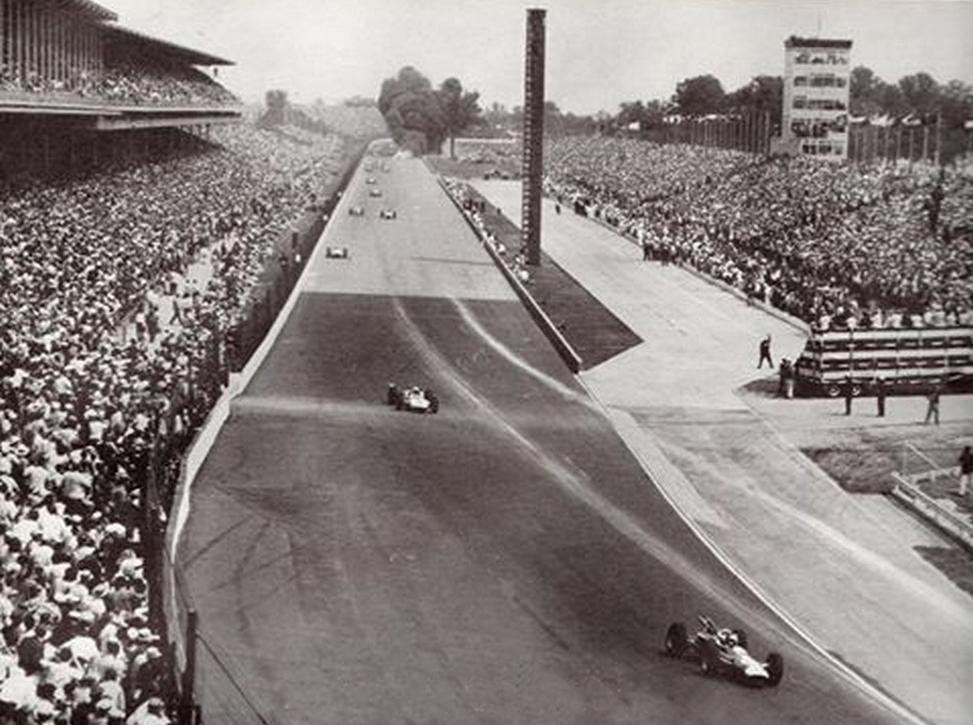
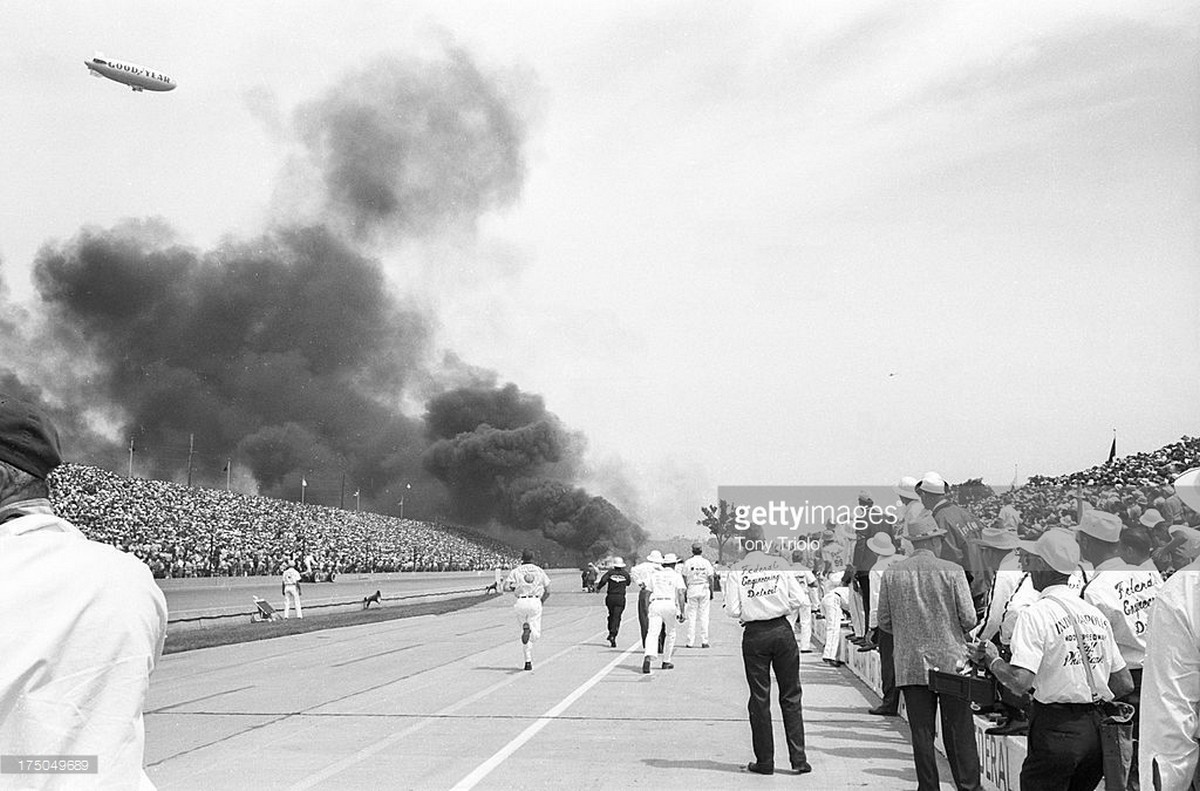
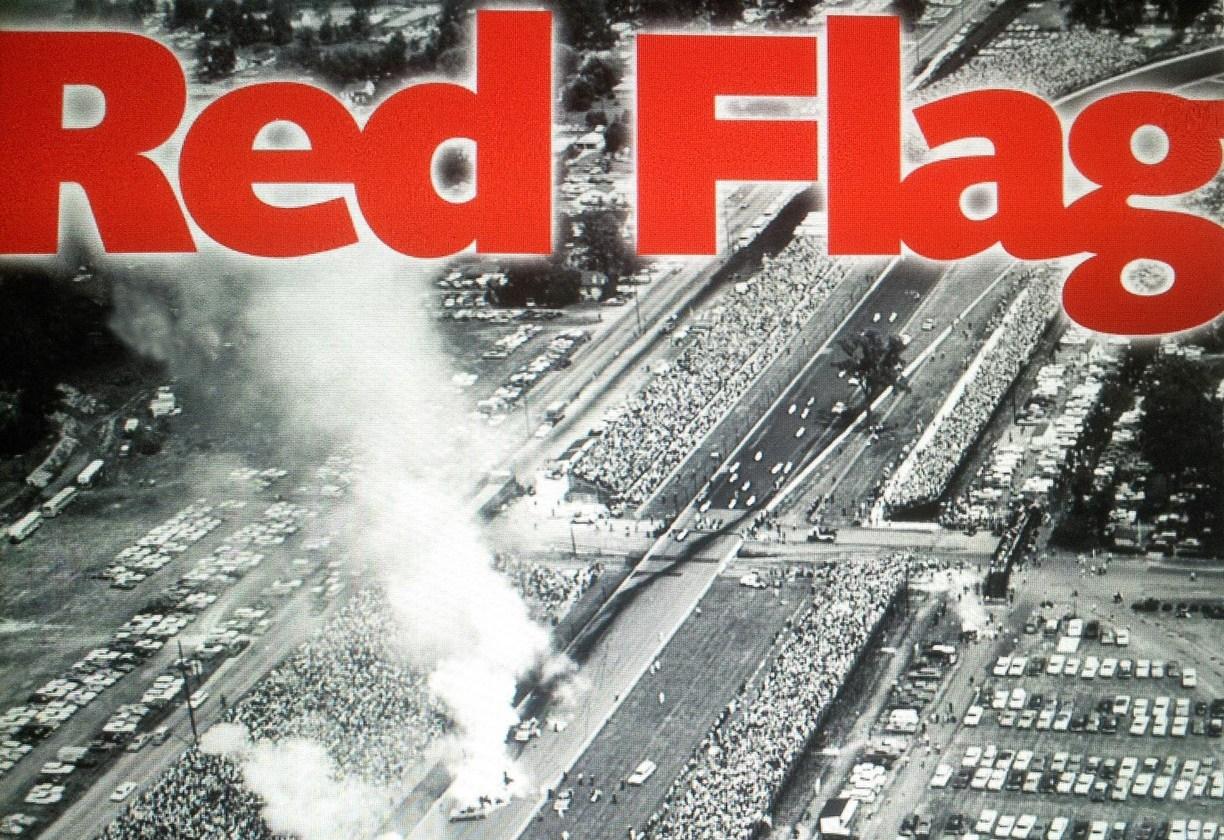
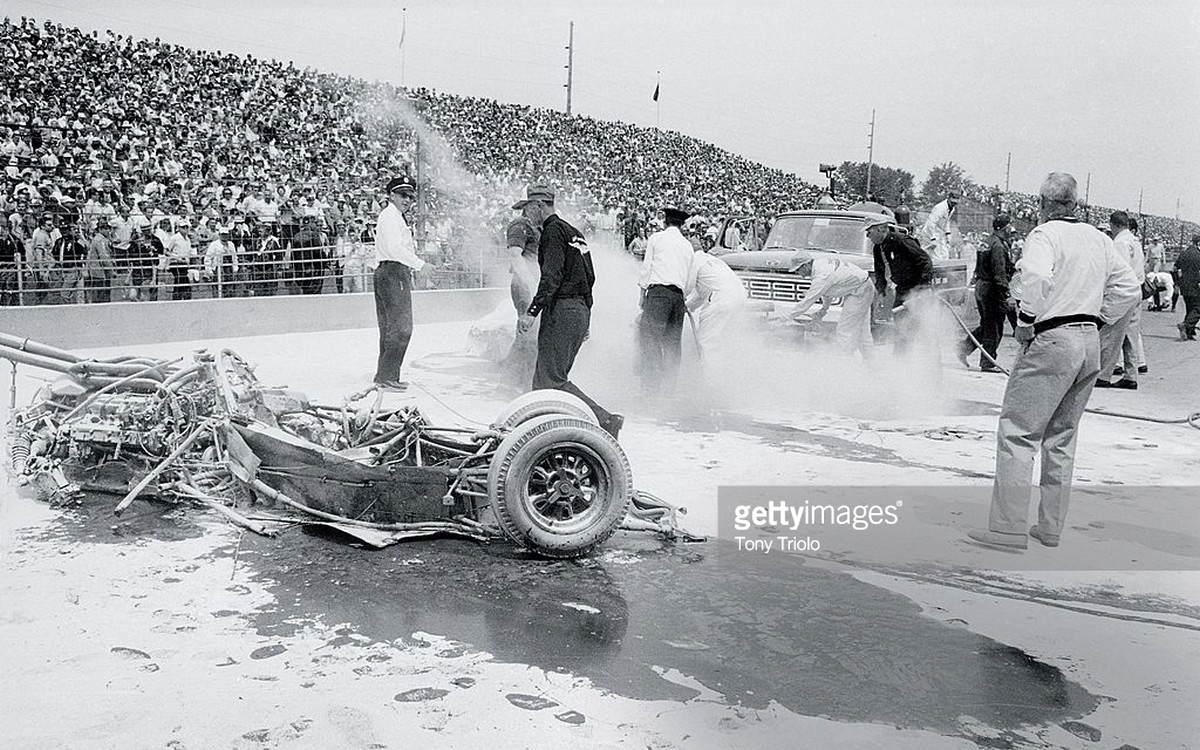
The aftermath. The fire truck at the very bottom of this photo is parked next to Dave MacDonald's car. The dark marks on the track show
the path Dave's car took to get there - the initial impact on the inside wall and the second impact at the outside wall. Cars making it through
have come back around to a stop as race officials halted the race. This is the first time in history the Indianapolis 500 was stopped for a
crash. Image courtesy of the William Oates-Phil Reilly Collection & Vintage Motorsport magazine.
Cars that made it through have come back around and parked as the cleanup continues
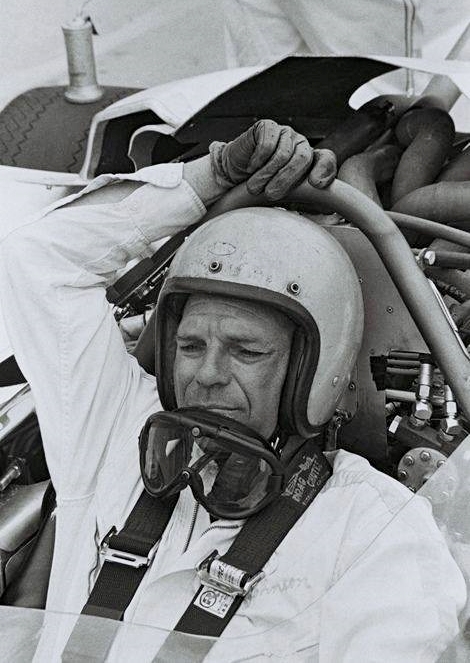
Eddie Johnson is among the cars parked. You can see the anguish on Eddie's face as he looks toward the horror in front of him knowing that
his friend and teammate is one of the drivers involved

Dave MacDonald's car in the foreground, Eddie Sachs' in the background. RIP. Getty Images
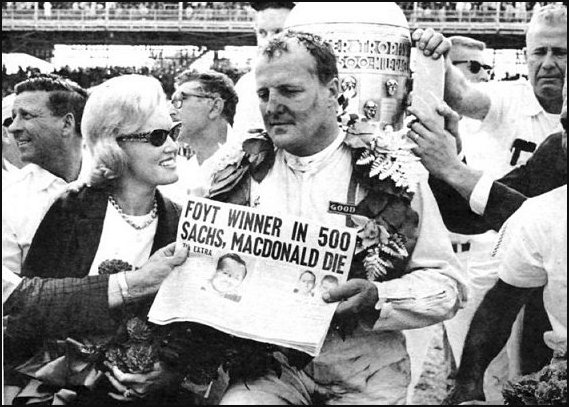
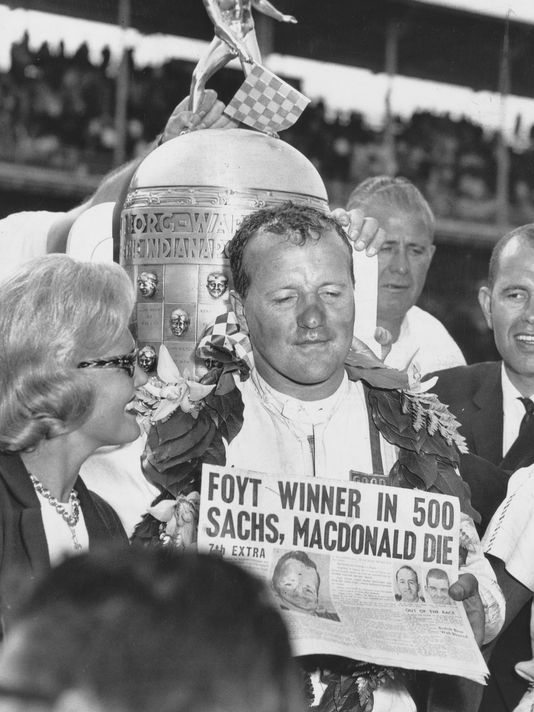
The race was eventually restarted and legendary racer AJ Foyt went on to win. A happy but subdued AJ holds a glimpse of what tomorrow's
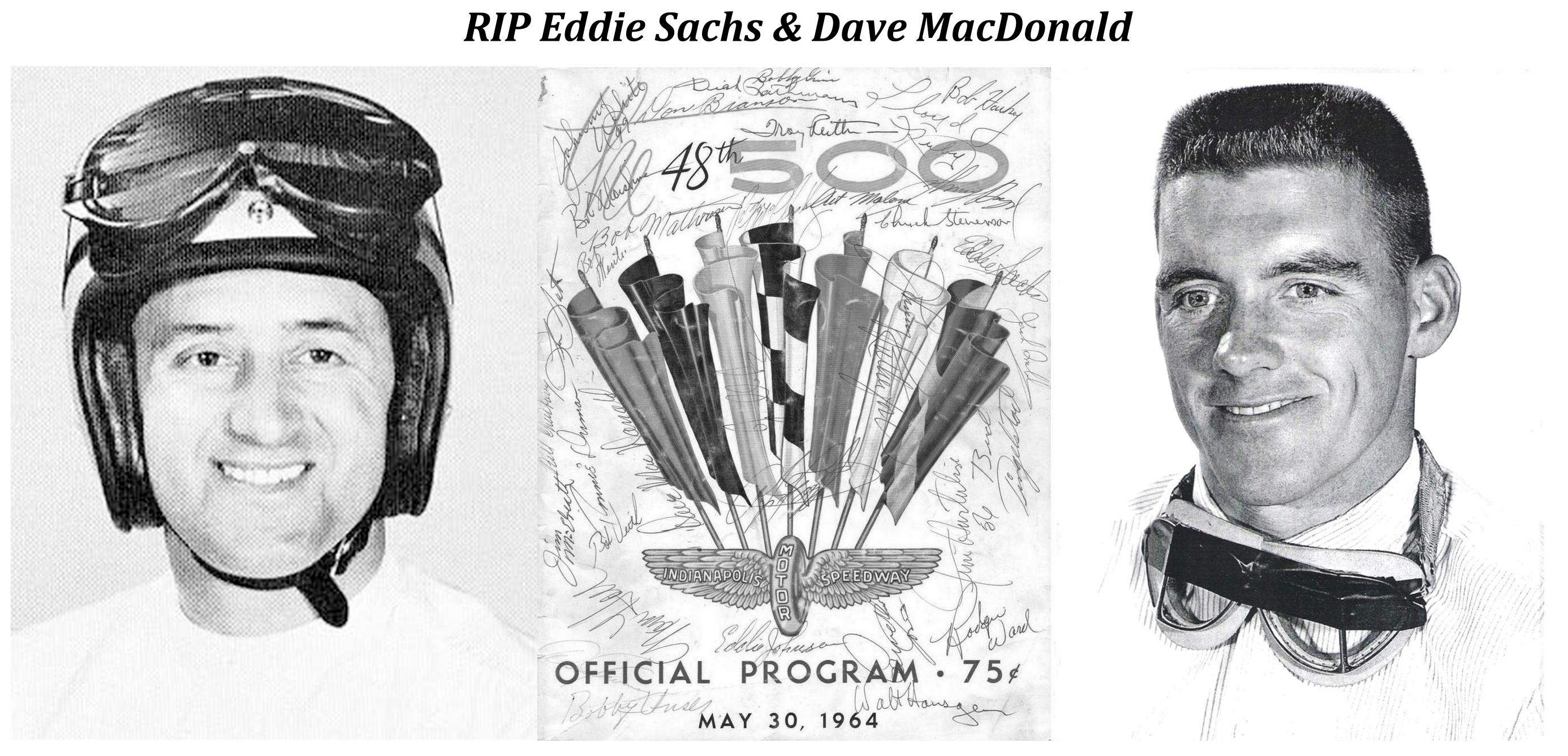
headlines will read. Two popular racers - Eddie Sachs and Dave MacDonald would die in the fiery crash. RIP Dave and Eddie. Photo IMS
A record payout for the 1964 Indy 500 and race winner AJ Foyt's share was a staggering $153,650. The richest Formula One race in the
world at the time was the 1964 Monaco Grand Prix and race winner Graham Hill's payout was a mere $2,000. It's not hard to understand
why the best drivers in the world flocked to Indy every year.
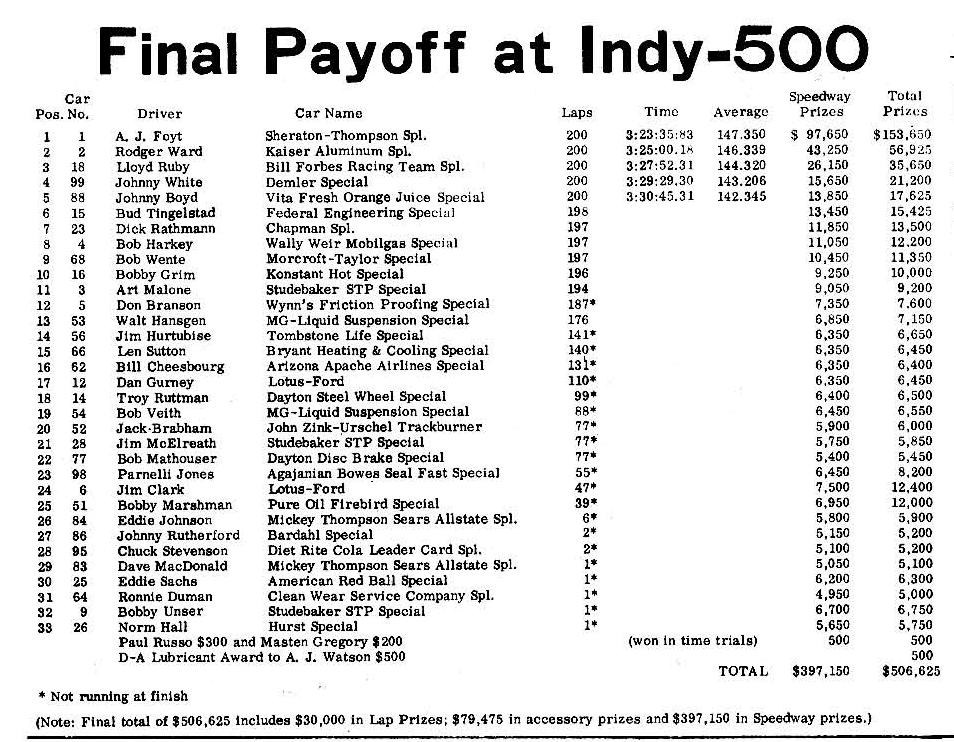
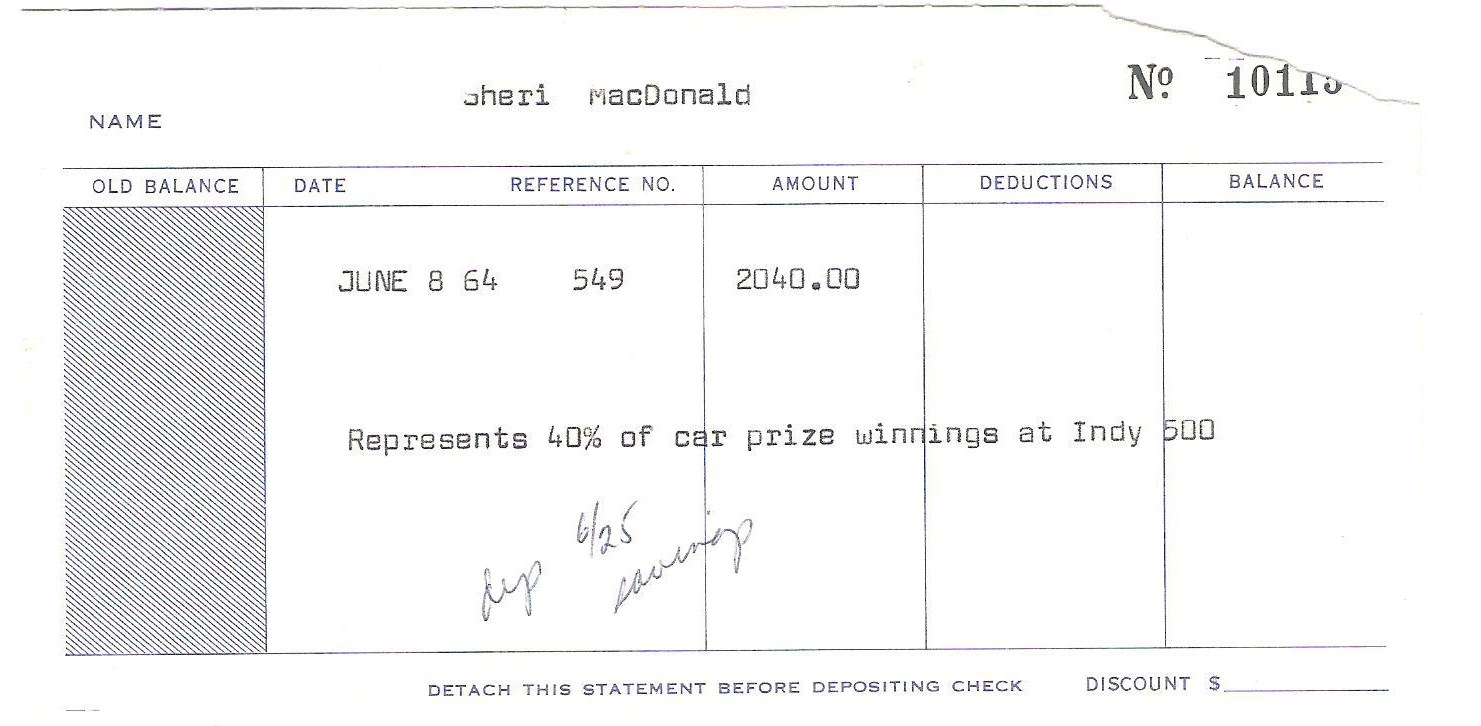
The Thompson team was awarded $11,000 in prize money - $5,900 for Eddie Johnson and $5,100 for Dave MacDonald. Dave's portion
of $2,040 was given to Sherry by Mickey Thompson.
.jpg)
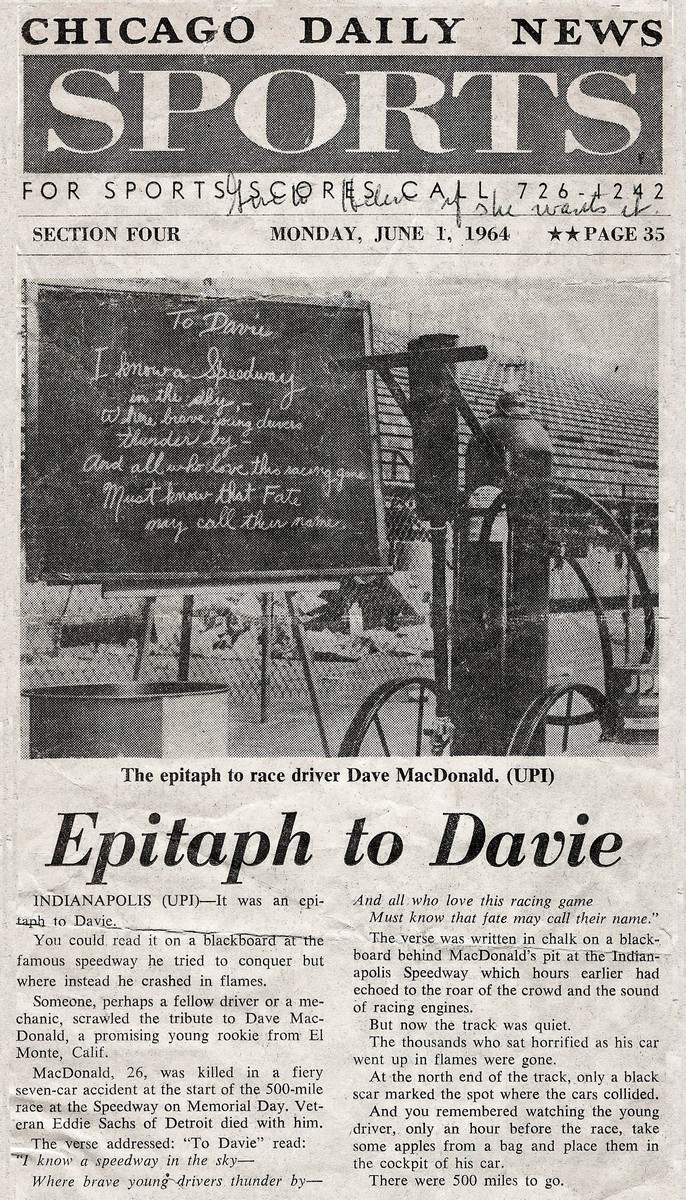
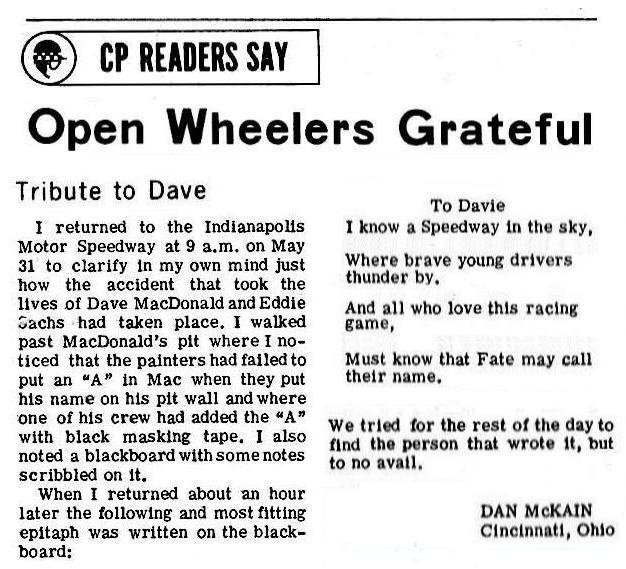
This beautiful epitaph was written by Kirby Guyer
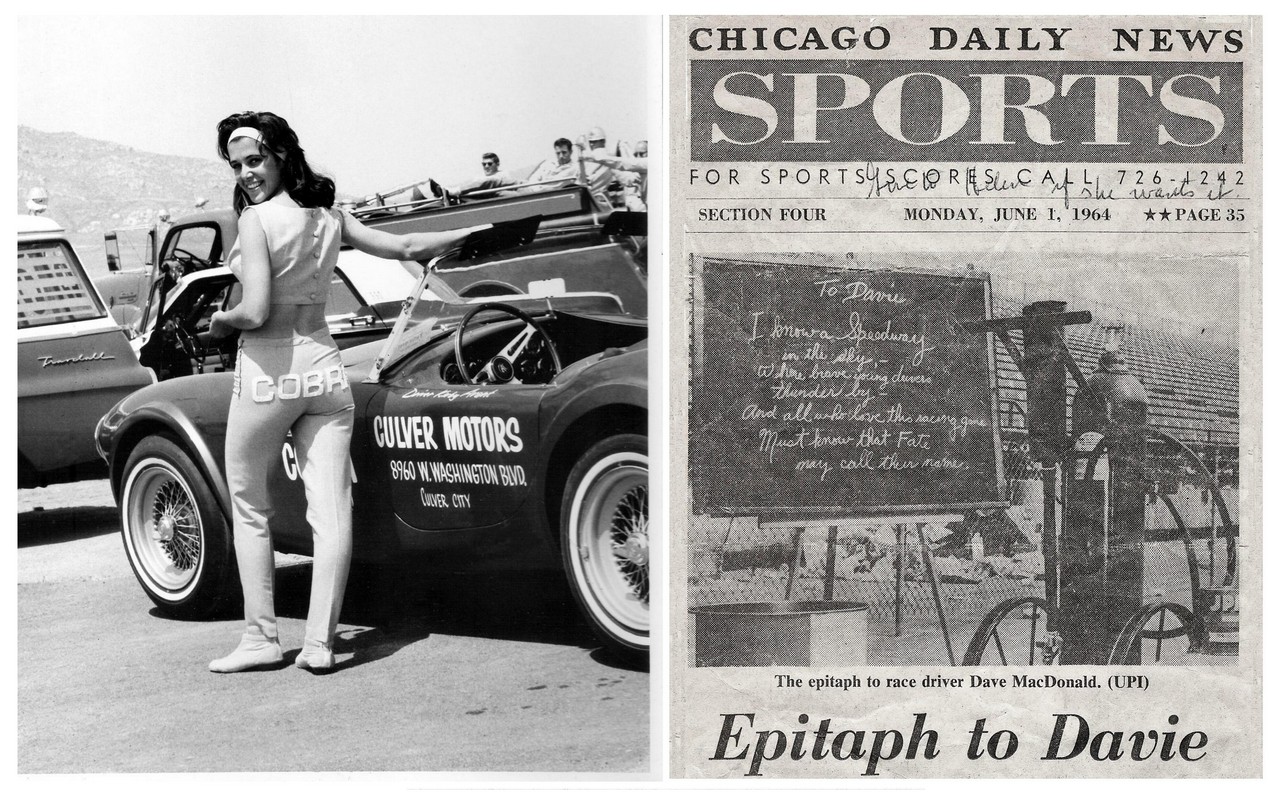
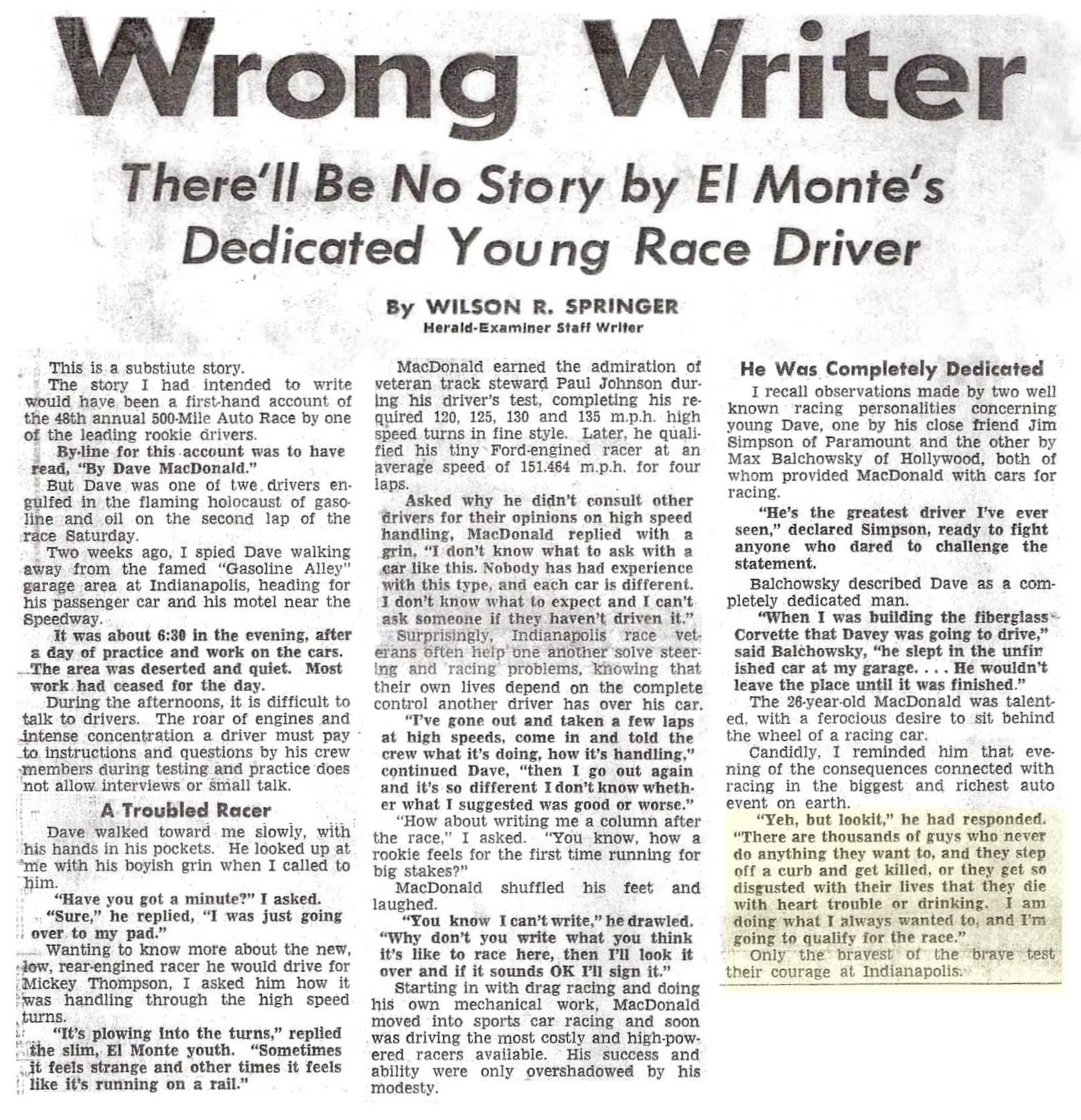
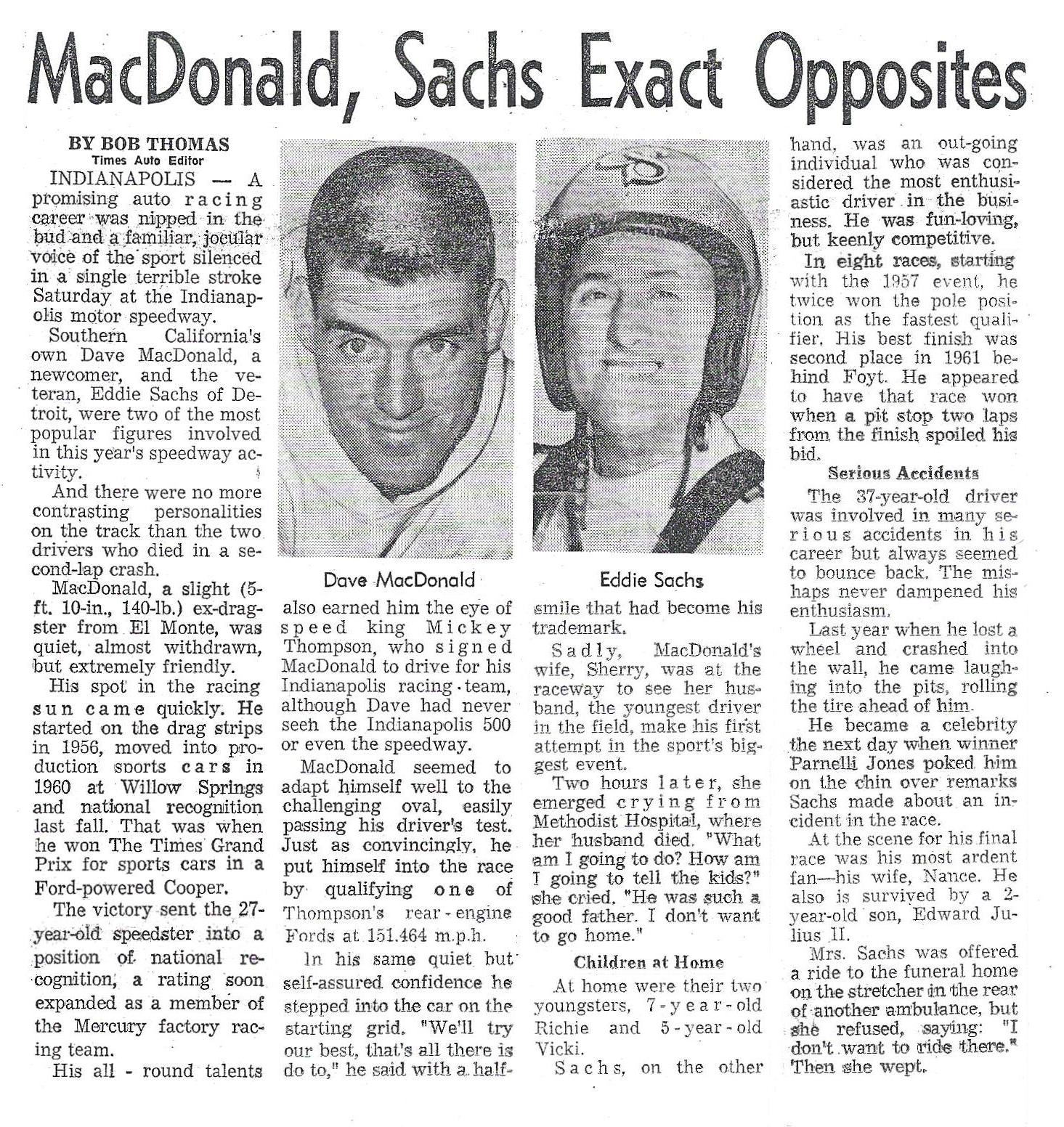
JC Agajanian was kind enough to offer Mickey and a distraught Sherry MacDonald a ride back to California on his chartered plane.
.jpg)
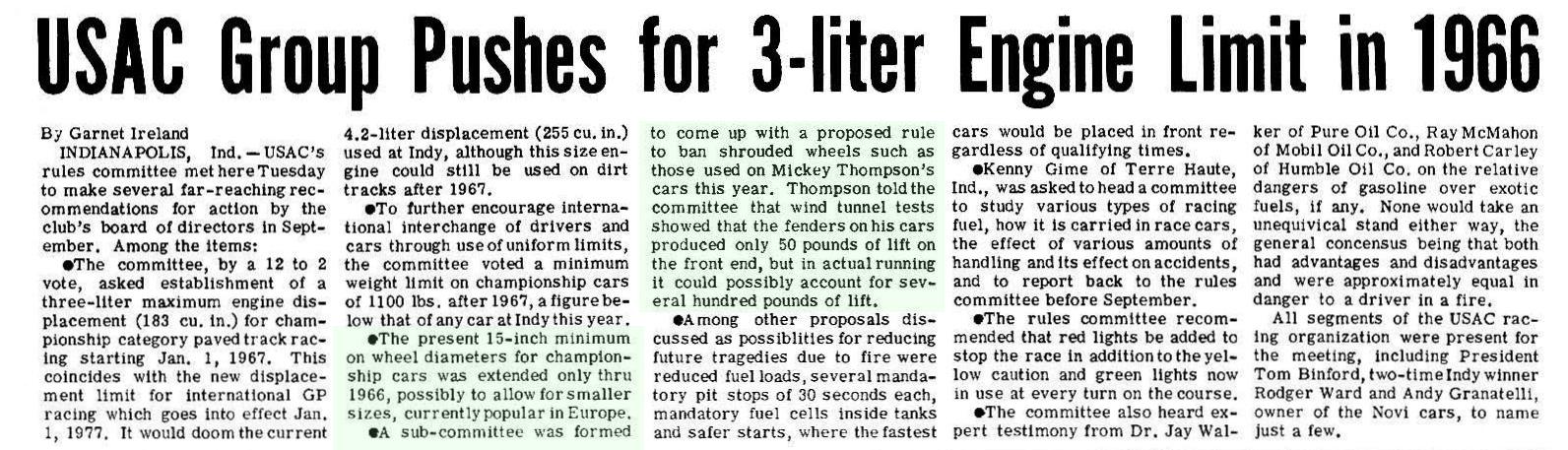
Proposed rules changes for subsequent races involved gasoline, Mickey's fully covered fenders and tire height
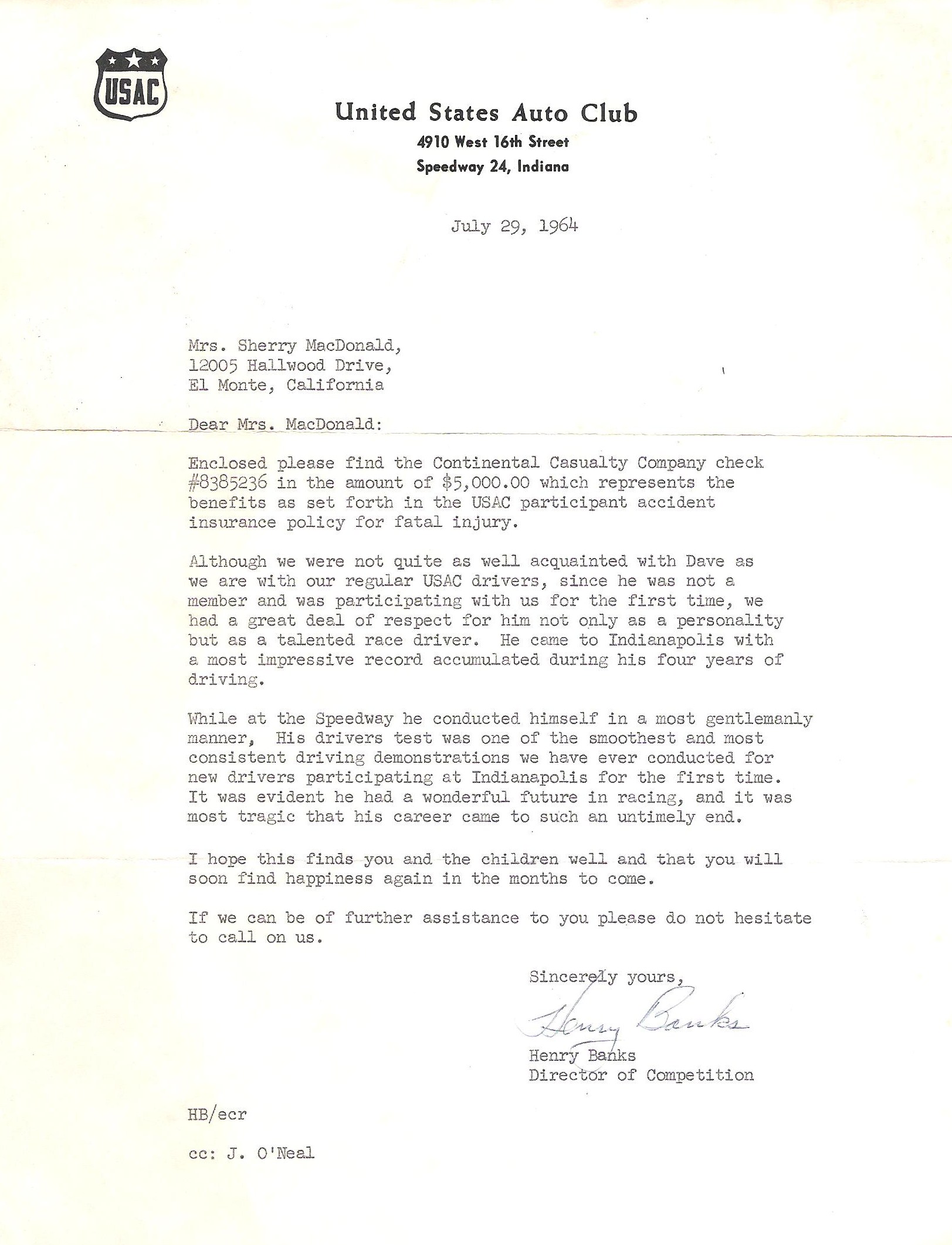
Letter from USAC's Henry Banks to Dave MacDonald's wife Sherry after the 1964 Indy 500
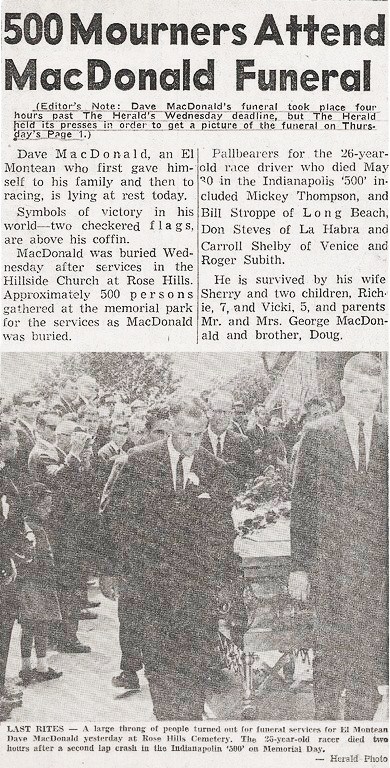
Los Angeles Herald Examiner
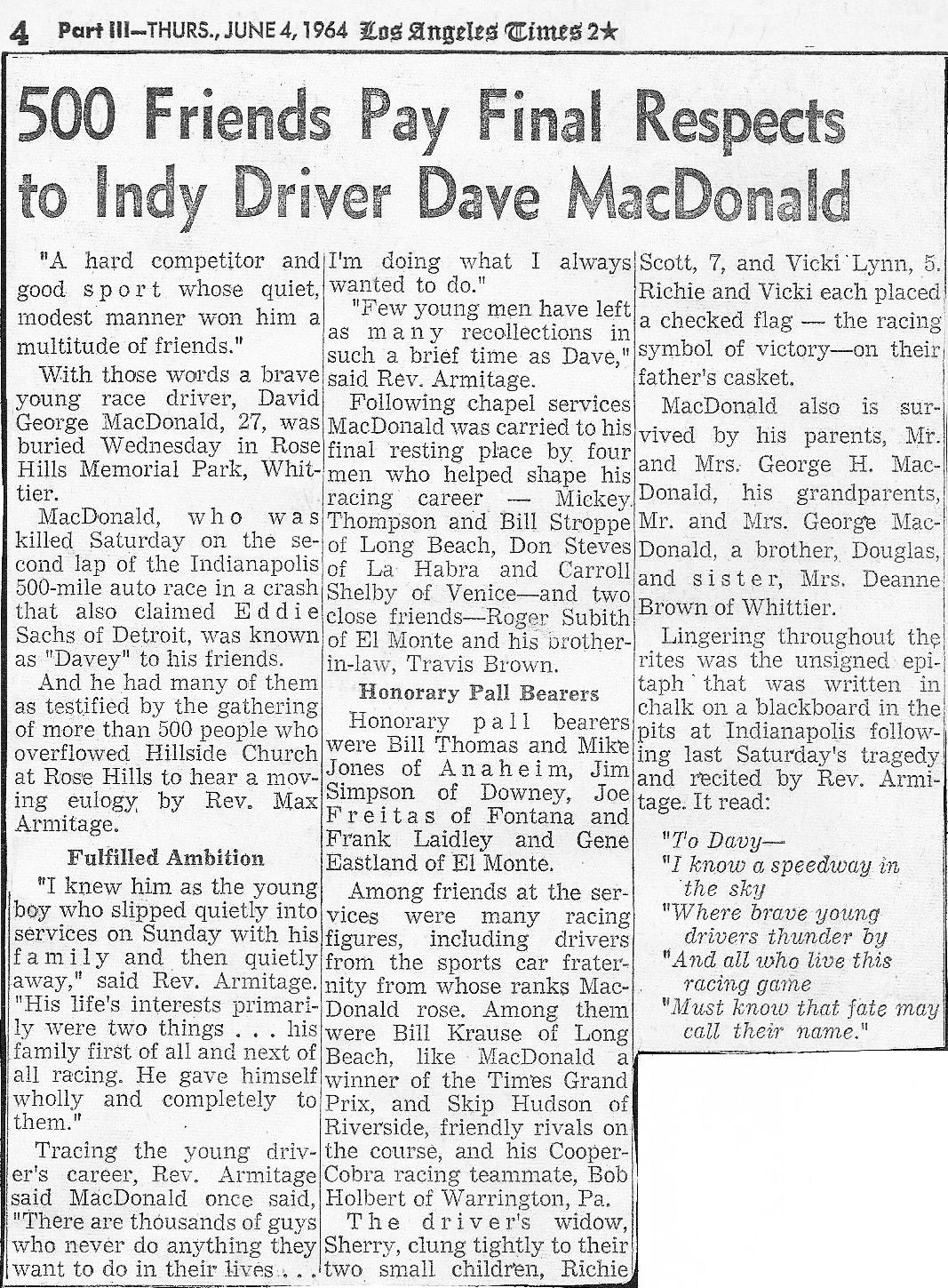
Los Angeles Times
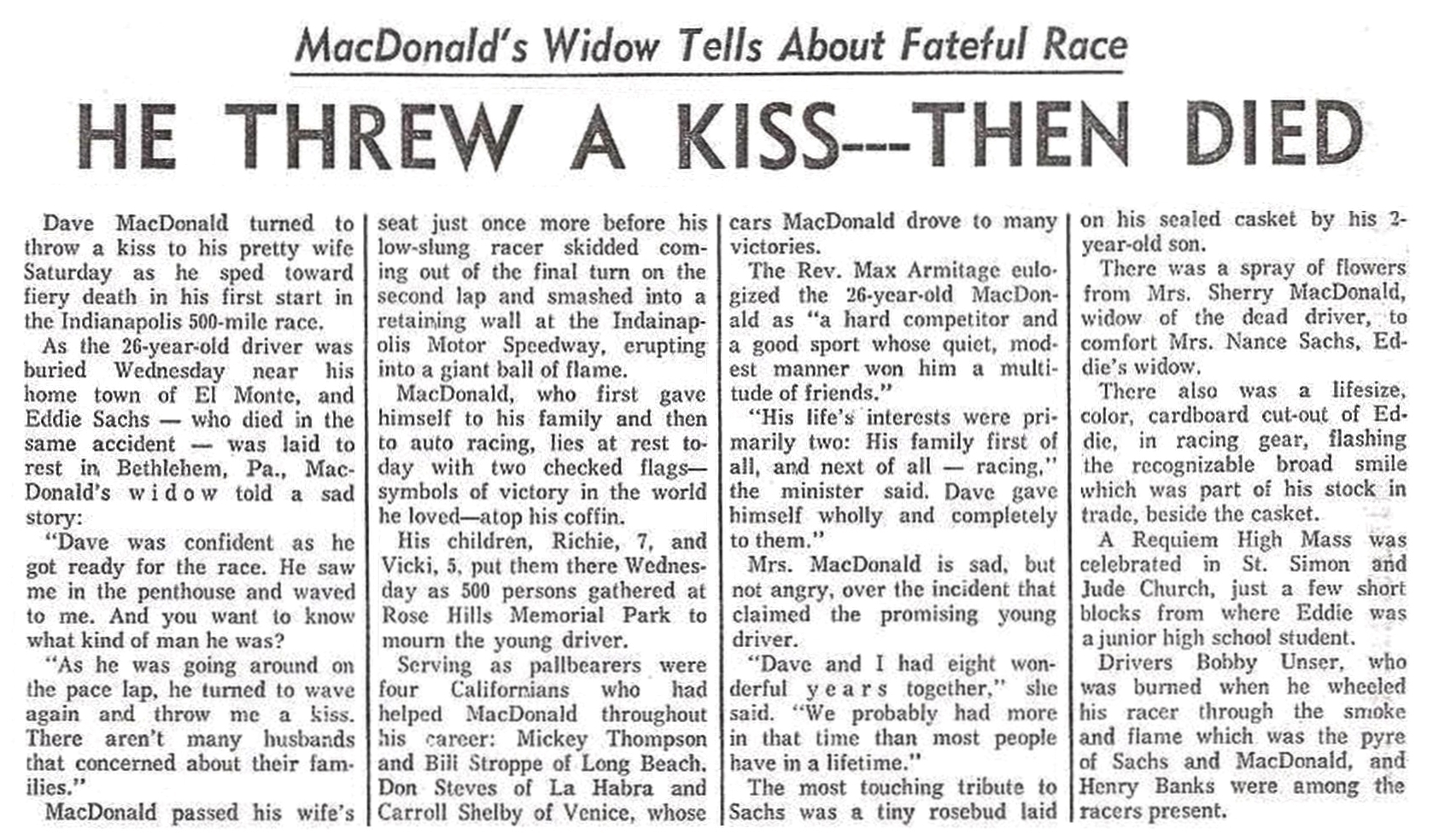
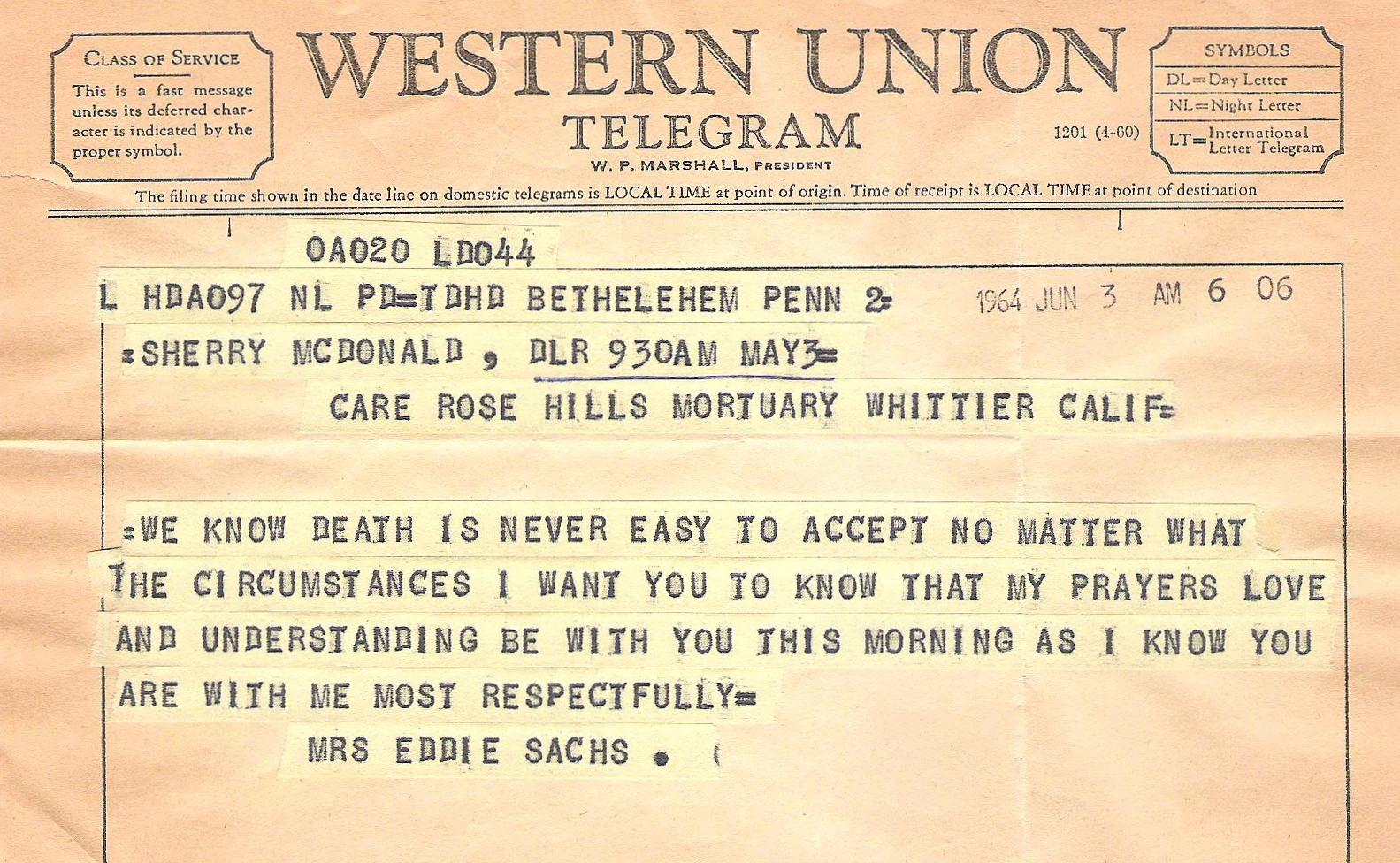
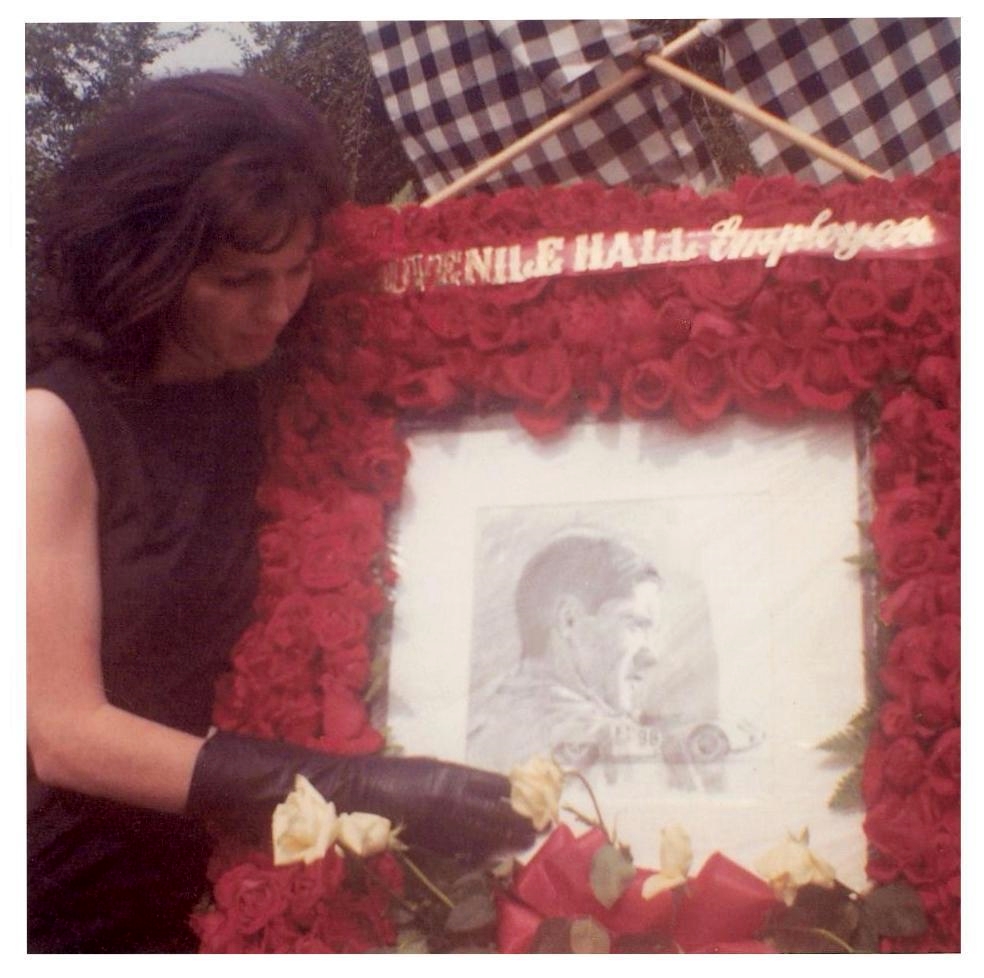
Both Sherry MacDonald and Nance Sachs sent emotional support to the other. Sherry sent flowers while Nance sent a telegram
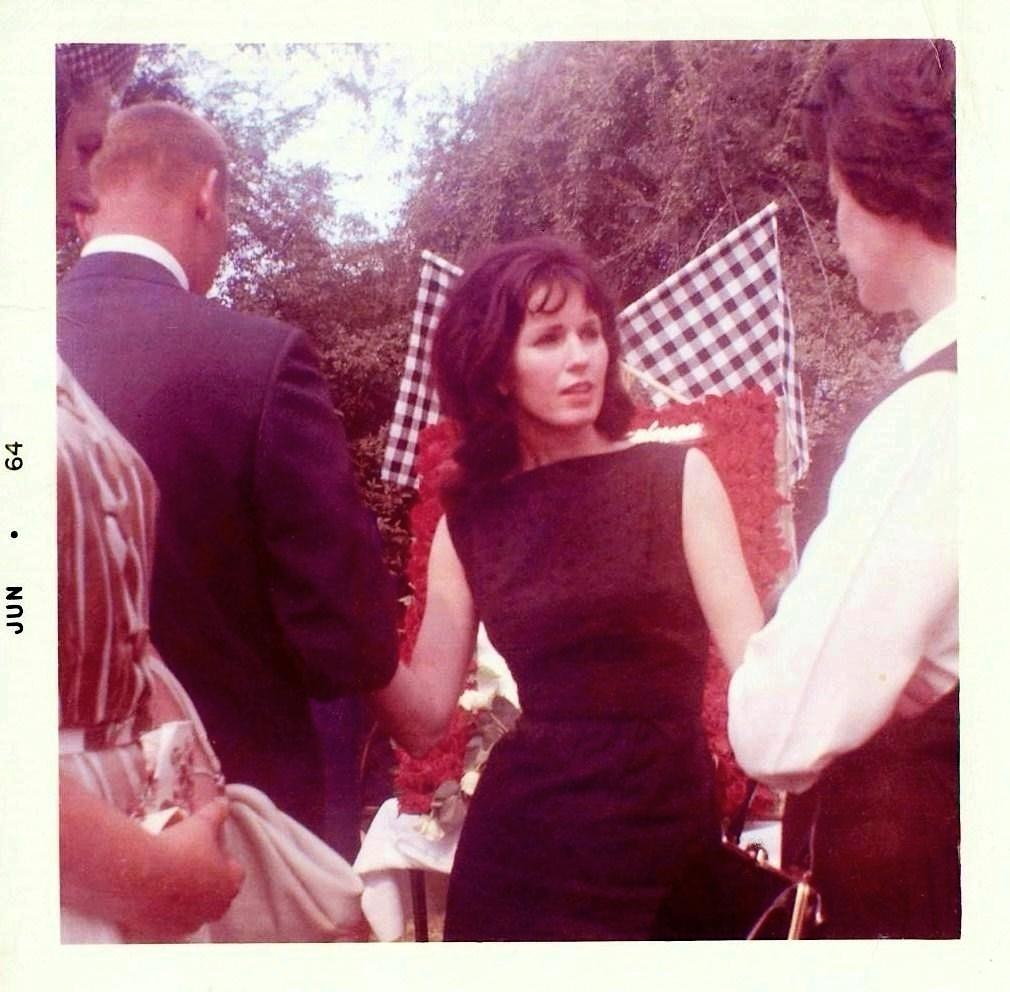
Sherry MacDonald at Dave's funeral in California
|
|